Airbnb Security Camera Rules: Recording vs Sharing Footage

On Friday, November 6, 2026, Jordon Hudson filed a civil complaint in Suffolk Superior Court against Elise McDevitt and Craig Nolan, a Winthrop, Massachusetts couple who hosted her on Airbnb in June 2023, according to the Boston Globe. The suit is over Ring doorbell footage of a shirtless Bill Belichick outside the rental, which later circulated online and which the hosts discussed anonymously on a podcast. Airbnb removed the couple after Hudson reported them.
The coverage is celebrity news. For a host it is the first visible test of a gap most have never considered: Airbnb's camera policy tells you where a camera may be and that you must disclose it, and says almost nothing about what you may do with the footage afterward. The Winthrop hosts may have been compliant on the first question. The lawsuit is about the second.
There is a third layer for anyone taking direct bookings. A Ring doorbell captures audio unless the owner switches that setting off, Massachusetts is one of about 11 states that require every party's consent to record a conversation, and on your own site the disclosure, retention and no-sharing rules all have to come from you.
Key facts
- Hudson's complaint against hosts McDevitt and Nolan was filed in Suffolk Superior Court on November 6, 2026, over Ring footage from a June 2023 Airbnb stay in Winthrop, Massachusetts, and seeks unspecified damages, per the Boston Globe.
- Airbnb has banned indoor cameras and recording devices "even if these devices are turned off" since April 30, 2024, and requires exterior and doorbell cameras to be disclosed in the listing description, per Airbnb help article 3061.
- Airbnb's camera policy has no rule on keeping, forwarding, or publishing footage. A separate page says private photos or videos of community members "must not be publicly posted" without permission, per Airbnb's Protecting your privacy page.
- Massachusetts General Laws chapter 272, section 99 makes it a crime to "secretly record" speech without all parties' consent, with a fine of up to $10,000 or up to five years in state prison, plus a civil remedy of at least $1,000, per the statute.
What happened in Winthrop, in order
In June 2023 Hudson booked a four night stay, per ESPN's account of the complaint. On the final night McDevitt texted her a link to the Ring footage, per the texts the Globe published, and when Hudson asked for confirmation it would be deleted, McDevitt replied: "We will delete it from ring, but as you know, unfortunately, videos are never totally deleted."
In November 2023 the clip surfaced online, and McDevitt texted: "I absolutely did not leak this video to twitter or anyone." In May 2025 the account changed: "We had sent it to a few people initially wondering is this him, isn't it him." On May 23, 2025, the couple appeared anonymously on the Pablo Torre Finds Out podcast, which CBS Boston names, and Hudson reported them to Airbnb, which delisted them, per the Globe.
MassLive's reading of the complaint says it alleges privacy, consumer protection and contract violations and asks the court to bar the couple from distributing her personal information. Neither Globe article lists causes of action or a docket number, and the defendants had not responded as of November 9, so treat the legal theories as reported, not confirmed.
Layer one: what Airbnb's camera policy actually says
Airbnb's device rules live in help article 3061, in force since April 30, 2024. Indoor cameras are out entirely: hosts may not have cameras or recording devices that monitor indoor spaces "even if these devices are turned off," including a detached guest house and the shared spaces of a private room listing. A recording device is anything that records or transmits video, images, or audio, and the article names a doorbell camera as an example.
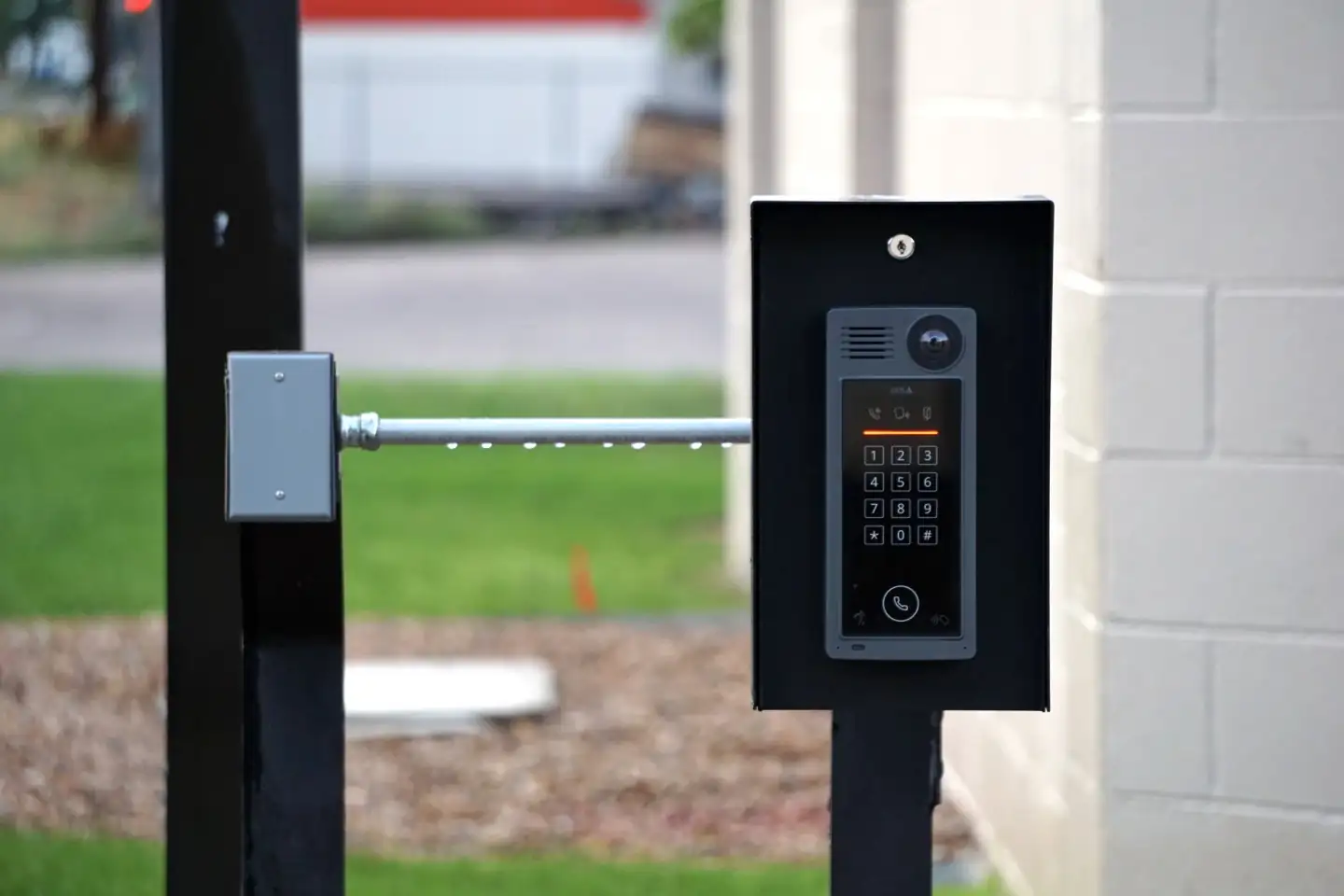
Exterior and doorbell cameras are allowed on one condition: the host discloses their location in the listing description. Airbnb's sample wording is plain, for example "I have a doorbell camera monitoring my front door and the hallway of my apartment building."
The consequence is in Airbnb's March 11, 2024 newsroom post: reported violations "will be investigated, and action we take can include listing or account removal." That post frames the disclosure as happening "before guests book," which is why it belongs in the listing description, not the house rules.
Layer two: the policy stops at the lens
Read article 3061 end to end and you will not find a word about what happens after the camera records: nothing on retention, downloading, forwarding, or a guest's right to ask for deletion.
The nearest thing Airbnb has is one sentence on a different page. The Protecting your privacy policy says private information, photos, or videos of community members "must not be publicly posted" unless the subject has given permission. That covers posting a clip on social media. It does not, on its face, reach sending it "to a few people," as the hosts said they did, or an anonymous podcast interview, as the complaint alleges. CBS Boston reports that Hudson's lawyers say Airbnb found a violation of its policies on nonconsensual sharing of guest recordings, a rule Airbnb's public pages do not spell out.
That is the gap the lawsuit occupies. A host can be compliant on placement and disclosure and still face a civil claim over the file, because that question is governed by state law, not platform policy.
Why deleting from Ring is not the end of it
Ring's storage time page says US storage defaults to 60 days for 1080p and 2K devices and 30 days for 4K, can be set from 1 to 180 days with a subscription, and that videos are "permanently lost" when deleted or when the period expires. It then adds: "To keep your videos, download them." A downloaded clip is outside Ring's retention clock forever, and so is every copy of it.
The statute under the doorbell: audio in an all-party consent state
Nothing published says audio was part of the Winthrop dispute, but the device at its center captures sound, and that is a Massachusetts host's largest exposure.
Chapter 272, section 99 defines "interception" as to "secretly hear, secretly record, or aid another to secretly hear or secretly record the contents" of a communication without prior authority "by all parties to such communication." Willful interception carries a fine of "not more than ten thousand dollars, or imprisoned in the state prison for not more than five years." Subsection Q adds a civil remedy: actual damages "but not less than liquidated damages computed at the rate of $100 per day for each day of violation or $1000, whichever is higher," plus punitive damages and attorney's fees.
Do the arithmetic on a four night stay: four days at $100 is $400, below the $1,000 floor, so the statutory minimum for one guest's stay is $1,000 before punitive damages and fees. That applies only if a court finds the recording was secret and non-consensual.
The word that decides everything is "secretly." The Reporters Committee for Freedom of the Press guide to Massachusetts says the law "only applies to secret recordings," so consent is not required when all parties are aware. Whether a doorbell disclosed in a listing description makes its audio non-secret for every guest and every visitor who walks up to the door is a question no published Massachusetts case about short term rentals has answered, and this post does not answer it either. Ask a Massachusetts lawyer before leaving audio on.
The Reporters Committee counts about 11 all-party consent states: California, Delaware, Florida, Illinois, Maryland, Massachusetts, Michigan, Montana, New Hampshire, Pennsylvania and Washington, per its guide introduction. The privacy claim itself would rest on chapter 214, section 1B, a "right against unreasonable, substantial or serious interference with his privacy."
What this means on a direct booking
On Airbnb the disclosure duty is enforced by a platform that can remove your listing. On your own website nothing reminds you, and the statutes apply the same way. You own the guest relationship, and you own the compliance.
Three places need the disclosure: the listing description, in the plain form Airbnb models ("A video doorbell covers the front porch. No cameras inside."); the booking confirmation, so the notice arrives in writing before arrival; and the rental agreement, the one document the guest signs. Our post on the direct booking rental agreement covers the clauses that pay; a device clause belongs beside them, naming each camera's location, whether it records audio, the retention period, and that use is limited to security, damage documentation, and legal process.
Keep retention simple: the Ring default or shorter, no downloading as a habit, and when a guest asks for deletion, delete and confirm in writing without promising what the software cannot do. The one legitimate reason to pull a clip is documenting damage, and even that has a clock, as our breakdown of why Airbnb damage claims get denied explains.
This fits where Airbnb is heading. From November 20, 2026, hosts lose the ability to require separate contracts and to keep copies of guest ID in most cases, which we covered in what hosts can no longer ask for at check-in. Footage is the next item on that list. Haven builds branded direct booking sites on your own domain, where the listing copy and the agreement are yours to write, which is where this disclosure has to live. See bookwithhaven.com.
A checklist for the next 30 days
- List every device that records or transmits: cameras, doorbells, baby monitors, noise monitors, voice assistants, and confirm nothing sits indoors, switched off or not.
- Rewrite the exterior camera disclosure in the listing description using Airbnb's sample form, with the location named.
- Decide on audio. In an all-party consent state the safe default is off unless a lawyer in your state says otherwise. In the Ring app the toggle is Audio Streaming and Recording under Privacy Settings, and Ring says turning it off "stops your videos from having any sound at all," per Ring's privacy features page.
- Set a retention period and leave it alone. Download clips only to document damage, and remove shared users who do not need the feed.
- Never forward a clip, however famous the subject, and if you take direct bookings, copy the disclosure into the booking confirmation and the rental agreement this week.
What to watch next
Watch the defendants' answer, whether the court reaches the consent question (the reporting describes a privacy claim, not a wiretap claim), and whether Airbnb adds a footage paragraph to article 3061.
FAQ
Can an Airbnb host have a Ring doorbell camera?
Yes, if it points outside and its location is disclosed in the listing description before booking. Airbnb help article 3061 counts a doorbell camera as a recording device and allows it on the exterior, never covering an enclosed outdoor shower, a sauna, or any indoor space.
Can an Airbnb host share or post security camera footage of a guest?
Airbnb's camera policy does not address it, but its Protecting your privacy page says private photos or videos of community members must not be publicly posted without the subject's permission. Beyond the platform, state privacy and recording laws apply, which is what the Winthrop lawsuit filed November 6, 2026 is testing.
Are security cameras with audio legal at a vacation rental in Massachusetts?
Massachusetts chapter 272, section 99 criminalizes secretly recording speech without all parties' consent, reaches audio rather than silent video, and applies only to secret recordings. Whether a disclosed doorbell's audio counts as secret for everyone it captures is unsettled, so the conservative choice is to turn audio recording off until a Massachusetts attorney says otherwise.
Do Airbnb's camera rules apply to direct bookings?
No. Airbnb's policy binds only Airbnb listings. On a direct booking the duties come from state law, so the disclosure has to appear on your own website, in the booking confirmation, and in the rental agreement, along with your retention and no-sharing rules.