Tropical Storm Edouard Refunds: What Airbnb and Vrbo Cover


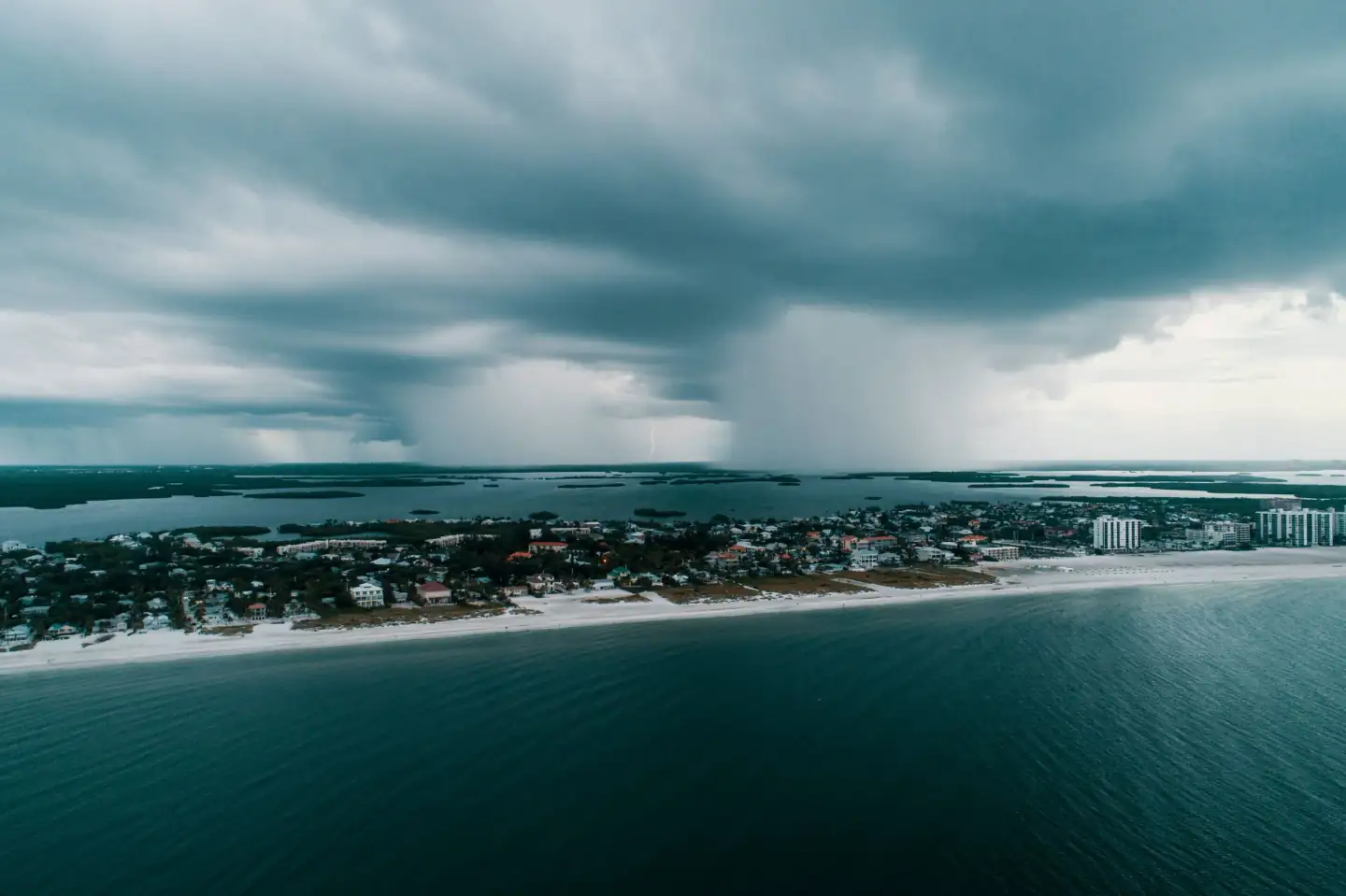
Tropical Storm Edouard is coming ashore near the Texas and Louisiana border this afternoon, September 1, 2026. The National Hurricane Center's 1 PM CDT advisory put the center about 20 miles west-southwest of Cameron, Louisiana and 25 miles southeast of Port Arthur, Texas, with 50 mph sustained winds and landfall expected shortly, according to NHC Advisory 5A. The morning's Hurricane Watch was discontinued in that advisory; a Tropical Storm Warning still runs from Port Bolivar, Texas to the Vermilion/Iberia Parish line in Louisiana.
Labor Day falls on Monday, September 7, per the federal holiday calendar, so guests holding Galveston, Bolivar Peninsula, Houston, and southwest Louisiana reservations for the September 5 to 7 weekend are already asking about refunds. As of this afternoon, no county or parish in the warning area had issued an evacuation order in any coverage we could verify. That single detail decides the refund question.
Airbnb's weather policy turns on evacuation orders. Vrbo's turns on Category 3 hurricanes. A 50 mph tropical storm with no evacuation is the case both platforms hand back to the host, which leaves your cancellation policy, and your judgment, as the only rules in play.
Key facts
- As of 1 PM CDT on September 1, 2026, Tropical Storm Edouard had 50 mph sustained winds, the Hurricane Watch had been discontinued, and landfall was expected within hours, according to the National Hurricane Center.
- Airbnb's Major Disruptive Events Policy excludes "weather or natural conditions that are common enough to be foreseeable in a given location, such as hurricanes in Florida during hurricane season," according to Airbnb's policy page. It does cover mandatory evacuation orders.
- Vrbo's Extenuating Circumstances Policy says hurricanes "classified as Category 3 or higher at least 24-hours before forecasted landfall may be in scope," and only after Vrbo notifies both parties, per Vrbo's policy page. Category 3 begins at 111 mph, per the NHC's Saffir-Simpson scale.
- A host who cancels an Airbnb reservation between 48 hours and 30 days before check-in pays a fee of 25% of the reservation amount and forfeits the payout, per Airbnb's host cancellation policy.
Where Edouard is going
The morning forecasts ran hotter than the storm. The NHC's 4 AM CDT discussion projected a 55 knot peak, with two hurricane models making Edouard a hurricane before landfall, per Forecast Discussion 4. By 10 AM the forecast peak had settled at 45 knots and dissipation was expected Wednesday, per Forecast Discussion 5.
Rain is the larger threat: 3 to 6 inches from the upper Texas coast through east-central Texas, with isolated totals near 9 inches. Texas activated 1,500 state personnel on August 31, with 10 to 15 inches possible in Harris County in the worst case, according to the Texas Tribune. Surge from High Island, Texas to the Vermilion/Cameron Parish line was revised down to 1 to 3 feet, and Galveston County's emergency management coordinator, Jesse Ryholt, expected island surge of "probably less than two feet" with no major damage for most of the county, according to KPRC.
None of the KPRC, Texas Tribune, Associated Press, or Insurance Journal coverage we read today mentioned an evacuation order, and the Texas governor's news page listed no Edouard proclamation.
Why a tropical storm is the gap in both platform policies
Airbnb's Major Disruptive Events Policy
Airbnb's policy covers events that "prevent or legally prohibit completion of a future or ongoing reservation," including "mandatory travel restrictions imposed by a governmental agency, such as an evacuation order or shelter-in-place order," and prolonged utility outages "impacting the vast majority of homes in a given location," according to the policy text. The exclusion is equally explicit: "weather or natural conditions that are common enough to be foreseeable in a given location, such as hurricanes in Florida during hurricane season."
A Gulf tropical storm in the first week of September is foreseeable weather by that definition. The policy steps in if a county issues a mandatory evacuation or a widespread outage prevents the stay, not because of the storm itself. Until then, "any refunds outside of the reservation's cancellation policy are at the host's discretion." And activation is less generous than hosts assume: "hosts can cancel without fees or other adverse consequences," but "the host does not receive a payout for the canceled dates of the reservation." It protects the host from penalties, not from lost revenue.
Vrbo's Extenuating Circumstances Policy
Vrbo names hurricanes, with a threshold. Hurricanes "classified as Category 3 or higher at least 24-hours before forecasted landfall may be in scope," and the policy excludes "foreseeable seasonal weather typical for the region and season when it does not cause another qualifying disruption," per Vrbo's policy page. Edouard's 50 mph is below even the 74 mph floor for a Category 1 hurricane, per the NHC scale, let alone the 111 mph Category 3 line.
The notice rule is the part hosts miss. "Until Vrbo provides that notice, the listing's cancellation policy and any enforcement under the Host Cancellation Policy will continue to apply." A host who cancels ahead of that notice gets no waiver of cancellation fees or Premier Host consequences. Vrbo's own hurricane guidance is blunt about it: "not all hurricanes and/or significant weather events qualify," according to the Expedia Group newsroom.
The payout math on a Labor Day booking
Take a three-night Galveston stay checking in Friday, September 4, at $300 per night with a $150 cleaning fee: a $1,050 subtotal. Airbnb's service fees are a percentage of the nightly price and any fees charged by the host, excluding taxes, and most hosts on the host-only structure pay 15.5%, according to Airbnb's service fee page. That is $1,050 × 0.155 = $162.75, for a net payout of $887.25 if the guest stays.
The guest messages on Tuesday, September 1, three days out, and asks to cancel. What the host keeps depends entirely on the listing's cancellation policy, per Airbnb's policy definitions:
- Flexible: full refund until 24 hours before check-in. The guest is well inside that window, so the refund is automatic and the host keeps nothing.
- Moderate: the full refund window closed 5 days before check-in, on Sunday, August 30. A cancellation now pays the host one night plus 50% of the unspent nights: $300 + (0.5 × $600) = $600 in nightly revenue. At 15.5% the fee is $93, so the net on the nights is $507. For reservations booked on or after April 21, 2025, any refund of the cleaning fee "will be based on the host's cancellation policy," according to Airbnb's cleaning fee page.
- Firm: fewer than 7 days out, the host is paid 100% for all nights and keeps the full $887.25.
The instinct is to cancel on the guest's behalf, and on Airbnb that is the most expensive option available. A host-initiated cancellation between 48 hours and 30 days before check-in carries a fee of 25% of the reservation amount and no payout, per Airbnb's host cancellation policy: $262.50 on a $1,050 booking, on top of the $887.25 forgone, or $1,149.75 in total, plus a calendar Airbnb may block for the affected dates. Within 48 hours of check-in the fee rises to 50%, or $525. We break those tiers down in our post on what it costs a host to cancel a guest.
The cheaper path: let the guest cancel under your policy, then refund whatever portion you choose through the Resolution Center, which accepts requests "up to 60 days after your reservation's checkout date," according to Airbnb. A voluntary refund costs you the refund. A host cancellation costs the refund, the fee, and the calendar.
What this means for Labor Day weekend reservations
Guests in the property now need safety information before anything else: the county emergency management page, the TxDOT ferry status on Bolivar, and your flood evacuation guidance. Galveston's ordinance already requires "flood-evacuation guidance" inside the rental and a local contact who can respond within one hour, according to Avalara's summary of the ordinance, a trend we covered in our post on one-hour response requirements.
Guests arriving Thursday or Friday are the hard case. Edouard should dissipate Wednesday, so by Friday the weather may be a non-event while the property is not: a flooded access road, a lingering outage, or a suspended ferry can make a stay impossible under clear skies. If the property is operational and roads are open, holding your policy is defensible. If you cannot guarantee access or utilities by check-in, a proactive offer to move dates or refund is the fair call, and the one that avoids a review written in anger. Guests booked later in September need only a short note that the property was unaffected, once you can confirm it.
What to do today
Write down your weather stance before the next refund request lands: what you will do for a guest who wants to cancel with no evacuation order, what changes if an order is issued, and what changes if the property loses power or road access. A rule set at 2 PM is a policy. A rule improvised at 9 PM in a guest thread is a negotiation.
Do not cancel as the host on either platform unless the policy has been activated for your reservation. Cancel before that and you carry the penalty.
Message every guest arriving in the next ten days with facts, not forecasts: the NHC advisory, the county emergency management site, the property's condition, and when you will update them next.
Document the property now and again after the storm. Timestamped photos of the exterior, the street water line, the breaker panel, and the interior are what an insurance adjuster and a chargeback dispute will both ask for. Our post on the insurance gap most hosts have covers what a homeowners policy leaves out.
Fix your direct booking terms this week. On your own website your rental agreement governs, and if it is silent on weather, guests will read that silence as "full refund." The clause should say that weather is not grounds for a refund outside your standard policy unless a government evacuation order covers the property's address or the property is uninhabitable at check-in, and state what you will offer in those two cases. Hosts on Haven can send the storm-week update to every affected direct guest at once from the built-in guest CRM instead of one thread at a time. The rest of the pre-storm checklist is in our hurricane season preparation guide.
What to watch next
The trigger that changes everything is a mandatory evacuation order. If Galveston County, Chambers County, Jefferson County, or Cameron Parish issues one, Airbnb's "mandatory travel restrictions" language applies to the covered dates, and Vrbo may send notice for affected reservations.
Then expect to have this conversation again. Edouard is the Atlantic's fifth named storm of the season, according to Insurance Journal, and September is the peak. The stance you write down today is the one you will reuse.
FAQ
Does Airbnb refund guests for a tropical storm?
Not automatically. Airbnb's Major Disruptive Events Policy excludes weather that is "common enough to be foreseeable in a given location," with hurricane season as its own example, according to Airbnb. Refunds follow the listing's cancellation policy unless a mandatory evacuation order or a widespread utility outage triggers the policy.
Does Vrbo's Extenuating Circumstances Policy cover a tropical storm?
No. Vrbo's policy says hurricanes "classified as Category 3 or higher at least 24-hours before forecasted landfall may be in scope," and it excludes foreseeable seasonal weather, per Vrbo. Until Vrbo sends notice for a specific reservation, the host's cancellation policy applies.
Should I cancel my guest's Labor Day reservation because of Tropical Storm Edouard?
Not as the host, unless a platform policy has been activated for your dates. On Airbnb, a host cancellation between 48 hours and 30 days before check-in costs 25% of the reservation amount plus the entire payout, per Airbnb's host cancellation policy. Let the guest cancel under your policy and send any refund voluntarily through the Resolution Center.
What should my direct booking cancellation policy say about weather?
State that weather is not grounds for a refund outside your standard policy unless a government evacuation order covers the property or the property is uninhabitable at check-in, and say what you will offer in each case. Require guests to accept the terms at checkout so any later card dispute has an agreed policy behind it.