Hurricane Isaias Refunds: The Evacuation Order Trigger

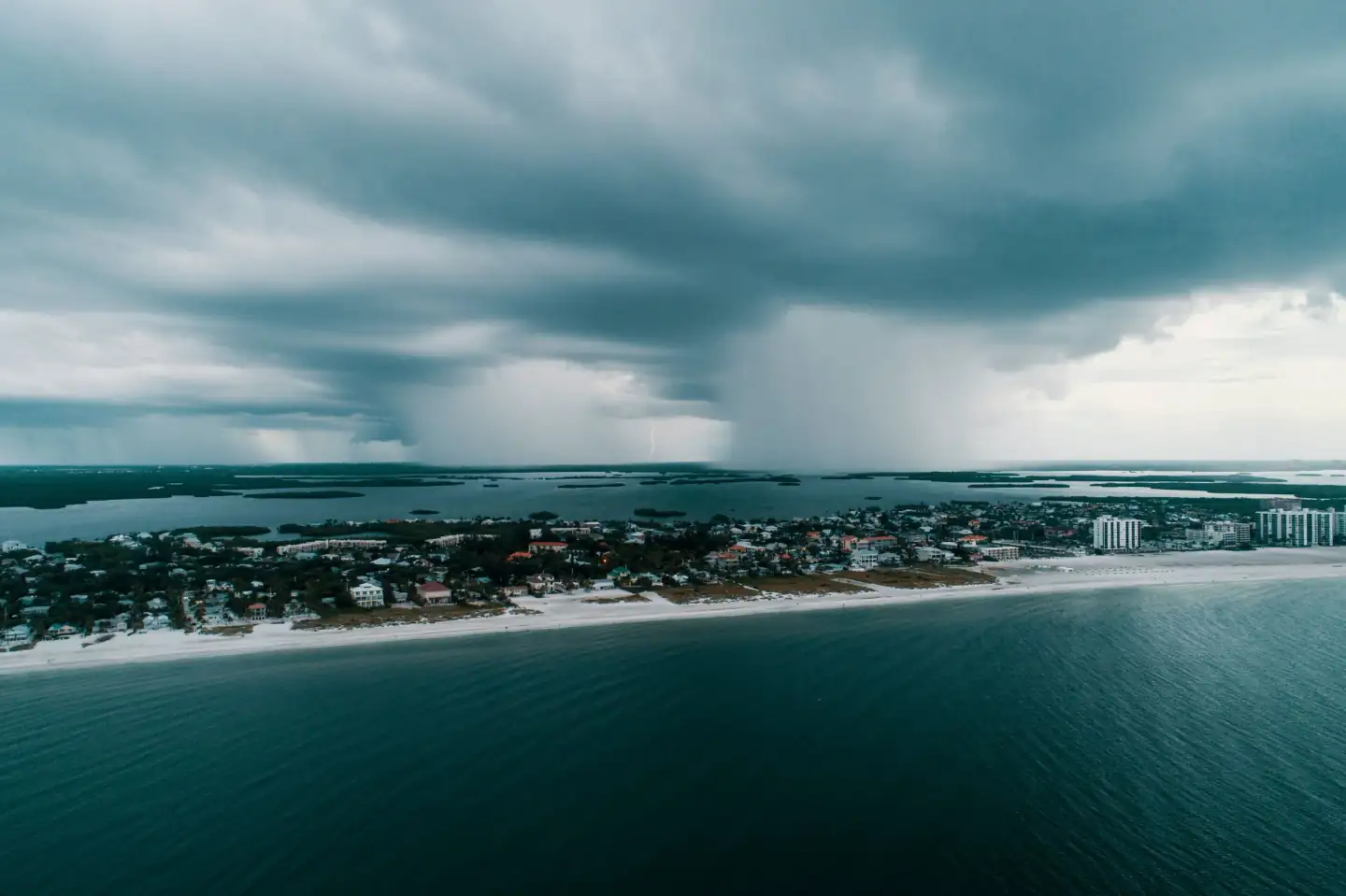
Hurricane Isaias came ashore near Destin, Florida at 8:30 p.m. CT on Friday, October 9, 2026, as a Category 2 storm with winds up to 105 mph, according to ABC News. It arrived on the first night of Columbus Day weekend. Two days earlier, Baldwin County officials had put beach hotel and vacation rental occupancy at about 80%, Travel And Tour World reported.
Haven's two earlier storm posts this season, on Tropical Storm Edouard and Hurricane Nolo, explained why neither Airbnb nor Vrbo refunded guests. Isaias is the reverse case. Governments ordered people out, and that order, not the wind speed, is what moves a booking from the host's cancellation policy to the platform's.
That distinction decides which hosts are covered, what they are paid, and when next week's guests may arrive.
Key facts
- Isaias made landfall near Destin, Florida at 8:30 p.m. CT on October 9, 2026 as a Category 2 hurricane with 105 mph winds, per ABC News.
- Alabama Gov. Kay Ivey ordered all non-residents, tourists and visitors out of Baldwin County south of the Gulf Intracoastal Waterway effective 2:30 p.m. CDT on October 8, 2026, according to the proclamation text posted by the City of Orange Beach.
- About 24 hours before landfall, Isaias carried 100 to 105 mph winds (NHC Advisory 9 and Advisory 10), below the 111 mph floor for Category 3, the level named in Vrbo's hurricane clause.
- When Airbnb's Major Disruptive Events Policy applies, the host receives no payout for the canceled dates, and a payout already sent is withheld from the next ones, per Airbnb.
- As of the morning of October 10, 2026, the Alabama governor's newsroom showed no order modifying or ending the visitor evacuation.
What happened between October 7 and October 9
Isaias became a hurricane on Wednesday, October 7, the latest date in 121 years for an Atlantic season's first hurricane, CBS News reported. The orders followed within a day.
In Alabama, the governor's supplemental proclamation of October 8 required that "all non-residents, tourists, and visitors in the covered areas shall immediately evacuate themselves from the covered areas until the state of emergency expires or this order is modified in writing," in the wording reproduced by Orange Beach. The covered areas are Baldwin County south of the Gulf Intracoastal Waterway, including Gulf Shores and Orange Beach, plus Mobile County's Zone 1, which takes in Dauphin Island and parts of Bayou La Batre, Gulf Coast Media reported. The signed proclamation is on the governor's site.
Florida's orders were drawn by evacuation zone rather than by visitor status. Okaloosa County made evacuation mandatory for Zones A and B at noon on October 8, and Walton County did the same for Zones A, B and C, according to WJHG. Escambia County ordered out Zones A and B, and Santa Rosa County expanded its order to Zones A, B and C on October 9, per WUWF.
The order did the work, not the category
Airbnb treats a Gulf hurricane in October as foreseeable, and Vrbo sets a wind speed bar that Isaias did not clear in time. A government act changes the answer.
Airbnb
Airbnb's Major Disruptive Events Policy excludes weather "common enough to be foreseeable in a given location" and names "hurricanes in Florida during hurricane season" as its example. The same page covers "Mandatory travel restrictions imposed by a governmental agency, such as an evacuation order or shelter-in-place order," and says foreseeable weather becomes covered when it produces one.
Vrbo
Vrbo's Extenuating Circumstances Policy has two relevant doors. The first reads: "Hurricanes classified as Category 3 or higher at least 24-hours before forecasted landfall may be in scope." The second: "Binding national or local government travel restrictions may be in scope."
Run Isaias through the first door. Landfall came at 8:30 p.m. CDT on Friday, so the 24 hour mark is 8:30 p.m. Thursday. The National Hurricane Center's 4 p.m. Thursday advisory showed 100 mph. Its 10 p.m. advisory showed 105 mph. Category 3 begins at 111 mph, which left Isaias 6 mph short at the reading nearest the line.
It stayed short for hours afterward. The 4 a.m. Friday advisory put winds at 110 mph, one mph under the threshold. The Hurricane Center did not declare a major hurricane until 7:20 a.m. CDT on Friday, about 13 hours before landfall. By the 7 p.m. advisory the storm was back to 110 mph.
On the published numbers, the hurricane clause alone would not have reached Isaias. Vrbo keeps discretion ("may be in scope"), but the binding evacuation orders are the cleaner basis.
What the platforms said
The only report of activation found for this post is from Travel And Tour World on October 10. It says Vrbo activated its policy in areas expected to be affected, and that Airbnb said its policy was in effect in areas covered by the governor's mandatory evacuation order, with coverage subject to adjustment. Neither company had posted a public notice we could locate, so the message in your own host inbox is the authority for your listing.
Where the coverage map stops
Airbnb activates its policy "for the impacted area and timeframe" and warns that "Reservations outside of the defined area and timeframe may not be eligible," per its policy page. Vrbo likewise reserves the decision on the affected area and which reservations qualify.
Alabama's order is broad and names tourists directly: every visitor south of the Intracoastal Waterway. Florida's orders follow zone letters. A Destin condo in Okaloosa Zone A sat inside a mandatory order. A house a few miles inland, outside the lettered zones, did not, even though its guests watched the same forecast.
Okaloosa's treatment of visitors is also worded less firmly than Alabama's. WJHG reported that out-of-town visitors were "asked to evacuate" from Wednesday evening, while FOX10 in Mobile described them as "told to leave the area." The difference matters because both policies exclude non-binding advisories. Read the county's order itself before assuming which side of the line a booking falls on.
A rental outside the defined area is back where Edouard and Nolo left hosts: on the listing's own cancellation policy, with any further refund the host's choice.
What a covered host is paid
Nothing, for the canceled nights.
Under Airbnb's policy, guests can cancel for a refund regardless of the listing's cancellation policy, hosts can cancel "without fees or other adverse consequences," and the calendar is blocked for the canceled dates. The host receives no payout for those dates, and if one was already made, "the refunded amount will be withheld from the next payout(s)," the policy states.
On Vrbo, once the policy applies, "If the guest has not checked in, the host must provide a full refund," and a stay already under way gets a partial refund for the portion that cannot be completed, per the policy.
Take a three night holiday weekend booking at $2,400 before platform fees, arriving Friday, October 9, in Gulf Shores.
- Policy activated and the guest cancels: guest refund $2,400, host payout $0.
- Policy not activated and the guest cancels: the listing's cancellation policy governs, and the host keeps whatever that policy provides.
- Policy not activated and the host cancels on Airbnb within 48 hours of check-in: payout $0, plus a fee of 50% of the booking, or $1,200 ($2,400 x 0.50), under Airbnb's Host Cancellation Policy. The fee is 25% ($600) between 48 hours and 30 days out and 10% ($240) beyond 30 days, with a $50 minimum.
The first and third lines differ by $1,200 on a single booking, which is why sequence matters: a host who cancels before the platform has defined the area risks the fee and must then document a waiver. Our breakdown of Airbnb host cancellation fees covers how that fee is assessed.
Vrbo is explicit on the same point: "Until Vrbo provides that notice, the listing's cancellation policy and any enforcement under the Host Cancellation Policy will continue to apply."
Next week's arrivals in Alabama
The Alabama order carries no date of its own. It lasts "until the state of emergency expires or this order is modified in writing." The City of Orange Beach says the state of emergency took effect at 4 p.m. on Wednesday, October 7 and runs seven days, "expiring Wednesday, Oct. 14th unless a different expiration time is prescribed by proclamation."
Conditions on the ground point to a faster reopening. Orange Beach reported "minimal damage throughout the city" at 11 p.m. on October 9. Brett/Robinson, a large Gulf Shores and Orange Beach manager, closed rental operations through Sunday, October 11, promised full refunds for unused reservations in that window, and still plans check-ins on Monday, October 12.
Monday is two days before the date Orange Beach gives for the emergency's expiration. A visitor arrival in the covered area before then depends on the governor modifying the order in writing. As of the morning of October 10, the governor's newsroom listed no such document; the most recent Isaias item was dated October 9. Baldwin County's emergency management page had posted no notice lifting the visitor evacuation.
The platform timeframe is a separate question: the dates Airbnb or Vrbo treats as eligible may end before, or after, the government order does.
A checklist for Gulf Coast hosts this week
- Identify the exact order covering your address (Alabama's visitor proclamation, or your Florida county and zone letter) and save a copy with its effective time.
- Wait for the platform's notice before canceling anything. If a guest asks, have them cancel through the platform so the policy carries the cancellation, not your account.
- List every affected booking and its payout status. Expect Airbnb to net refunded amounts against upcoming payouts.
- For Alabama listings, hold visitor check-ins through October 14 until a written modification appears, and tell guests which document you are watching.
- If the property is damaged, photograph it before cleanup. An uninhabitable home is a different cancellation from an evacuation, and it is where the insurance gap shows up.
- On direct bookings, follow the evacuation clause in your rental agreement as written. No platform policy sits behind your own site.
A direct booking does leave the host the decision the platforms take away during a covered event: refund, credit, or new dates. Hosts who run their own site through a provider such as Haven also keep the guest's contact details, which turns a rebooking offer into a short email.
What to watch next
Three documents will settle most open questions: a written modification of the Alabama visitor order, each Florida county's notice lifting its zone evacuation, and the platforms' own definition of the affected dates. Federal emergency declarations were approved for Florida and Alabama, CBS News reported. A major disaster declaration, if one follows, would matter for owners with damage.
FAQ
Does an Airbnb host get paid when a booking is canceled for the Isaias evacuation?
No. When Airbnb's Major Disruptive Events Policy applies, the guest is refunded and the host receives no payout for the canceled dates. If Airbnb had already paid the host, it withholds the refunded amount from the next payouts. The host does avoid cancellation fees and other penalties.
Was Hurricane Isaias strong enough to trigger Vrbo's hurricane refund clause?
Not on the published advisories. Vrbo's clause refers to hurricanes at Category 3 or higher at least 24 hours before forecast landfall, and Isaias carried 100 to 105 mph winds at that point, below the 111 mph Category 3 floor. Vrbo's separate provision for binding government travel restrictions fits the mandatory evacuation orders.
When can vacation rental guests return to Gulf Shores and Orange Beach?
Alabama's order runs until the state of emergency expires or the governor modifies it in writing. The City of Orange Beach gives Wednesday, October 14, 2026 as the expiration date unless a proclamation changes it. As of the morning of October 10, no modification had been posted.