Short Term Rental Density Caps: Why 1% Beats 30%

On September 15, 2026, Kalispell's mayor asked the city council to change one thing about the city's short term rental cap. Not the number. Kalispell limits short term rentals to 2 percent of the residences in its residential zones, and the proposal would have kept that 2 percent while applying it separately inside each of the four wards. The council declined, saying it was comfortable with the citywide restriction for now, per the Flathead Beacon.
That is a small vote in a small Montana city, and it is also a clean demonstration of something that governs every capped short term rental market in the country. A percentage cap is a fraction, and the denominator does the work. Shrink the geography it covers and the identical percentage produces either a cap with years of headroom or a cap that closed before you bought the house.
San Diego proves it. The city runs both designs at once and publishes the running totals: one cap is set at 1 percent and still has licenses available, the other is set at 30 percent and has none left.
Key facts
- San Diego's Tier 3 whole home licenses are capped at 1 percent of housing units outside Mission Beach. As of September 11, 2026, the city reported 4,862 issued and 799 still available, per the City of San Diego's STRO page.
- San Diego's Tier 4 Mission Beach licenses are capped at 30 percent of the Mission Beach Community Planning Area. As of the same date: 1,099 issued and 0 available.
- Both ceilings are calculated from SANDAG housing estimates in a report the city says "was last updated in March 2024."
- Kalispell's cap, at section 27.20.095 of the city code, limits short term rentals to "two percent of the residences in all of the 'R' and 'RA' zones," not 2 percent of the city. It was adopted as Ordinance 1778 on December 19, 2016.
- Kalispell had 115 active short term rentals as of June 2026, 86 of them in residential and residential apartment zones, according to the Daily Inter Lake.
What a density cap actually is
A density cap limits short term rental licenses to a share of the housing units in a defined area, rather than to a fixed number of permits. Three variables decide what it does, and only one appears in the headline.
The numerator is which licenses count against the cap, and cities routinely exempt hosted stays, owner occupied rentals, or units in commercial zones. The denominator is which housing units go on the bottom of the fraction, and how often it is refreshed. The geography is how large an area the fraction covers. A cap written against a whole city and one written against a single neighborhood are different rules at the identical percentage.
Those three variables are the structural half of compliance. Our 2026 audit of U.S. short-term rental regulation treats them separately from permit fees, because a closed cap can cost more than any filing.
San Diego runs a 1% cap and a 30% cap in the same city
San Diego licenses short term residential occupancy in four tiers. Tier 1 covers rentals of 20 days or less per year and Tier 2 covers home sharing with the host onsite. Neither is capped. The caps land on the two whole home tiers, and the city publishes counts for both.
Tier 3: 1 percent of the city, still open
Tier 3 covers whole home rentals outside Mission Beach, where "the number of licenses issued will not exceed 1% of San Diego's total housing units outside the Mission Beach Community Planning Area." On September 11, 2026 the page showed 4,862 issued and 799 available.
Add those and the ceiling is 5,661. Divide issued by ceiling and the cap is 85.9 percent full (4,862 divided by 5,661 equals 0.8589). About one license in seven is unclaimed.
Tier 4: 30 percent of one neighborhood, and full
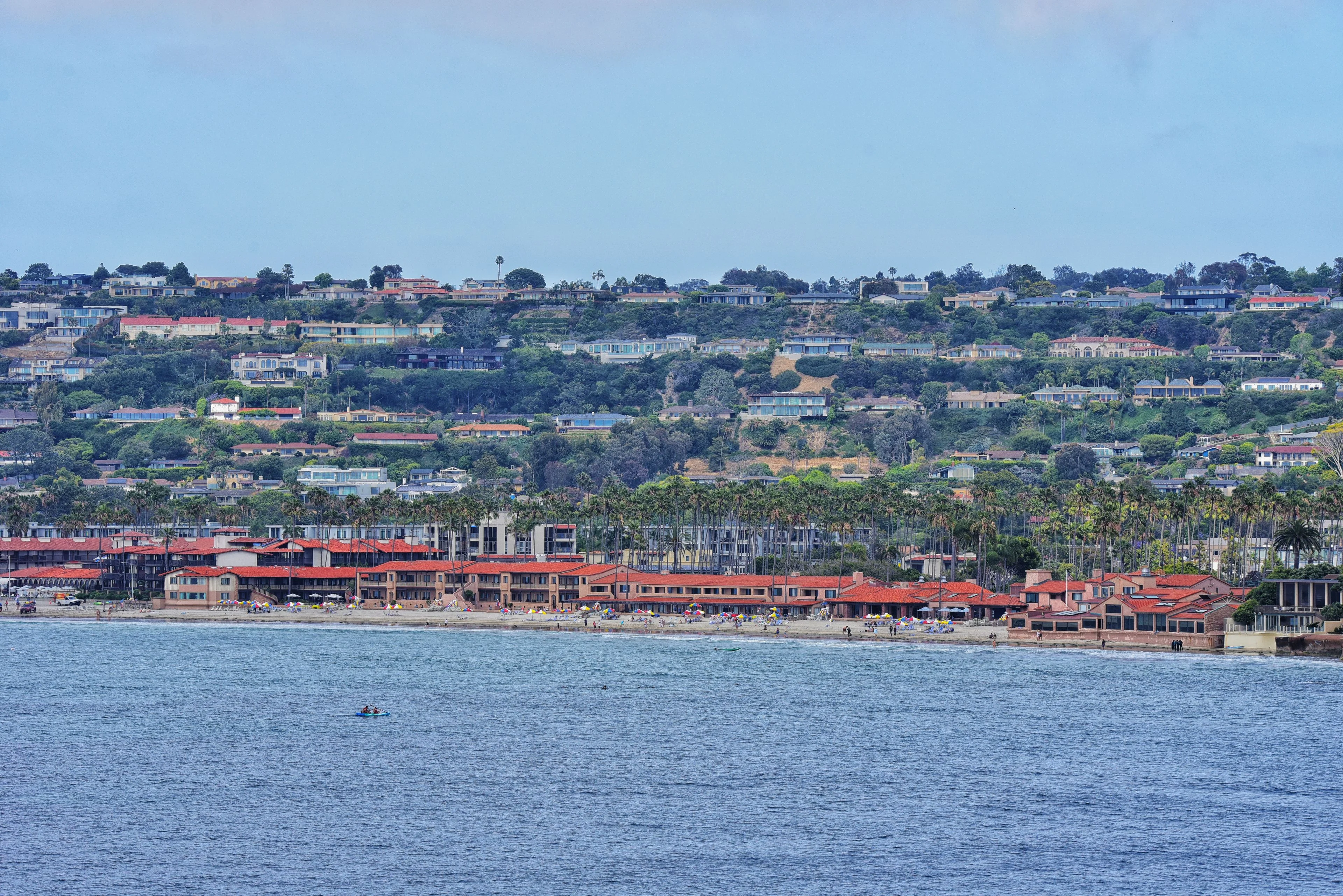
Tier 4 covers whole home rentals inside Mission Beach, capped so that "the number of licenses issued will not exceed 30% of the Mission Beach Community Planning Area." The count on September 11, 2026 was 1,099 issued and 0 available, making the ceiling 1,099 and the cap exactly 100 percent full.
Mission Beach licenses filled soon after the original 2022 application window and stayed closed from November 30, 2022. The city reopened applications for 45 days in the summer of 2025 and, per the city's own newsroom, ran "a random lottery to determine processing order and potential waitlist position" once that window closed. A year later the result is a waitlist, not an opening.
Why the larger percentage is the stricter rule
Neither denominator is published, but both can be derived. A 1 percent cap yielding 5,661 licenses implies about 566,100 housing units outside Mission Beach (5,661 divided by 0.01). A 30 percent cap yielding 1,099 licenses implies about 3,663 housing units inside Mission Beach (1,099 divided by 0.30). The city states neither figure, so treat both as derived.
Now put them side by side. The Tier 4 percentage is 30 times larger than the Tier 3 percentage. The Tier 4 denominator is about 155 times smaller (566,100 divided by 3,663 equals 154.5). The geography overwhelms the percentage by a factor of five, which is why the generous looking cap is the closed one. Demand for whole home rentals concentrates in exactly the beach and downtown pockets that make small denominators.
The denominator is older than you think
San Diego attributes its housing unit counts to "the most recent Demographic and Socioeconomic Housing estimates issued by the San Diego Association of Governments (SANDAG)," in a report the page says "was last updated in March 2024."
A license ceiling governing applications in September 2026 therefore rests on a housing estimate roughly two and a half years old. A percentage cap reads as though it grows with the city. It grows only when somebody re-runs the estimate, and between refreshes it behaves exactly like a fixed number cap. Hosts cannot tell how stale the figure is unless the city discloses the vintage. San Diego does, which is more than most cities do.
What Kalispell was actually voting on
Mayor Hunter proposed replacing the citywide 2 percent cap with "a separate 2% cap in each ward," per the Daily Inter Lake, to keep neighborhoods from losing year round occupants. It failed to win majority support.
The two local accounts describe the pressure point slightly differently. The Daily Inter Lake says Ward 3, which includes much of downtown, "is the only ward that slightly exceeds the proposed 2% cap." The Flathead Beacon places the concentration in the downtown historic district, "comprising just over 2% of the ward's housing." Both point at the same downtown core, over 2 percent while the city is not.
The ordinance is where the story sharpens. Section 27.20.095 does not cap rentals at 2 percent of Kalispell. It says "no more than a total of two percent of the residences in all of the 'R' and 'RA' zones within the City of Kalispell may be used as a short-term residential rental," and adds that "this limitation shall not apply to any other zones where short term rentals are otherwise permitted."
That changes both halves of the fraction. The numerator is not the 115 active rentals; it is the 86 in residential and residential apartment zones, because the other 29 sit in commercial zones and do not count. The denominator is not the city's housing stock; it is the residences inside the R and RA zones only. The Daily Inter Lake's figure that short term rentals "make up less than 1% of the city's residential housing stock" is accurate as reported, and it is measured against a larger denominator than the ordinance uses.
Work it backward and the cap binds at 4,300 residences: 86 divided by 0.02 equals 4,300. If Kalispell's R and RA zones hold more than 4,300 residences, the cap still has room. If fewer, it does not. The city does not publish that count, so no host there can calculate the headroom from public documents. San Diego publishes a live number. Kalispell publishes a rule whose denominator is invisible.
Percentage caps, fixed caps and attrition caps are three different risks
A fixed number cap is the legible one. Folly Beach's 800 license ceiling was a number you could count against. An attrition cap is the shrinking one: Lincoln County's licenses decline as they lapse and do not transfer with a sale, so the cap tightens without another vote and the license stops being an asset you can sell.
A percentage cap is the opaque one. It can look generous and be closed, or strict and be open, and the percentage alone will not tell you which. Smaller geographies compound it: San Antonio's blockface density limit measures one side of one street, about the smallest denominator in use anywhere.
The three questions to ask before you buy into a capped market
Ask what the denominator counts: whole city or one neighborhood, all housing units or only certain zones, and whether units that could never legally be rented are inflating the bottom of the fraction.
Ask what geography it covers, and whether a smaller cap sits inside it. San Diego's Tier 3 cap is citywide with a tighter cap carved out for Mission Beach, so a comfortable citywide number can sit on top of a neighborhood closed for years.
Ask when the housing estimate was last updated and who updates it. If the answer is a regional planning agency on a multi-year cycle, your ceiling is fixed until that agency publishes again. Then ask the licensing office, in writing, for the issued and remaining counts and the date they were compiled.
What to watch next
Ward and neighborhood level caps are the direction of travel, because they are politically easier than lowering a citywide number: the headline percentage stays the same and the binding constraint tightens anyway. Kalispell declined this round, so the proposal is what to watch, not the vote. Watch the refresh too. When a city updates the housing estimate behind a percentage cap, the ceiling moves with no council action at all.
Where Haven fits
In a capped market the license is the scarce asset and the listing is not, which is an argument for owning the guest relationship rather than renting it from a platform. Haven builds branded direct booking sites with no booking commission, so the guest list stays yours whatever a licensing office decides next. For the wider picture, our 2026 state by state rundown tracks what changed this year.
FAQ
How does a short term rental density cap work?
A density cap limits licenses to a percentage of the housing units in a defined area rather than to a fixed number. The city multiplies that percentage by a housing unit estimate to get a ceiling, then issues licenses until it is reached. What the estimate counts, and how large the area is, matter more than the percentage.
Why would a city with a 30 percent cap have fewer licenses available than one with a 1 percent cap?
Because the denominators differ. San Diego's 30 percent cap covers one neighborhood, Mission Beach, and yields a ceiling of 1,099 licenses, fully issued as of September 11, 2026. Its 1 percent cap covers the rest of the city and yields a ceiling of 5,661, with 799 available on that date.
How can I find out whether my city still has short term rental licenses available?
Check whether the licensing or treasurer's office publishes issued and remaining counts, as San Diego does. If it does not, request the count in writing with the date it was compiled, and ask which housing estimate the cap is calculated from and when it was last updated.
Do all short term rentals count against a density cap?
Often not. Kalispell's cap counts only rentals in its R and RA zones, so rentals in commercial zones are permitted without counting toward the 2 percent limit. San Diego exempts its two hosted tiers entirely. Read the ordinance for what the numerator includes.