Airbnb Housing Accelerator: What $250 Million Buys

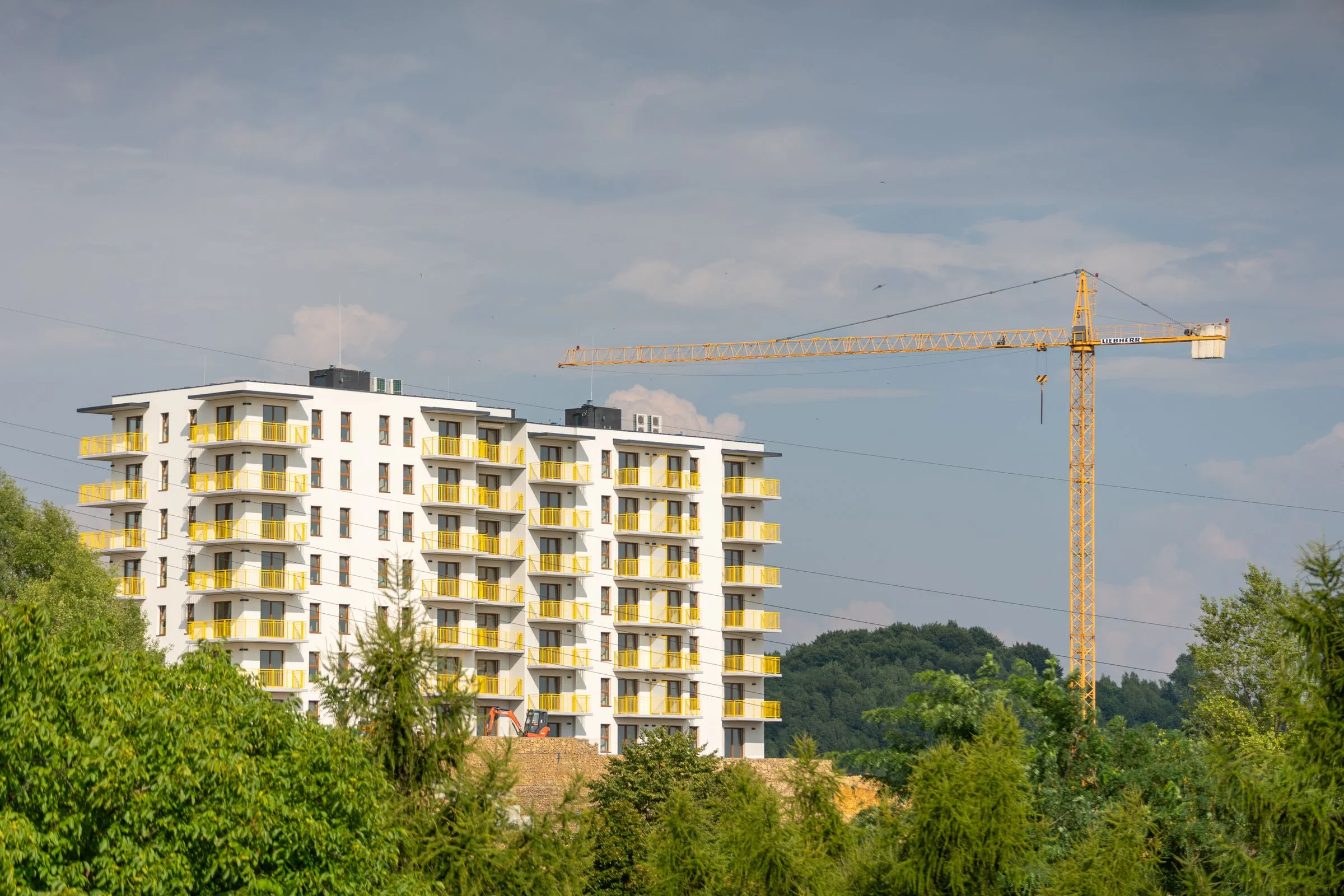
The argument that ends most short term rental permits is the housing argument. Rentals take homes off the long term market, the reasoning goes, so the city caps them, bans them, or prices the permit high enough that hosts stop applying. If you have sat through a council hearing in the last three years, you have heard it.
On September 14, 2026, Airbnb answered that argument with a balance sheet. It announced the Housing Accelerator, a $250 million commitment of below market "last dollar" financing for rental housing projects that have their approvals but cannot close their funding, which the release says will unlock $5 billion over ten years. It also funds four housing policy advocacy groups, creates a $5 million construction innovation prize, and promises an annual Airbnb City Index ranking cities on housing policy.
For a host, the question that matters is whether any of this changes how the housing argument lands in your council chamber. Answering it takes two things nobody else has supplied: the scale arithmetic, and a plain statement of what the money is aimed at. The short version is that this is real money pointed at housing production, and pointed nowhere near the rules that govern your permit.
Key facts
- Airbnb announced the Housing Accelerator on September 14, 2026: $250 million in last dollar financing, which the company projects will unlock $5 billion in capital investment over the next ten years.
- The first investment is $6.4 million supporting 201 affordable homes in Austin's St. John redevelopment, a 19 acre city owned site slated for 526 units of mixed income housing.
- That works out to $31,840.80 per home. At that rate, the full $250 million supports roughly 7,851 homes.
- Airbnb's release cites commissioned research estimating 750,000 US housing units that have cleared most regulatory hurdles but lack final financing. 7,851 is about 1.05% of that figure, or about $333 per stalled unit.
- The release names four advocacy partners and says Airbnb will support reforms in communities where 100 million Americans live. It does not mention short term rental permits, caps, or registration anywhere.
What Airbnb announced on September 14, 2026
Airbnb says it "will make an initial investment of $250 million in rental housing developments that are ready to build but stuck on the one-yard line, thereby unlocking $5 billion in capital investments over the next ten years."
The first deployment is $6.4 million toward 201 affordable homes at the St. John site in Austin, Texas. Austin's own project page describes roughly 19 acres of publicly owned land being redeveloped into 526 units of mixed income housing. Greystar is building it, the Austin Housing Authority partners through a public facilities corporation, the city bought the land with bond funds, and ground broke in July 2026. Airbnb's money arrived after all of that. KUT reported on September 15, 2026 that Council Member Vela described it as closing a multimillion dollar funding gap.
Three other pieces round out the program: a $5 million Housing Innovation Prize awarded as five separate $1 million awards for offsite construction, construction site productivity, and permitting and design acceleration; funding for four policy advocacy organizations, the Citizens Housing and Planning Association, the Florida Housing Coalition, AURA, and the Housing Action Coalition; and the Airbnb City Index, a global ranking of cities on housing outcomes such as affordability and housing additions per capita, releasing later in 2026.
Brian Chesky framed the motive personally in the release: "The ability to afford housing is part of the foundation of Airbnb."
What "last dollar" financing means
Last dollar financing is the final slice of capital a development needs after every other source is committed, the money that moves a project from approved to under construction. Airbnb calls it "the modest, incremental capital that makes the difference between a project moving forward or sitting idle."
Applied at that position, a small amount can trigger a much larger amount of already committed money, which is where the $5 billion projection comes from: 20 times leverage claimed over a decade. It also means the $6.4 million in Austin is not what those 201 homes cost. It is the last piece of a stack the city, a housing authority, and a national developer had already assembled.
The scale check, using Airbnb's own numbers
Here is the division nobody else has run. Take Airbnb's two published figures from the same release and put them next to each other.
$6,400,000 divided by 201 homes is $31,840.80 per home. Divide the full commitment by that rate: $250,000,000 divided by $31,840.80 gives roughly 7,851 homes.
Now compare that to the problem the release names. Airbnb cites research it commissioned estimating that "750,000 housing units across the country have cleared most regulatory hurdles but lack the final financing commitment needed to break ground." 7,851 divided by 750,000 is about 1.05%. Run it the other way and $250 million spread across 750,000 stalled units is about $333 per unit.
Two caveats. The Austin rate comes from a single project and last dollar amounts vary widely by deal, so 7,851 is an order of magnitude check rather than a forecast. And the $5 billion figure is a leverage projection published without methodology, so it belongs in a sentence that names Airbnb as its source rather than one reporting it as an outcome.
One note on the denominator, because the figures get conflated. The Harvard Joint Center for Housing Studies catalogued in January 2024 national shortfall estimates ranging from 1.5 million units to 7.3 million. Airbnb's 750,000 is a narrower measure than any of them: units already approved, waiting only on money.
None of this makes the program bad. Housing that gets built is housing that gets built. It makes the framing clear: production, not permits.
The part that reaches your city council
Two pieces of the announcement are political rather than financial, and those are the ones with any chance of surfacing in a hearing about your permit.
The advocacy funding goes to four organizations working on zoning, permitting, and building code reform, in communities Airbnb says hold 100 million Americans. Note what that list is not: none of the four is a short term rental trade group, and every reform named is a production reform.
The City Index is the more interesting piece. An annual scorecard grading cities on housing outcomes is a document built to be cited in local politics, and the complication is authorship. A council member already inclined to cap rentals is unlikely to accept a housing report card funded by the largest short term rental platform, and opponents will say so in the first minute of public comment. HousingWire named the tension on the day of the announcement, noting that Airbnb "built its business in part by monetizing existing homes through short-term rentals" and is "now explicitly investing in production, reform coalitions and construction innovation."
One neutral point on timing: the announcement landed the day before Airbnb's single host only service fee reached US self managed hosts. Airbnb's help center states that most hosts on that structure pay 15.5%, and we ran the repricing math in our September 15 fee checklist. The two are unrelated in substance, though not in how a host experiences the week.
Do short term rentals cause housing shortages?
This is the question underneath every cap, and it deserves an honest answer rather than a convenient one. The peer reviewed evidence says the effect is real and measurable, and smaller per unit of platform growth than the rhetoric implies. Both halves are true.
Barron, Kung, and Proserpio, in Marketing Science, found that a 1% increase in Airbnb listings leads to a 0.018% increase in rents and a 0.026% increase in house prices at the median owner occupancy zip code. That is a real effect with a small elasticity: listings have to grow a great deal to move rents a little.
Koster, van Ommeren, and Volkhausen, in the Journal of Urban Economics in 2021, studied 18 of 88 cities in Los Angeles County that adopted home sharing ordinances. Their finding: "Ordinances reduced listings by 50% and housing prices by 2%," with difference in differences estimates showing rents fell by about 2% as well, and much larger effects near tourist anchors.
Read together, the studies say restriction moves prices in the expected direction by a couple of percent, and that halving a city's listing count is what it takes to get there. Whether that tradeoff is worth it is a policy judgment rather than an empirical one. What a host should not do is claim the research finds no effect. It does.
What to do about the housing argument in your city
Find out which argument your city is making. Housing supply, neighborhood nuisance, and hotel tax parity are three rationales that lead to three different ordinances and respond to different evidence. Read the staff report, not the news coverage. Our state by state guide to what changed in 2026 is a starting point.
Bring local production numbers rather than platform talking points. Your city publishes its own permitting and completion data, and a council that believes rentals are the constraint will engage with its own permit pipeline more readily than with research Airbnb paid for. When the City Index arrives, cite it second, after a source with no stake in the outcome, or the sourcing becomes the argument.
Know which side of the line your unit sits on. Most ordinances that survive distinguish owner occupied from investor owned units, and relief runs to the former. Beverly Hills went further and banned every lease under twelve months, closing the thirty day mid term fallback. New York City's regime remains the largest enforcement program built entirely on the housing rationale. Our audit of U.S. compliance costs shows why a low permit fee is a poor proxy for how tightly those rules bind.
Finally, reduce your exposure to fights you do not control. A guest list, an email file, and a booking channel you own are worth more in a year when both your platform economics and your local rules are moving. That is the case for a direct booking site on your own domain, whether or not your council reads a word of Airbnb's index.
What to watch next
Three things. Whether the Airbnb City Index, publishing later in 2026, carries any short term rental metric, which would show whether Airbnb means to connect the two conversations. Whether later deployments land near the same per home rate. And whether any city cites the index in an STR hearing, the only route by which this announcement reaches your permit.
FAQ
What is Airbnb's Housing Accelerator? It is a $250 million commitment announced September 14, 2026 providing below market "last dollar" financing to rental housing projects that have cleared approvals but cannot close their funding. It also includes a $5 million innovation prize, funding for four housing policy advocacy groups, and a forthcoming Airbnb City Index ranking cities on housing policy.
How many homes will Airbnb's $250 million actually build? Airbnb's first investment was $6.4 million supporting 201 affordable homes, a rate of $31,840.80 per home. At that rate $250 million supports roughly 7,851 homes, about 1.05% of the 750,000 stalled units Airbnb's own release cites. The $5 billion figure is a projection of leverage on other capital over ten years, published without methodology.
Does the Housing Accelerator change short term rental regulations? No. The release addresses zoning, permitting, and building code reform, and says nothing about short term rental permits, caps, or registration. It does not alter any ordinance, and no city is bound by it.
Is it true that short term rentals cause housing shortages? The peer reviewed research finds a real but modest effect. A Marketing Science study found a 1% increase in Airbnb listings raises rents by 0.018% and house prices by 0.026%. A 2021 Journal of Urban Economics study of Los Angeles County found home sharing ordinances cut listings by 50% and reduced both prices and rents by about 2%. The effects are directionally consistent and small per unit of listing growth.