Maryland ADU Short Term Rental Rules: Three Locks on Oct. 1

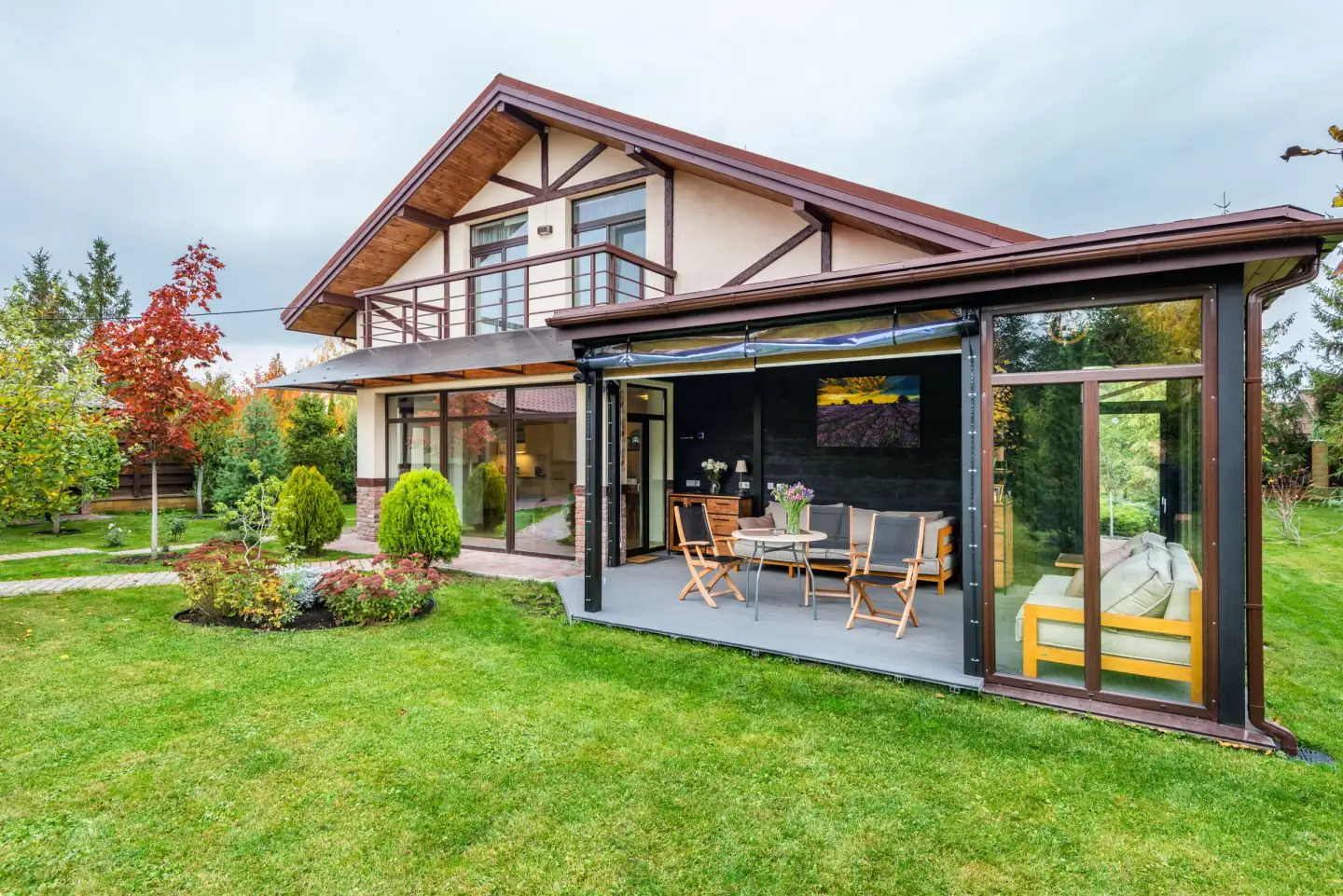
On or before October 1, 2026, every Maryland county and municipality with zoning power must have a local law on the books that authorizes accessory dwelling units on land zoned for single family detached homes. That date is five days out as of September 26, 2026. The mandate comes from Chapter 197 of 2025 (HB 1466), approved April 22, 2025, and the same chapter bars homeowners associations and deed covenants from imposing an "unreasonable limitation" on building an ADU or offering one for rent.
Read from a host's chair, the act is narrower than the headlines. Its Real Property section says an unreasonable limitation "does not include a limitation on the short-term rental of an accessory dwelling unit," and the Maryland Department of Planning's FAQ states that HB 1466 "does not alter a local government's powers to regulate short-term rentals." The unit becomes legal to build. Renting it by the night stays bannable at three layers: the recorded covenant, the county zoning code, and, from the same October 1 date, the state's own short term rental safety law. Howard County already says no; Montgomery County's code reaches the main house too.
Key facts
- Land Use 4-504(A)(1), Chapter 197 of 2025: "On or before October 1, 2026, each legislative body shall adopt a local law authorizing the development of accessory dwelling units on land zoned for single-family residential use."
- Real Property 2-126(B)(2)(II), same chapter: an unreasonable limitation by a covenant, deed, or HOA rule "does not include a limitation on the short-term rental of an accessory dwelling unit."
- Howard County, Maryland, under CB 3-2026 effective April 8, 2026: no short term rental of an ADU, and the owner must live in the principal dwelling or the ADU.
- Montgomery County, Maryland zoning code 3.3.3.I.2.a: "Short-Term Residential Rental is prohibited in a Farm Tenant Dwelling or on a site that includes an Accessory Dwelling Unit."
- The Short-Term Rental Fire Safety Act, Chapter 9 of 2026, takes effect October 1, 2026 for any unit offered for less than 30 consecutive days, ADUs included.
What the state law requires by October 1
An accessory dwelling unit, in the statute's definition at Land Use 4-501, is a secondary dwelling unit on the same lot as a primary single family detached home that is "not greater than 75% of the size of and subordinate in use to" that home. A 2,000 square foot house supports an ADU of up to 1,500 square feet under the state definition, though counties may measure differently: Howard County applies its 75 percent to the exterior footprint of the principal dwelling.
The local law has a required shape: under 4-504(C) it must exclude the ADU from density calculations and set objective conditions on massing, entrances, and square footage, and under 4-504(D) it may not require an oversized lot, new off street parking within 0.75 miles of mass transit, or approval on subjective criteria such as neighborhood compatibility. What the chapter leaves out matters as much. It never uses the phrase "by right," 4-504(A)(2) lets a local government adopt safety standards of its own, and the only place it mentions short term rental is the sentence that leaves it outside the HOA protection.
Lock one: the covenant
Real Property 2-126(B)(1) provides that a restriction on use "may not impose or act to impose an unreasonable limitation on the ability of the property owner to develop or offer for rent an accessory dwelling unit on a property zoned for single-family residential use." Subsection (B)(2) defines the term: a limitation that significantly increases the cost of an ADU or prohibits one explicitly or by effect is unreasonable, and an unreasonable limitation "does not include a limitation on the short-term rental of an accessory dwelling unit."
The asymmetry is deliberate. An association or a recorded declaration cannot stop you from building the unit or leasing it, and it can stop you from renting it by the night. The statute leaves a short term rental restriction outside its definition of unreasonable, so the ordinary law of covenants applies, the same ground covered in Deed Restrictions Can Still Ban Your Short Term Rental and surveyed in What Courts Have Actually Held About Short-Term Rentals. Under 2-126(C), none of this applies to property listed in, or eligible for, the Maryland Register of Historic Properties.
Lock two: the county
Howard County: the flat no and the residency rule
Howard County passed its compliance bill early. CB 3-2026 was signed February 6, 2026 and took effect April 8, 2026, with every ADU requiring a permit from the Department of Planning and Zoning. The county's ADU FAQ answers the short term rental question in one word, "No," and adds that the legislation "retains the requirement that prohibits ADUs from being used as short-term rentals." It also sets a residency rule, "The Property Owner must reside either within the principal dwelling or within the ADU," and renting to anyone outside the family requires a rental housing license.
Montgomery County: the rule that reaches the main house
Montgomery County's restriction is broader, and it has been in the code since ZTA 19-01 in July 2019. Two clauses in Section 3.3.3 of the county zoning ordinance work together. The ADU standards at 3.3.3.A.2.d: "An Accessory Dwelling Unit must not be located on a lot where any short-term rental Residential use exists or is licensed." The short term rental standards at 3.3.3.I.2.a: "Short-Term Residential Rental is prohibited in a Farm Tenant Dwelling or on a site that includes an Accessory Dwelling Unit."
A February 6, 2024 report from the county's Office of Legislative Oversight states the effect plainly: "The County Code allows either an ADU or a short-term rental on a single property, but not both." A homeowner who rents the main house on a short term basis under the county's primary residence rule loses that use the day an ADU is permitted on the lot.
The county's pending amendment to match the state act, ZTA 26-06, does not touch that rule: the Planning Board's May 21, 2026 staff report restates the 2019 clarification that "other rental uses (such as Airbnb) on a property that includes an ADU are prohibited," and Council action after the June 9, 2026 hearing was not confirmed for this post.
The counties still writing theirs
Anne Arundel County wrote short term rental into its ADU law directly. Local coverage of Bill 6-23, passed April 3, 2023, described it as allowing the main home or the ADU to be rented short term when the owner occupies one of them; the Montgomery OLO survey a year later read the county as allowing rental of the entire property but not either unit on its own. Read the county code rather than either summary.
Prince George's County is mid-process. The bill that came out of its ADU task force, CB 92-2026, had a committee hearing on September 14, 2026, and testimony filed for that hearing opposed the bill's "special restrictions on short term rental for ADUs" and its owner occupancy requirement.
Baltimore City is the laggard. As of February 23, 2026, Baltimore Brew reported that the administration had "notably failed to submit a bill to comply with the state's ADU mandate," while the pending zoning rewrite, Bill 25-0066, would hold R-1-A through R-4 lots to a single dwelling unit.
In every county the check is the same: read the adopted ADU ordinance and the separate short term rental ordinance together.
Lock three: the state safety law that starts the same day
October 1, 2026 is also the effective date of the Jillian and Lindsay Wiener Short-Term Rental Fire Safety Act, Chapter 9 of 2026, approved April 14, 2026. It applies to any residential unit "offered for short-term rental for less than 30 consecutive days," which brings a nightly ADU inside it whether the booking came through a platform or the host's own site. The four host duties (evacuation diagram, posted emergency numbers, fire extinguisher, working smoke and carbon monoxide alarms) are covered in Maryland Short Term Rental Safety Act: The Oct. 1 Checklist.
What happens if your county misses October 1
The chapter contains no penalty provision, no state enforcement mechanism, and no default authorization if a jurisdiction fails to act, and the state FAQ does not address the question. That is our reading of Chapter 197, not a statement from any agency. A homeowner in a late county gets nothing automatically on October 2: the permit still comes from the county, and there is no state process to apply under.
The use the law was written for
The act's purpose clause is about housing supply. The one use that clears all three locks in most of the state is a furnished rental of 30 days or more, which sits outside the Safety Act's definition, outside the HOA carve-out, and outside Howard's and Montgomery's nightly prohibitions. The trade is that a 30 day guest is a tenant: landlord and tenant law applies, the county rental license applies, and the cash flow resembles a lease rather than a calendar. That shift is the subject of The Quiet Shift to Monthly Rentals, and California hosts have lived with the same structure for years, as ADU Short Term Rental Rules: Where 31 Nights Is the Floor explains.
Cost sets the stakes. The Baltimore Banner's March 31, 2026 explainer quotes builder estimates of $150,000 to $350,000 to build one. An owner underwriting that spend against nightly rates in Howard or Montgomery County is underwriting a use the code does not allow.
What a Maryland host should do this week
- Pull the recorded covenants and HOA rules. A short term rental restriction there survives Chapter 197; a restriction on building or leasing the ADU does not.
- Pull the county's adopted ADU law and its short term rental ordinance and read both. In Howard County, assume the ADU cannot be rented nightly and that you must live on the property. In Montgomery County, assume that permitting an ADU ends any short term rental on the lot.
- If the plan was nightly income, price the 30 day furnished alternative before signing a construction contract, and budget the rental license and landlord obligations that come with it.
- If nightly rental of the ADU is allowed where you are, put the Safety Act items in place before October 1, 2026, including alarms with a production date on or after October 1, 2016.
- Keep the compliance file yourself. The Safety Act's notice and documentation duties run through booking services; a direct booking carries the same host duty with no platform prompt behind it.
What to watch next
Which counties adopt by October 1 and which miss it, with Baltimore City the one to watch. Whether any county permits nightly rental of an owner occupied ADU, which Prince George's is now debating. And whether the 2027 General Assembly session touches the carve-out in Real Property 2-126, which would be the first time the state took a position on ADUs as lodging rather than housing.
Haven builds branded direct booking sites on a host's own domain, and for a Maryland owner whose ADU ends up as a 30 day furnished rental, a site that explains the unit and takes the booking directly is the same tool it is for a nightly listing. Details at bookwithhaven.com.
FAQ
Can I rent my ADU on Airbnb in Maryland?
Only where the county allows it, and the state ADU law does not require any county to. Howard County prohibits short term rental of an ADU and requires the owner to live in the house or the unit. Montgomery County prohibits a short term rental anywhere on a site that includes an ADU.
Does Maryland's ADU law override my HOA?
Partly. Under Real Property 2-126, a covenant or HOA rule may not impose an unreasonable limitation on building an ADU or offering it for rent, and a rule that prohibits an ADU or significantly raises its cost is unreasonable by definition. The same section says an unreasonable limitation does not include a limitation on short term rental of the ADU, so an HOA nightly rental ban sits outside the statute's protection.
Is a 30 day rental of an ADU a short term rental in Maryland?
Not under the Short-Term Rental Fire Safety Act, which applies to units offered for less than 30 consecutive days. A furnished rental of 30 days or longer falls outside that act, outside the HOA carve-out in the ADU law, and outside the nightly rental prohibitions in Howard and Montgomery Counties, though it is a tenancy under landlord and tenant law and needs the county rental license.