Deed Restrictions Can Still Ban Your Short Term Rental

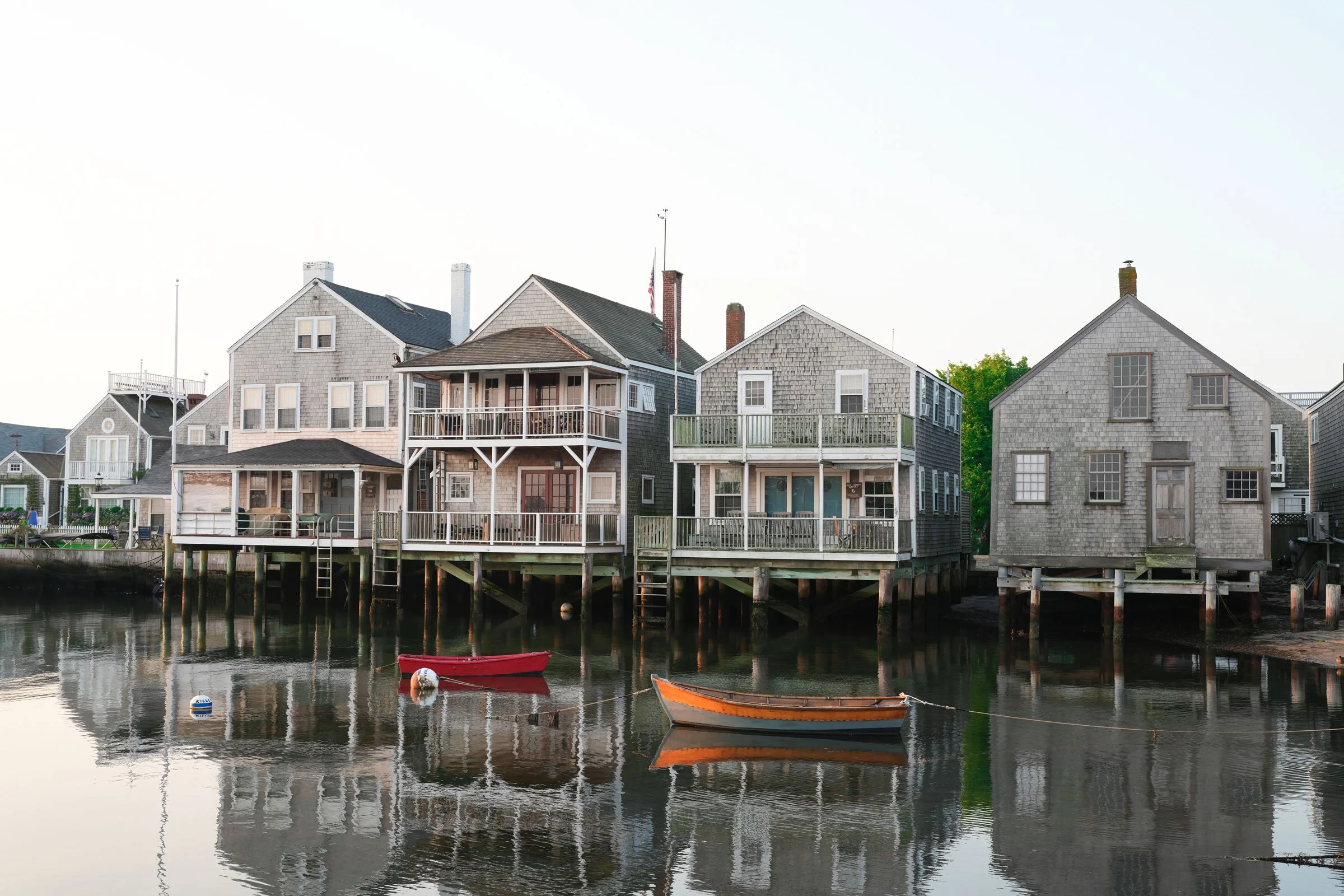
On Wednesday, September 16, 2026, Nantucket's Select Board voted unanimously to oppose a request to lift a short term rental ban on 36 lots in the Sandpiper section of the Richmond Great Point development, according to the Nantucket Current. The ban is not in the zoning code. It comes from a 2015 memorandum of agreement the developer signed with the Select Board as a condition of the project's approval.
What makes the vote worth reading outside Massachusetts is the timing. Ten months earlier, Nantucket voters made short term rentals an allowed use under zoning across almost the entire island, and the state Attorney General approved that bylaw in May 2026. So these homes are legal to rent under town zoning, and their owners still cannot rent them.
Most host guides treat rentability as a zoning and permit question. Nantucket shows the gap: a private or contractual restriction is a separate layer, and a town legalizing rentals does not erase it. Here is what happened, why, and the four layer check to run before you buy or list.
Key facts
- Nantucket's Select Board voted unanimously on September 16, 2026 to oppose lifting a short term rental ban on 36 Sandpiper lots at Richmond Great Point, per the Nantucket Current.
- The ban traces to a 2015 agreement with the Select Board that was part of the development's original approval, per the developer's statement and the investor's attorney.
- Nantucket's November 4, 2025 Special Town Meeting made short term rentals an allowed use under zoning islandwide by a vote of 1,045 to 421, and the Massachusetts Attorney General approved the bylaw, reported May 18, 2026.
- Airbnb's Terms of Service, section 5.2, make hosts responsible for complying with "contracts with third parties" that apply to a listing, including HOA and condominium rules.
- Fannie Mae's standard Second Home Rider requires the borrower to keep the property available primarily for personal use for at least one year, per the rider text.
What happened on Nantucket
The vote that legalized rentals
Nantucket spent five years fighting over whether short term rentals were legal under its zoning bylaw. Article 1 at the November 4, 2025 Special Town Meeting ended that by codifying short term rentals as an allowed use under zoning islandwide. It passed 1,045 to 421, which is 71.3% of the 1,466 votes cast (1,045 divided by 1,466), clear of the two thirds (66.7%) a zoning change needed.
A legal challenge followed, and the Attorney General rejected it, writing that "we cannot conclude that Article 1 conflicts with state law," as reported on May 18, 2026.
The agreement the vote did not touch
Richmond Great Point is the island's largest affordable housing development, though most of its units are market rate, according to the Current. The developer's statement to the paper said Richmond "continues to observe the agreements it reached with the Select Board in 2015 (which restrict STRs)" and described them as "a continuing private restriction."
The November vote did not stop the town, developers, or homeowners associations from blocking rentals on particular properties. Sachems Path and Abram's Quarry ban them outright, and they are blocked in essentially every deed restricted affordable unit on the island, per the Current.
What the investor argued and what the board said
Nantucket Property Owners, the real estate investment company that bought the 36 Sandpiper lots in 2022, sent the Select Board several letters after the Attorney General's decision. Its attorney, Johanna Schneider, wrote that "singling out these homes for prohibition of an activity that the broader community is now free to engage in is inequitable," per the Current's September 14 preview, and told the board the ban was "chilling the sale of the remaining ownership units," per its report on the vote.
The board was not persuaded. Vice chair Brooke Mohr said density bonuses "and other things were granted by the Select Board at the time in exchange for that agreement." Member Bob DeCosta said the buyers knew the terms: "It was strictly understood that there would be no short-term rentals in here." Chair Dawn Hill went further and said she had seen rentals in the development advertised online, adding, "We need to get a handle on the enforcement of this restriction."
That matters for anyone shopping in a restricted development. Neighbors listing their homes is not evidence that renting is allowed. It may only mean nobody has enforced the restriction yet.
Why a zoning vote does not cancel a private restriction
Zoning regulates land; a covenant or contract binds the owner
Zoning is public law: it sets which uses the town will allow in a district. A restrictive covenant is private, defined by Cornell's Legal Information Institute as "a provision in a real property conveyance that limits the grantee's use of the property." When zoning becomes more permissive, it removes the town's objection. It does nothing to a promise that sits in a deed, a declaration, or an agreement with the town.
The Richmond agreement is a less familiar variety: an approval condition. The developer received density bonuses and other concessions and accepted limits on use in exchange. The party holding that promise, here the Select Board, decides whether to release it.
The exact wording decides what a restriction covers
Private restrictions are not all equal, and the wording matters. In Tarr v. Timberwood Park Owners Association, decided May 25, 2018, the Texas Supreme Court held that renting a home for short stays did not violate covenants limiting lots to "residential purposes" and a "single-family residence," so long as the occupants used the home for a residential purpose, "no matter how short-lived."
The court added that another court "may reach a different conclusion" if a covenant specifically lists prohibited conduct. So a generic "residential use only" clause and one that names short term rentals can produce opposite outcomes, and the Richmond restriction, as reported, names them. Covenant law varies by state, so take the wording to a local real estate attorney. A national survey of what courts have actually held about short-term rentals shows how far the result can swing on a few words.
HOA declarations are the most common version
For most hosts, the private layer is an HOA or condominium declaration. Airbnb's own terms flag it: section 5.2 says some "homeowner and condominium association rules, restrict or prohibit subletting, short-term rentals and/or longer-term stays," and puts compliance on the host, per Airbnb's Terms of Service. State law on whether an association can add a rental ban after you buy differs sharply, so read your own state's statute alongside the declaration.
The four layer check before you buy or list
A property is rentable only if all four layers say yes. Clearing one tells you nothing about the others.
Layer 1: zoning
Confirm that short term rental is an allowed use in the property's district, and whether it is allowed by right or needs a discretionary permit. Our 2026 state by state rule map covers the states where this changed this year, and our explainer on state preemption laws in Idaho and Indiana shows how far a state can go in limiting what a town regulates. Note that preemption statutes limit local government. They do not, by themselves, void a private covenant.
Layer 2: permit and registration
Allowed in the zoning code does not mean available. Check whether the town caps licenses, runs a waitlist, or requires registration numbers on listings. Cities increasingly match listings against their registries, as our post on how cities find unlicensed rentals explains.
Layer 3: private restrictions
This is the layer Nantucket is about. Pull the title commitment and read the exceptions list, which one Texas title company describes as the place where specific items such as "restrictions, easements, mineral severances, and setback requirements" appear. Then get copies of each recorded document listed there, not just the one line summary.
Do not assume every approval condition surfaces in a title search. Ask the seller, the town's planning office, and the HOA whether any development agreement, approval condition, or affordability restriction applies to the property.
Layer 4: lender, insurer, and lease
Your mortgage can restrict use too. Fannie Mae's standard Second Home Rider requires the borrower to "maintain exclusive control over the occupancy of the Property, including short-term rentals," bars any rental pool or agreement that "requires Borrower either to rent the Property or give a management firm" control over occupancy, and requires the home to be kept "primarily as a residence for Borrower's personal use and enjoyment for at least one year." A loan written as a second home is not written for a full time rental.
Insurance is the other gate. The National Association of Insurance Commissioners says "most homeowners or dwelling insurance policies are not designed to cover accidents arising from short-term rentals," and our post on the insurance gap most hosts do not know they have covers what fills it. If you lease rather than own, your lease can say no too.
Who can lift a restriction?
The holder of the restriction decides. On Nantucket the Select Board said no to an investor holding 36 lots, even with a legalization vote and an Attorney General approval on the investor's side, and the Current expects that "adamant opposition" to deter similar requests, per its report. For a buyer, the safe planning assumption is that a restriction on the property today will still be there after you close.
What to do this week
If you are under contract or shopping, ask for the title commitment early and read every recorded restriction in full before your inspection period ends. Ask the town whether the property was part of a development approved with conditions, and ask the HOA for the current declaration and every amendment.
If you already list a property, run the same check now. A restriction you never read still applies, and Nantucket's chair has already said enforcement at Richmond is coming.
If the answer on any layer is unclear, pay for an hour with a local real estate attorney before you pay for furniture. Once all four layers are clear, the property can earn through every channel, including your own. Hosts who want a branded booking site on their own domain, with no booking commission, can see how Haven works.
FAQ
If my town legalized short term rentals, can a deed restriction still stop me from renting on Airbnb?
Yes. Zoning and private restrictions are separate layers, and making rentals legal under zoning removes only the town's objection. On September 16, 2026, Nantucket kept a short term rental ban on 36 lots even though voters legalized rentals islandwide in November 2025. Airbnb's terms also make hosts responsible for complying with third party contracts.
How do I check whether a house I am buying can be a short term rental?
Check four layers: zoning, permit availability, private restrictions, and your lender and insurer. For private restrictions, read the title commitment's exceptions and the full text of each recorded document, then ask the town and HOA about any development agreements or approval conditions. A local real estate attorney can confirm how your state reads the wording.
Does a "residential use only" covenant ban Airbnb?
It depends on the wording and the state. In 2018 the Texas Supreme Court held that short stays did not violate covenants requiring "residential purposes" and a "single-family residence," but said a covenant that specifically lists prohibited conduct could produce a different result. A clause that names short term rentals or sets a minimum lease term leaves far less room for that argument.
Can a mortgage restrict short term rentals?
Yes. Fannie Mae's standard Second Home Rider requires the borrower to keep exclusive control over occupancy, avoid rental pools or management agreements that control occupancy, and keep the home primarily for personal use for at least one year. Check your loan documents before listing a property financed as a second home.