Maryland Short Term Rental Safety Act: The Oct. 1 Checklist

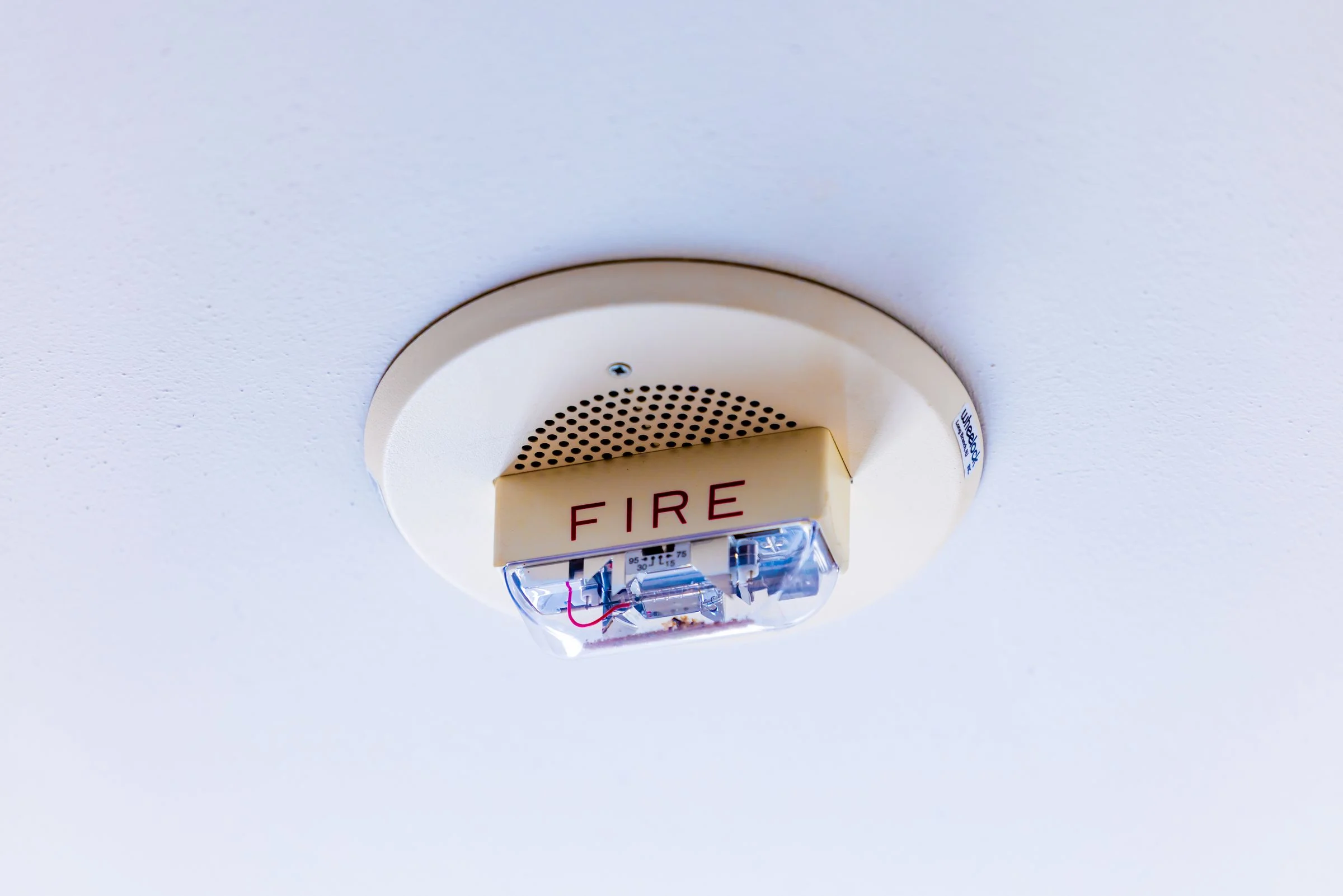
Maryland's Jillian and Lindsay Wiener Short-Term Rental Fire Safety Act takes effect on October 1, 2026, 19 days from the date of this post. It applies statewide, in every county and in Baltimore City, to any residential unit offered for short term rental for less than 30 consecutive days. It is named for Jillian and Lindsay Wiener, sisters from Montgomery County who died in a fire at a rented vacation home in August 2022.
The summaries circulating since spring describe a different law from the one that passed. The claim repeated most often is that Airbnb, Vrbo and other booking platforms must begin conducting annual fire inspections of Maryland listings on October 1. They do not. Under the enrolled chapter text, booking services notify hosts and collect paperwork, counties and Baltimore City run the inspections, and no county has to have an inspection rule in place until July 1, 2028.
That difference changes what you do this month. The trade summary tells you an inspector is coming and there is nothing to do yet. The statute gives you four things that must be in the unit on October 1, one of which sends most hosts up a stepladder with a flashlight.
Key facts
- Signed as Chapter 9 on April 14, 2026 after passing the House 111 to 16 and the Senate 44 to 0, it takes effect October 1, 2026.
- It creates a new Subtitle 11 of the Public Safety Article and reaches only units offered for less than 30 consecutive days.
- Hosts owe four duties on day one: a posted evacuation diagram, posted emergency telephone numbers, a working fire extinguisher, and working smoke and carbon monoxide alarms.
- Alarms must be replaced if they stop functioning, are more than 10 years old by the production date on the back of the device, or carry no production date at all.
- Counties and Baltimore City have until July 1, 2028 to require annual inspections by local law or regulation, which is 639 days after the law takes effect.
What the law requires inside the unit on October 1
Section 9-1103(a) is short and specific. A host shall conspicuously post an evacuation diagram identifying all exits from the unit and, where applicable, the exits from the building it sits in; conspicuously post a list of emergency telephone numbers for law enforcement and fire rescue services; provide a working fire extinguisher; and provide working smoke alarms and carbon monoxide alarms.
The alarm rule most hosts will fail
The statute requires replacing any smoke or carbon monoxide alarm that stops functioning, that is more than 10 years old based on the production date marked on the back of the device, or that has no production date on the back.
Do the arithmetic before you buy anything. On October 1, 2026, more than 10 years old means a production date earlier than October 1, 2016. An alarm stamped 2015 or earlier fails outright. One stamped 2016 needs the month checked. One with a blank back fails no matter how new it looks.
The date is printed on the back plate, so checking it means taking each alarm off its bracket and turning it over. This is a physical test, not a paperwork one.
The interconnection rule nobody is printing
There is a second alarm requirement the published summaries skip. Alarms must be installed and maintained in accordance with state, county and municipal fire codes. Where multiple smoke alarms are required in the unit, each must be interconnected so that activation of one activates all of them, or must comply with an alternative authorized by the State Fire Marshal in consultation with the State Fire Prevention Commission. The alarm must be clearly audible in every sleeping room and sleeping area, over background noise, with the doors closed.
Interconnection is the expensive line for anyone with an older house and a set of unconnected battery alarms. Whether hardwired or wireless devices satisfy it is a code question for your jurisdiction, because the statute routes installation back to local fire code. With three weeks left, that call goes to your county fire marshal's office now, not on September 30.
No, Airbnb and Vrbo are not inspecting your Maryland listing
Section 9-1104 gives a booking service exactly two duties: electronically notify all short term rental hosts that use the service of the fire safety requirements, and require each host to provide confirmation documentation for each unit the host owns.
Compare that to the published summaries. JMORE, on April 15, 2026, reported that the law requires "rental companies such as Airbnb and Vrbo to conduct annual fire inspections while operating in Baltimore City and every Maryland county." Avalara's August 11, 2026 explainer, the most complete piece published on the law, says it "requires STR marketplaces such as Airbnb and Vrbo to verify that their Maryland listings comply with safety requirements," and that rentals "are required to be inspected every year" from October 1, 2026. Neither matches the chapter text: notifying is not inspecting, and collecting a document is not verifying.
Governor Moore's signing release of April 14, 2026 gets it right: by July 1, 2028, each county where short term rentals are allowed, plus Baltimore City, must require the annual inspection by local law or regulation. The error sits in the secondhand summaries, not in the state's own account of its law.
The paperwork gate that has nothing to collect yet
Read 9-1104 alongside 9-1105 and the sequencing problem appears. The confirmation documentation a booking service must collect is defined as the documentation provided to the host under 9-1105, and 9-1105(d) says that when the person conducting the inspection finds a unit compliant with 9-1103, that person shall provide the host a certificate, receipt, or other documentation of compliance.
The document the platform must collect is therefore a county inspection certificate, and counties have until July 1, 2028 to require those inspections. Our reading of Chapter 9 is that where no inspection program runs today, no such certificate exists to hand over on October 1, 2026. The notification duty is live immediately. The documentation duty waits on a regime that need not exist for another 21 months.
Chapter 9 also carries no penalty of its own, which is our reading of the chapter end to end rather than a claim that noncompliance is free: exposure runs through local code and the platform document request, so the practical 2026 risk is a listing that cannot produce paperwork.
The inspection arrives in 2028, and your county writes it
Each jurisdiction writes its own inspection rule and may set a fee to cover the cost, then reports to the State Fire Marshal by July 1, 2028 on what it adopted and how many units it inspected and found compliant. The Fire Marshal reports to the General Assembly by October 1, 2028.
Where a jurisdiction already inspects, this is a frequency change rather than a new burden. Ocean City requires a rental license plus an added short term rental fee, $196.00 and $50.00 for a combined $246.00, and inspects rental properties on a five year rotation scheduled between 2025 and 2029. That combined fee sits near the median first-year charge in our compliance-cost audit. Annual inspection is five times that frequency, so expect both the rotation and the fee to be revisited before July 1, 2028. Budget for it in the 2028 cycle, not this year.
Why this lands differently on direct booking hosts
The two duties sit on different parties. The booking service duty in 9-1104 reaches hosts who use a booking service. The host duty in 9-1103 attaches to the unit and to the person in legal possession of it, whatever the channel.
A Maryland host taking reservations on their own site owes the identical duty, with no platform email explaining it and nobody holding the file. The compliance record becomes yours to build and keep.
The platforms hold little anyway. Airbnb asks hosts to select "Carbon monoxide alarm installed" and "Smoke alarm installed" in the listing editor, and says hosts should state whether the devices are present and keep them working. Vrbo prompts owners to indicate whether the property has an alarm, and treats extinguishers and posted emergency information as recommendations. Neither verifies the declaration. A checkbox ticked in 2021 is not compliance documentation on any channel.
Hosts who already keep their own guest records and compliance file start ahead, the same argument running through what a direct booking site needs to accept its first reservation and the insurance gap most short term rental hosts do not know they have. Haven builds branded direct booking sites at bookwithhaven.com, where the guest relationship and the guest data stay with the host. So does the compliance file, which cuts both ways.
What to do before October 1
- Take down every smoke and carbon monoxide alarm, photograph the back of each with the production date visible, and replace anything undated, dated before October 2016, or failing a test button press.
- Call your county fire marshal's office about interconnection and placement before you buy, especially if the unit's smoke alarms are not connected to each other.
- Buy a fire extinguisher, mount it near an exit and away from the range, and keep the receipt.
- Draw and print the exit diagram, including building exits for a condo or apartment.
- Print the emergency numbers for local law enforcement and fire rescue, post both documents conspicuously, and add them to your digital guidebook and pre-arrival message.
- File the photos, receipts and diagram in one dated folder. That is your evidence on any channel.
What to watch next
Watch your county's rulemaking between now and July 1, 2028, since frequency, fee and inspector are decided locally. Watch whether other states copy the design: a law that binds the host directly, uses the platform as a notification channel, and hands inspection to counties on a two year runway travels well. Our 2026 state by state rule map tracks the pattern, and the enforcement side shows up in how cities find unlicensed short term rentals.
Do not merge this law with Maryland's separate marketplace lodging tax change, which Avalara reports takes effect July 1, 2027 for marketplaces with at least $100,000 in annual sales or 200 booking transactions.
FAQ
What does Maryland's new short term rental safety law require, and when does it take effect?
The Jillian and Lindsay Wiener Short-Term Rental Fire Safety Act takes effect October 1, 2026 for units offered for less than 30 consecutive days. Hosts must conspicuously post an evacuation diagram identifying all exits and a list of emergency numbers for law enforcement and fire rescue, and provide a working fire extinguisher and working smoke and carbon monoxide alarms. Alarms over 10 years old by the production date on the back, or carrying no production date, must be replaced.
Do Airbnb and Vrbo have to inspect Maryland short term rentals starting October 1, 2026?
No. The statute requires a booking service to electronically notify its Maryland hosts of the fire safety requirements and to require each host to provide confirmation documentation. The annual inspection obligation falls on counties and Baltimore City, which have until July 1, 2028 to adopt it by local law or regulation.
If I rent my Maryland property through my own website instead of Airbnb, do the rules still apply?
Yes. The four host duties attach to the unit and to the person in legal possession of it, not to the sales channel. What changes is that no platform notifies you and none holds your paperwork.
What is the penalty for not complying?
Chapter 9 contains no penalty provision of its own, which is our reading of the chapter text rather than a statement that noncompliance carries no consequence. Enforcement runs through local code, through whatever your county adopts before July 1, 2028, and through the documentation your booking service must require.