Airbnb's Reasonable Requests Policy: The End of Checkout Chores

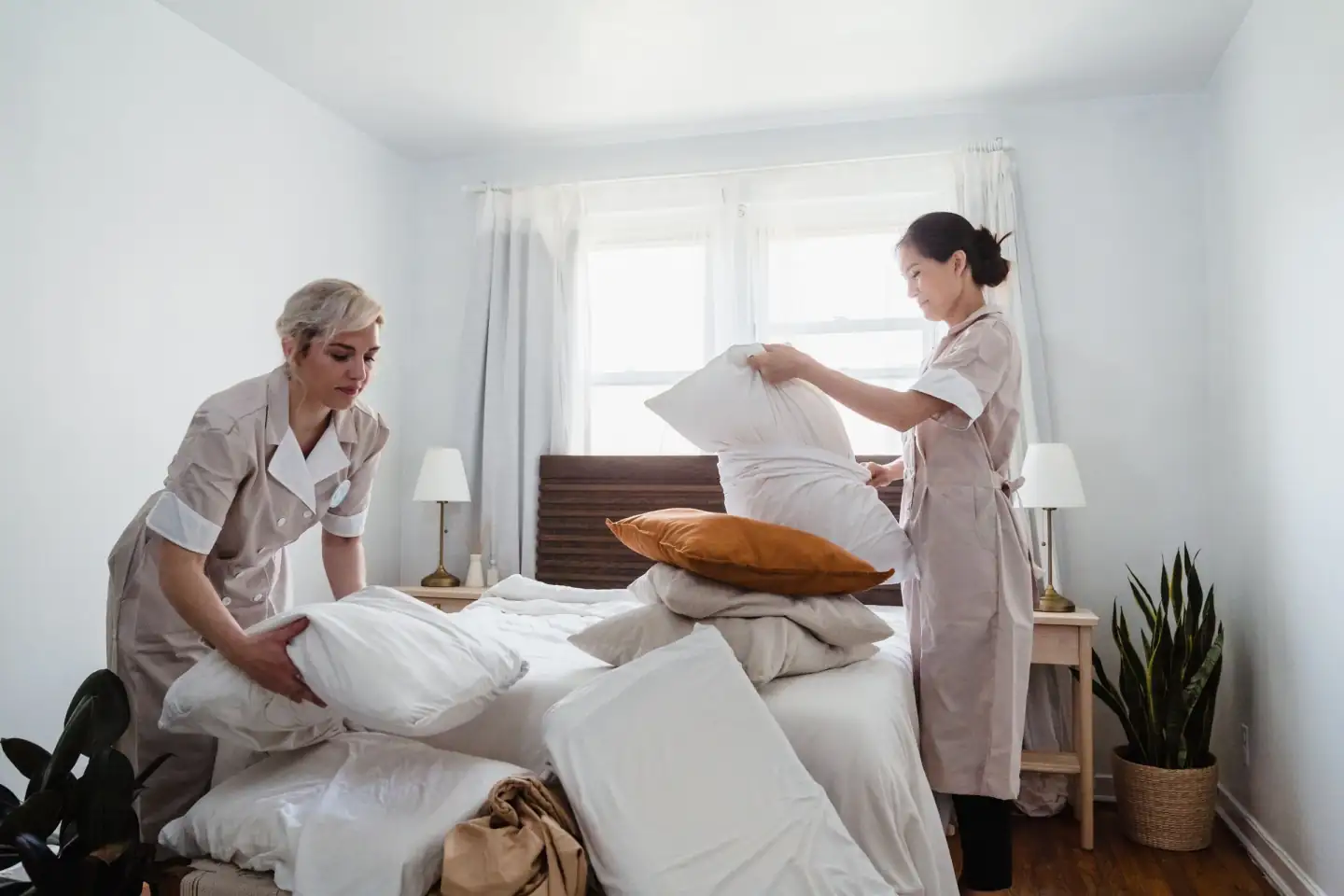
Airbnb hosts have a month to rewrite their checkout lists. On October 20, 2026, Airbnb moved house rules into a single section of the Listing editor and published a new house rules policy that applies to every reservation booked on or after November 20, 2026 (Airbnb Resource Center). Under it, hosts are generally not allowed to ask guests to wash and put away dishes, strip the beds, start the laundry or take the trash off-site. They can still ask for used dishes in the sink, used towels gathered up, trash sorted into indoor bins and the air conditioning switched off on the way out.
The chore list is the visible part. The larger story, in our read, is how quickly Airbnb is taking ownership of what a stay on its platform feels like, and what that leaves for hosts to own. What follows covers what the policy says, how it is enforced, what it costs, and what it means for hosts building a direct channel alongside Airbnb.
Key facts
- Airbnb announced the change on October 20, 2026, by email to hosts and in its Resource Center; the policy applies to reservations booked on or after November 20, 2026 (Airbnb Resource Center; Rental Scale-Up).
- Hosts are generally not allowed to ask guests to complete tasks that "require significant effort or time, or would typically be performed by a cleaner," including stripping the bed, taking trash offsite, or washing and putting away dishes (Airbnb Help Center).
- Airbnb's allowed alternatives: put used dishes in the sink, gather used towels, separate trash and recycling into designated indoor bins, and turn off the air conditioning when leaving (Airbnb Resource Center).
- Hosts add requests under Requests, in the House rules and requests section of the Listing editor, beside seven standard rules; checkout instructions no longer have a separate tab (Airbnb Resource Center; Airbnb Help Center).
- Rules and requests must be on the listing at the time of booking. Hosts may not add new ones afterward by message, on signs in the home or in person (Airbnb Help Center).
- A request that breaks the policy is highlighted in the Listing editor, followed by an email and a chance to appeal. If it stays unresolved, guests may see an alert such as "includes cleaning requests," and persistent violations can reduce the listing's visibility in search (Airbnb Resource Center; Airbnb Help Center).
- Cleaning fees "are only meant to cover the cost of standard cleaning between reservations," and hosts may not charge guests for skipped checkout tasks, though they may rate and review guests on cleanliness (Airbnb Help Center).
- A companion policy for the same bookings limits host contracts to a few cases and bars hosts, with limited exceptions, from soliciting a guest's phone number, home address or email during booking or the stay (Airbnb Help Center).
What hosts can still ask
Airbnb illustrates the policy with four pairs of examples (Airbnb Resource Center):
| Area | Guests shouldn't be asked to | Hosts can ask guests to |
|---|---|---|
| Dishes | Wash and put away dishes | Put used dishes in the sink |
| Laundry | Remove sheets from the bed or start a load of laundry | Gather used towels |
| Trash | Take garbage off-site | Separate trash and recycling into designated indoor bins |
| Utilities | Avoid using a listed amenity like air conditioning | Turn it off when they leave |
The examples illustrate a general test rather than a complete list. The policy rules out tasks that take "significant effort or time" or that a cleaner would typically perform, and it adds two prohibitions that have nothing to do with cleaning: hosts may not restrict access to anything advertised as part of the listing, and they may not impose fines or penalties on guests (Airbnb Help Center). Fees for an advertised feature belong in the price shown at booking. Optional add-ons, such as a breakfast service, can still be described in requests along with their price.
Context can move the line. Airbnb says it weighs the type of listing or stay and relevant local conditions, and gives two requests that may be reasonable for those reasons: an animal-proof trash container in bear country, and shorter showers under drought restrictions (Airbnb Help Center). Where a homeowners association or local government can fine for breaking a rule, the host can describe the rule and the fine as a local rule under Requests (Airbnb Help Center).
Some familiar requests fall between Airbnb's examples. Its list does not mention dishwashers, so whether "load and start the dishwasher" survives will be settled by the editor's flags and by appeals, not by anything Airbnb has published.
Requests also carry less weight than rules. Guests "must follow" house rules and are "encouraged to comply" with requests (Airbnb Help Center), and the right to cancel without fees applies when a guest breaks a house rule (Airbnb Resource Center). A request is, in the plain sense of the word, a request.
From guidance to enforcement
None of this is new thinking at Airbnb. In November 2022, alongside total price display, Airbnb told hosts that checkout requests "should be reasonable and displayed to guests before they book," named stripping the beds, doing the laundry and vacuuming as unreasonable, and called turning off the lights, throwing food in the trash and locking the doors fair asks (Airbnb Newsroom). Brian Chesky was blunter on Twitter, telling guests he had heard that "checkout tasks are a pain" (FOX 11). Airbnb's ground rules for guests bar hosts from charging for skipped checkout tasks (Airbnb Help Center).
California wrote a version of the rule into law. AB 2202, operative July 1, 2025, requires short-term rental hosts who charge a fee for skipped cleaning tasks, or impose a nonfinancial penalty such as "designating or threatening to designate the consumer as a less favorable guest," to disclose it in every advertisement or listing for the property (Avalara). Our guide to California short-term rental laws covers it alongside the state's other listing rules.
What changed in 2026 is enforcement. Guidance has become policy, with consequences that reach the guest: a flag in the editor, an alert on the listing and, for persistent violations, reduced visibility in search (Airbnb Help Center). Some operators welcome it. "Guests pay a cleaning fee and then get a list of chores. That never felt like hospitality," Casiola founder and CEO Dennis Goedheid wrote on LinkedIn (Rental Scale-Up).
Why Airbnb is doing it: our read
Airbnb's stated reason is clarity. House rules "can be confusing, onerous and hard to manage," the company told Euronews, so it redesigned them "alongside a new policy that keeps requests reasonable, with no surprises" (Euronews). The companion contracts policy is more direct about whose experience is being protected: "Guests want to know that when they use Airbnb, they won't encounter unexpected requests that negatively impact their experience or compromise their privacy" (Airbnb Help Center).
What follows is Haven's interpretation, not something Airbnb has said. We read the policy as Airbnb standardizing the stay itself. The implied promise to guests is that no Airbnb will hand them a chore list on the way out; at minimum, that the stay will feel consistent from one listing to the next, the way rooms do across a hotel brand. Consistency is what lets a marketplace of independently run homes be sold as one product.
The pace stands out. Checkout requests went from guidance in 2022 to an enforced policy in 2026, and the policy arrives alongside limits on host contracts and guest information, temporary phone numbers that relay calls between hosts and guests on some US and Canadian reservations (our explainer), and services Airbnb now sells into the stay itself, from laundry pickup to grocery and meal delivery in select cities (Airbnb Newsroom). Each moves part of the stay from the host's discretion into Airbnb's product.
Hosts carry the cost of that consistency: the labor guests used to do, and the rewrites the policy requires. Our read is that Airbnb accepts this friction, and probably some host attrition, as the price of a guest product it can promise. Guests are the demand the marketplace sells, and on a platform of Airbnb's size, a host who leaves over a dishwashing rule is easier to replace than a guest's confidence in the brand. That is an inference from how the policy is built, not a motive Airbnb has stated.
What the policy costs hosts
For hosts whose guests already left without chores, very little changes. For hosts whose turnover depended on guests doing part of it, the cost shows up in three places.
Cleaner time. Stripping beds, starting laundry, washing dishes and hauling trash move back to the turnover crew. As an illustration only: if those tasks add 30 minutes to a turnover and the cleaner costs $30 an hour, that is $15 a turnover, or $1,500 a year across 100 turnovers. Substitute your cleaner's actual time and rate. Rural listings without curbside pickup face a separate problem, because guests can no longer be asked to take garbage off-site, and the run to the dump becomes the host's. Hostomat founder Basit Ali framed the deadline on LinkedIn: hosts have "30 days to fix either the checkout list or the fee" (Rental Scale-Up).
The cleaning fee. Recovering that cost through the cleaning fee is the obvious move, and it costs more than it looks. Most Airbnb hosts now pay a 15.5% host-only service fee on the booking subtotal, cleaning fee included, so netting an extra $15 means raising the cleaning fee by $17.75 ($15 ÷ 0.845). Guests notice as well: Airbnb said in 2022 that its search ranking would prioritize total price, fees included, over the nightly rate (Airbnb Newsroom).
Rewrites and review risk. Every listing's requests need a pass before November 20 bookings start arriving, and so does everything around them. The policy bars new rules or requests delivered after booking, by message, on signs in the home or in person (Airbnb Help Center), so a laminated checkout card or a scheduled checkout message from a property management system has to match what the listing says. Reviews cut both ways. Hosts keep the right to rate a guest on cleanliness, but Airbnb's own guidance warns that asking guests to do things a cleaner should handle "can negatively affect their stay and your reviews" (Airbnb Resource Center), and an unresolved flag can put "includes cleaning requests" on the listing for every guest to see.
What it means for direct booking
A guest booking on Airbnb after November 20 is buying a predictable product: rules published before booking, no chore list, and a platform to call if something goes wrong. A guest booking on a host's own website gives most of that up, and the site has to make up the difference before the guest pays.
That raises the bar for direct sites, because Airbnb's standard becomes the baseline guests carry with them. Once guests learn that an Airbnb host cannot ask them to strip the beds, a direct site that asks for it compares badly with Airbnb, whatever it saves them in fees. A direct listing is no escape from disclosure rules either: in California, AB 2202 reaches every advertisement for the property.
What earns that trust looks something like Casa Querencia, a beachfront estate in Punta Mita, Mexico, that takes bookings through its own site. Read on October 21, 2026, the site names the house and explains the name, then answers a cautious guest's questions before they are asked, with separate pages for the guest suites, floor plans, cuisine, staff, rates, activities, location, reviews and an FAQ. Seasonal rates are published, from $7,500 a night in low season to $15,000 a night over the Christmas and New Year weeks, followed by "Please contact us to book" (Casa Querencia). The staff page describes a concierge, driver, butler and chef; the FAQ covers the drive from Puerto Vallarta's airport, security in the gated community and the nearest hospital (Casa Querencia). The home page closes with named contacts in Mexico and the United States, phone numbers included.
Few hosts run an estate with a butler, and the price point is not the lesson. Completeness is. A guest who finds the house outside a marketplace sees real people, published prices, a layout they can picture and testimonials signed by named guests, which is most of what builds trust on a new direct booking website. That presentation is hard to build, and it costs money and time: photography, copy, reviews gathered over years, a payment setup, and someone answering inquiries. The market numbers reflect the difficulty. In Key Data's panel of professionally managed US rentals, direct bookings fell to 23% of first-quarter 2026 reservations from 26% a year earlier, while Airbnb's share rose to 50% (Haven Research).
Time and money on both sides
The comparison is closer than either camp tends to admit. Staying on Airbnb costs most hosts 15.5% of every booking subtotal; on a $1,000 stay, the host is paid $845 (Airbnb guest service fee explainer). It also costs time, and that bill keeps rising. Within roughly a year, hosts have absorbed the move to host-only fees, temporary phone numbers on some reservations, an April terms update that tightened damage claims, and now a rewrite of house rules, contracts and guest-data practices before November 20. Each change is defensible on its own. Together they amount to a standing compliance job.
A direct channel costs money and time as well, most of it up front. Our read is that for many hosts the two roughly cancel out once both are counted honestly. There is no single figure for it; it depends on the portfolio, the market and how much of the direct work a host does personally. What does not cancel out is who keeps the guest.
Guest data decides it
On Airbnb, the guest relationship belongs to Airbnb, and the November 20 policies make that more explicit. With limited exceptions, hosts may not solicit a guest's phone number, home address or email at any point during the booking process or stay, may not run a Wi-Fi login that asks for an email address unless the listing is a hotel or resort, and may not ask guests to review the stay or fill out a survey on another website (Airbnb Help Center). On reservations with a temporary phone number, even the phone line closes two days after checkout. The guest leaves; the host keeps a review.
A direct booking works the other way. The guest gives a name, email address and phone number to the host at checkout, under the host's own privacy policy, and the record does not expire with the stay. That record is what makes a repeat booking possible without paying a platform for the same guest twice, and it sits at the center of the case for moving guests off Airbnb and booking direct. Marketing to it still requires whatever consent the law demands. If the money and the hours come out roughly even, the guest list is what decides it.
What to do before November 20
- Rewrite your Airbnb requests. For each listing, open the Listing editor, then House rules and requests, then Requests (Airbnb Help Center). Typical rewrites:
- "Wash, dry and put away all dishes" becomes "Please leave used dishes in the sink."
- "Strip the beds and start a load of towels" becomes "Please gather used towels in the bathroom."
- "Take the trash to the bins at the end of the drive" becomes "Please sort trash and recycling into the bins under the sink."
- "Don't run the AC while you're out" becomes "Please turn off the air conditioning when you leave."
- "$50 fee if the kitchen isn't cleaned" is deleted. Fines and charges for skipped tasks are not allowed.
- Set the new standard rules. Maximum overnight guests and lock up at checkout are new options, and the lockup rule takes optional details on where to return keys.
- Match everything else to the listing. Checkout signs, guidebooks and scheduled messages can remind guests of listed requests but cannot introduce new ones.
- State the reason for any exception. If bears, drought or an association rule justify a request outside Airbnb's examples, say so in the request, and appeal if the editor flags it.
- Budget the cleaner's time. Ask your cleaner what the added work takes per turnover, then decide whether to absorb it or raise the cleaning fee, dividing the increase by 0.845 to net it after Airbnb's fee.
- Check contracts and ID requests. For bookings from November 20, a separate rental agreement is allowed only when required by law or association rules, for optional amenities, for stays of 28 nights or more, or for Luxe listings. ID can be checked in person at check-in if Requests says so, but not copied, absent an exception (Airbnb Help Center).
- Keep your direct guests' details. On your own site, collect email and phone at checkout with clear consent, store them in a system you control, and use them to bring past guests back.
FAQ
When does Airbnb's reasonable requests policy start?
It applies to reservations booked on or after November 20, 2026. Bookings made before then keep the house rules that were on the listing when the guest booked (Airbnb Help Center; Rental Scale-Up).
Can Airbnb hosts still ask guests to load the dishwasher?
Airbnb has not said. Its examples rule out asking guests to wash and put away dishes and allow asking them to put used dishes in the sink. Requests in between will be judged by the Listing editor's flags and by appeal.
Can hosts charge guests for skipping checkout tasks?
No. Airbnb's ground rules say cleaning fees cover standard cleaning between reservations and that hosts may not charge guests for failing to perform specific cleaning or checkout tasks. Guests are still expected not to leave the home needing excessive or deep cleaning, and hosts may rate and review them on cleanliness (Airbnb Help Center).
What happens if a request breaks the policy?
The Listing editor highlights it with a tip for fixing it, and Airbnb sends an email with a chance to appeal. If the issue stays unresolved, guests may see an alert such as "includes cleaning requests" on the listing, and persistent violations can reduce the listing's visibility in search (Airbnb Resource Center; Airbnb Help Center).
Are requests enforceable like house rules?
Not in the same way. Guests must follow house rules and are encouraged to follow requests. A host can cancel without fees when a guest breaks a house rule, and can contact Airbnb when a guest ignores a request (Airbnb Resource Center).