Florida STR Preemption: When Your Building Is a Hotel

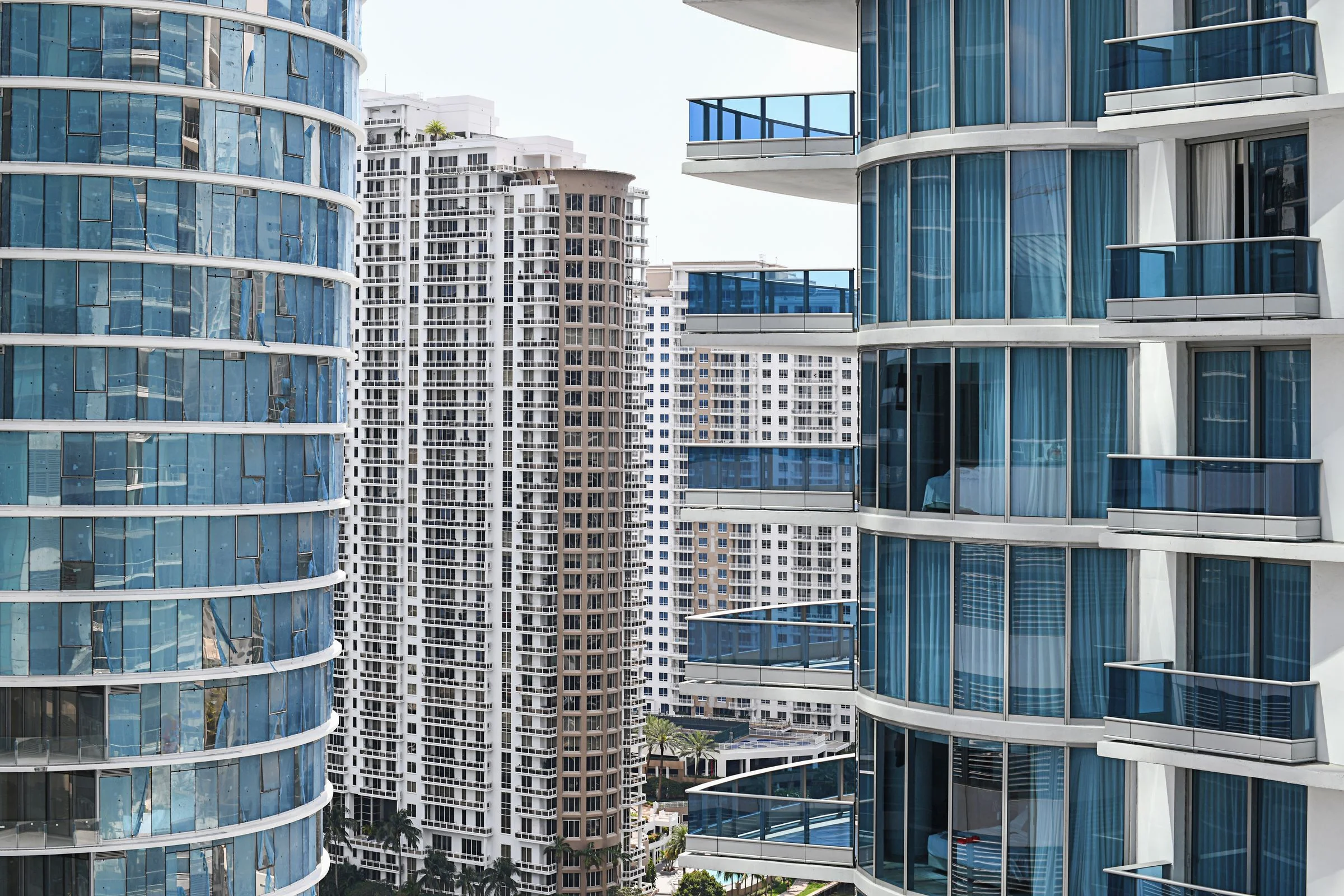
On August 11, 2026, the City of Miami ordered the condominium association at the Club at Brickell Bay, a 43 story tower with 643 units, to stop rentals of fewer than 30 days. The city said more than 300 units were operating as vacation rentals against 30 approved for lodging use, and that inspectors had been denied entry, according to CBS Miami. The association denies operating a lodging or hotel establishment, disputes the count, and asked for a 90 day grace period.
Florida is a preemption state. Fla. Stat. 509.032(7)(b) says a local law, ordinance, or regulation "may not prohibit vacation rentals or regulate the duration or frequency of rental of vacation rentals." A host reading that sentence would reasonably conclude that no Florida city can order a stop to stays under 30 days. Miami did it anyway, and not because it ignored the statute.
The statute carries two exceptions, and neither is about listings. Read alongside Florida's definition of a lodging establishment, they explain why the enforcement unit in Brickell is a building rather than any individual rental, and why a fully licensed host can sit inside the radius of an order they did not cause. That mechanism travels to every preemption state with a building code.
Key facts
- The City of Miami's cease and desist order to the Club at Brickell Bay association is dated August 11, 2026 and gave 30 days to halt rentals of fewer than 30 days, a compliance date of September 10, 2026.
- The building has 43 floors and 643 units, and 88 percent were short term rentals as of August 14, 2026, roughly 566 units.
- The city counted more than 300 units operating as vacation rentals against 30 units approved for lodging use, about ten times the approved number. The association disputes the count.
- Fla. Stat. 509.032(7)(b) bars local prohibition of vacation rentals and local regulation of duration or frequency, but that bar does not reach any local rule "adopted on or before June 1, 2011."
- Fla. Stat. 509.032(7)(a) preempts lodging regulation to the state while expressly preserving local authority to inspect for Florida Building Code and Florida Fire Prevention Code compliance.
What Florida preemption actually says
Section 509.032(7)(a) preempts the regulation of public lodging establishments to the state, then carves out an exception in the same paragraph: preemption does not reach "local government authority to conduct inspections for compliance with the Florida Building Code and the Florida Fire Prevention Code, pursuant to ss. 553.80 and 633.206."
Paragraph (7)(b) is the sentence hosts quote. The sentence after it is the one they skip. The restriction on prohibiting vacation rentals and regulating duration or frequency "does not apply to any local law, ordinance, or regulation adopted on or before June 1, 2011."
That grandfather date is the most important number in Florida short term rental law. A city with rules on the books before June 1, 2011 kept them and may still enforce them, duration rules included. A city that did not cannot adopt them now, so two neighboring Florida cities can hold opposite answers to the same question on the strength of a calendar date from fifteen years ago.
The clause is narrower than it looks once a city amends its code. In AGO 2019-07, issued August 16, 2019, the Florida Attorney General concluded that provisions "essentially unchanged from the prior ordinances" keep their exemption, while new provisions regulating duration and frequency are preempted even when less restrictive than what they replaced. A grandfathered city can keep what it had. It cannot tighten.
Our explainer on state preemption of short-term rental rules covers how Idaho and Indiana handle the same problem. Florida's grandfather window is why its enforcement looks so uneven from one city to the next.
Why the enforcement unit is the building and not the listing
Read the definitions in order and the letter stops being surprising. Section 509.013(4)(a) defines a transient public lodging establishment as "any unit, group of units, dwelling, building, or group of buildings within a single complex of buildings which is rented to guests more than three times in a calendar year for periods of less than 30 days or 1 calendar month, whichever is less, or which is advertised or held out to the public as a place regularly rented to guests."
Look at the nouns. A unit qualifies, and so does a building, and so does a group of buildings in a single complex. Nothing requires a regulator to pick the smallest one.
Section 509.242 then sorts licenses by classification. A vacation rental is a unit or group of units in a condominium, or a one to four family dwelling, that is also a transient public lodging establishment and not a timeshare project. A hotel is "any public lodging establishment containing sleeping room accommodations for 25 or more guests and providing the services generally provided by a hotel."
Both classifications fit the same tower, and that is the mechanism. At 643 units and two guests per unit, the building sleeps about 1,286 people, roughly 51 times the 25 guest hotel threshold. NBC 6 South Florida reported on August 14, 2026 that the city's letter framed the building as operating as a hotel in violation of Florida law, and that units had been altered to hold 10 or more people.
Characterize 300 units as 300 vacation rentals and preemption is squarely in play. Characterize them as one unlicensed hotel and the question becomes whether an establishment of that class is licensed and code compliant at the structure, which is the terrain the state left with local inspectors. Section 509.241 requires each public lodging establishment to obtain a state license and receive it "prior to the commencement of operation." A building that meets the hotel definition and holds no hotel license is not a preemption fight. It is an unlicensed establishment.
The city has not published its full legal theory, and the association's denial is a live factual dispute. The architecture above makes the city's position available. It does not prove the city wins.
What this means for hosts
Three consequences travel past Brickell.
Your own compliance does not fully protect you. When the enforcement unit is the structure, a host holding a state license, a local certificate of use, and a clean tax record can still sit inside a building under a stop order. Nothing in the Miami action turns on which owners were compliant, because the order went to the association.
The rational response from a board is stricter than anything the city could impose directly. A Florida city cannot ban vacation rentals in a building. A condominium association can. Local 10 reported that the city threatened revocation of certificates and tax receipts along with possible legal action, and a board facing that has every incentive to remove the exposure. The plausible end state is an association wide rental ban, a private restriction no preemption statute reaches, which is the same line courts draw between municipal rules and HOA covenants.
Channel independence does not answer a code order. Enforcement that runs through platforms, like the Clark County platform booking ban, is the kind a direct channel genuinely blunts, because a booking engine you control sits outside the pipe a city squeezes. A code order attaches to the structure and does not ask which channel sold the night.
What to do about it
Five checks, ordered by what you can finish this week.
Find your city's adoption date. Ask the clerk or planning department when the current short term rental provisions were adopted and whether the city claims the June 1, 2011 exemption. That public record decides whether a duration rule pointed at you is enforceable or void.
Separate the three approvals. A state license under section 509.241, a local certificate of use or business tax receipt, and permission under your condominium declaration are independent. Losing any one stops the business.
Confirm your unit's approved use in writing. The Miami dispute turns on 30 approved units in a building where the city counted more than 300 operating. If your building carries a legacy approval covering only some units, get the record rather than trusting what a seller or a board said.
Do not exceed your approved occupancy. The allegation that units were altered to hold 10 or more people is what moved this from a nuisance complaint to a code case, and occupancy and egress are exactly what a code inspection measures.
Let inspectors in. Denial of access was reported here, and it turns a compliance question into an adversarial one. Our post on how cities find unlicensed short-term rentals covers how a city builds its list, but once it is at the door, refusal is the worst answer.
What to watch next
The order's 30 day compliance date fell on September 10, 2026, and a 90 day grace period measured from August 11 would run to about November 9, 2026. As of August 21, 2026, listings in the building were still advertised and the city had not ruled on the grace period request.
Two questions decide whether this becomes a template. The first is whether the hotel characterization holds up, which is a factual contest about how the building is operated rather than a legal question about preemption. The second is whether other Florida cities copy the structure of the action rather than its subject. A city that cannot ban your rental can still ask whether your building is a licensed lodging establishment that passes a fire inspection.
Any host who lands under a 30 day floor, by city order or association vote, is in the territory our 30-day minimum stay analysis covers. Work out the monthly rate that replaces your nightly gross before you need it, because the conversion is usually survivable and the surprise is what costs money.
Building a direct channel changes who owns the guest relationship and the economics of each reservation, which is the problem Haven is built to solve. It does not change what a code inspector may ask. Those are two separate files, and in a preemption state the compliance file is the one a city opens first.
FAQ
Can a Florida city ban short term rentals?
Generally no. Fla. Stat. 509.032(7)(b) bars a local law, ordinance, or regulation from prohibiting vacation rentals or regulating the duration or frequency of rental. The exception is large: it does not apply to any local rule adopted on or before June 1, 2011, so a city with a pre-2011 ordinance may still enforce it.
Can a city inspect my short term rental in a preemption state?
Yes, in Florida. Section 509.032(7)(a) preempts lodging regulation to the state but expressly preserves local authority to inspect for Florida Building Code and Florida Fire Prevention Code compliance under sections 553.80 and 633.206. Code and life safety inspection is the lever Florida left with cities.
When does a short term rental become a hotel under Florida law?
Section 509.242 defines a hotel as a public lodging establishment with sleeping room accommodations for 25 or more guests that provides the services generally provided by a hotel. Because section 509.013(4)(a) defines a transient public lodging establishment to include a building or group of buildings in a single complex, a residential tower operating largely as short term rentals can be assessed at the building level rather than unit by unit.
Am I at risk if my unit is compliant but my building is targeted?
Possibly. The City of Miami's August 11, 2026 order went to the condominium association rather than to individual hosts, and the consequences the city threatened, as reported by Local 10, included revocation of certificates and tax receipts. A compliant host in a targeted building can face a stop order they did not cause, and the board may respond with a rental ban that preemption does not prevent. A direct booking channel does not answer a code order either, since the order attaches to the structure regardless of how the stay was sold.