Dallas Short Term Rental Ban: The Dec. 3 Supreme Court Test

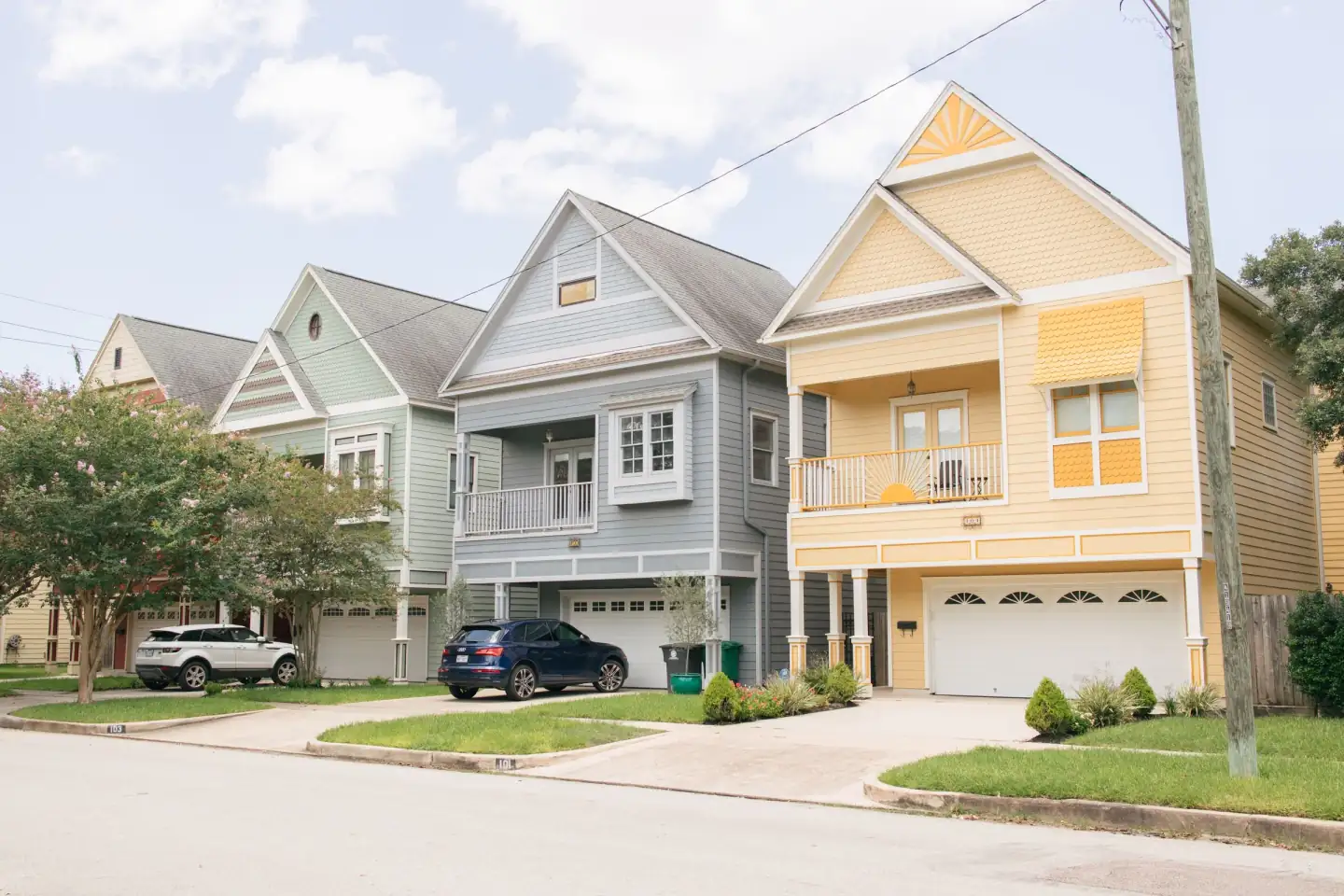
On October 23, 2026, the Supreme Court of Texas granted the City of Dallas's petition for review in City of Dallas v. Dallas Short-Term Rental Alliance, No. 25-0748, and set oral argument for 9:00 a.m. on December 3, 2026, with 20 minutes a side. The case decides whether Dallas can enforce two ordinances it adopted on June 14, 2023: one that bans short term rentals in single family residential zoning, and one that registers and regulates the rentals left over.
Neither ordinance has ever been enforced. A Dallas County district judge enjoined both on December 6, 2023, eight days before the city's own six month enforcement delay would have run out, and the Fifth Court of Appeals kept that injunction in place in July 2025. Dallas filed its petition on October 16, 2025 and told the court it needed the rules in force before the 2026 World Cup; the tournament has come and gone with the injunction intact.
For a Dallas host, nothing changes on December 3 and the ordinances stay enjoined until the court rules. The case matters statewide because the owners have been winning on a legal theory that most rental bans elsewhere have survived, and a ruling either way reaches every Texas city that has copied Dallas's occupancy formula or its zoning approach.
Key facts
- The Supreme Court of Texas granted review on October 23, 2026 in No. 25-0748 and set argument for 9:00 a.m. on December 3, 2026, 20 minutes per side.
- The Dallas City Council adopted both ordinances on June 14, 2023: a zoning amendment (Ordinance 32482) and a registration ordinance (Ordinance 32473).
- The 95th District Court of Dallas County issued a temporary injunction on December 6, 2023 in Cause No. DC-23-16845, and the city says it is not enforcing either ordinance while it stands.
- The Fifth Court of Appeals affirmed the injunction on July 18, 2025 as to the Alliance and three owners, and reversed it only as to one cleaning business owner.
- The registration ordinance sets maximum occupancy at three people per bedroom with a total of 12, a $404 annual registration fee, a two night minimum stay, and a one hour emergency response rule.
What the grant does and does not do
A grant of review means the court will hear the case. It is not a ruling, and it does not touch the injunction. The STR Association of San Antonio put it correctly on October 26: the appeal "concerns a temporary injunction," and the ordinances "have not been permanently struck down."
One correction to the most widely read coverage. Fox 4's October 27 report calls the order a temporary restraining order and dates the appeals ruling to February 2025. It is a temporary injunction, which lasts until trial, and the Fifth Court withdrew its February 7, 2025 opinion after the city sought en banc review and replaced it with the July 18, 2025 opinion on rehearing the Supreme Court will now review.
What Dallas passed on June 14, 2023
The city's planning page says the council created "a new lodging use called 'Short-term rental lodging'" and approved a registration ordinance the same day. The Fifth Court summarized the effect: Ordinance 32482 "banned short-term rentals in areas zoned for 'single-family residential' use while ordinance 32473 regulated the remaining short-term rentals."
The registration ordinance, Ordinance 32473, created Chapter 42B of the city code. Its terms are specific enough to price:
- A short term rental is a unit "rented to occupants for fewer than 30 consecutive days or one month, whichever is less, per rental period."
- The annual registration fee is $404, with a $234 reinspection fee, and each violation carries a fine of up to $500 with each day a separate offense.
- "Maximum occupancy for a short-term rental is three people per bedroom with a total occupancy of 12."
- The minimum stay is two nights, guest vehicles are capped at the off-street parking available, and a local responsible party must arrive within one hour of an emergency call.
- In a multifamily building of more than 20 units, short term rentals are capped at 3 percent of units in a multifamily zoning district and 20 percent in a nonresidential district. A building of 20 units or fewer gets zero.
The density math is the part most hosts miss. In a 100 unit building in a multifamily district, 3 percent of 100 is three permitted rentals. In a 34 unit building it is 1.02, so one. Below 21 units the number is zero, so a condo in a small building has no path to registration at all.
What the injunction stops, and for whom
The Fifth Court's opinion describes the trial court order as "enjoining the City of Dallas from enforcing two ordinances concerning short-term rentals within the city limits." It affirmed that order for the Alliance and for owners Sammy Aflalo, Vera Elkins and Denise Lowry, and reversed it for Danielle Lindsey, who "runs a business that provides cleaning, maintenance, and other such support services to rental properties." She does not lease property, so she could not show a vested right to lease; the protected right is the owner's right to rent the house.
Why the owners keep winning, and why it is not a takings case
Most rental bans survive in court because owners sue on a takings theory, which asks for compensation for property the government took, and courts rarely find that a use restriction takes anything. On August 19, 2026 a federal judge in Minnesota dismissed takings claims against 30 day minimum stay rules in Bloomington and Apple Valley on exactly that ground.
The Dallas owners did not sue on takings. They sued under the due course of law clause, Article I, Section 19 of the Texas Constitution, which says no citizen "shall be deprived of life, liberty, property, privileges or immunities, or in any manner disfranchised, except by the due course of law of the land." A due course claim does not ask for money; it asks whether the government may impose the rule at all. The Fifth Court noted the owners "did not make a regulatory-taking claim and their petition does not seek monetary damages."
The claim rests on the right to lease being a vested property right. The court quoted the 2021 Fort Worth decision in City of Grapevine v. Muns: "The right to lease is a stick within a property owner's metaphorical bundle of rights." That was enough to show a probable right to relief against the zoning ordinance.
The occupancy finding: no evidence behind three per bedroom
For the registration ordinance the court asked whether the rules were "so unreasonably burdensome" as to be "oppressive in relation to the underlying governmental interest," and decided the question on occupancy. The city pointed to an interrogatory response and a task force appendix; the court said they showed only "that the Task Force discussed limits on occupancy," and concluded the ordinance "is likely unconstitutionally oppressive in light of the alleged but presently unsupported governmental interest in limiting the maximum occupancy of short-term rentals." Three per bedroom is a common formula in Texas ordinances, and this opinion says a city that writes it down has to be able to show evidence for it.
HB 2127 was irrelevant
Dallas argued its ordinances were not preempted by HB 2127, the 2023 state law that bars local regulation in fields the state occupies. The court declined to go there: "Assuming arguendo that House Bill 2127 does not preempt the City's ordinances, the constitutionality thereof is irrelevant to our review of the trial court's order." Hosts following the Corpus Christi notice of claim under HB 2127 should keep the tracks separate: that is a statutory preemption fight, this is a constitutional one.
What each side will argue on December 3
Owners' counsel David Coale told Fox 4 the zoning ordinance leaves "Ninety-plus percent of the short-term rentals in Dallas banned outright" and read the grant as a signal "that the Supreme court is interested in this topic statewide."
The standard of review is the live question. The Texas Public Policy Foundation said on October 9, 2026 it filed an amicus brief in a Texas Supreme Court case over short term rental restrictions, asking the court to hold "that restrictions on the use of property are subject to at least rational basis review, regardless of when they were adopted," and that courts "may consider evidence rather than simply accepting a government's claims as fact." The release does not name the case, but its timing and subject match this one, and if the court adopts that framing the Fifth Court's demand for evidence behind three per bedroom becomes the rule statewide.
What this means for a Dallas host now
Both ordinances remain enjoined, and the $404 registration, the occupancy cap and the two night minimum are not being applied. The city's code compliance FAQ says the injunction prohibits "enforcement of the two short-term rental ordinances" while the city keeps enforcing "minimum property standards, disturbing noises, and private nuisances." The order was granted to the Alliance and the named owners; a host who is not a member should read the city's pause the cautious way, as a choice that can change the day a ruling lands.
Hotel occupancy tax is a different matter. The state rate is 6 percent of the cost of a room, due by the 20th of the month after the activity, and Texas cities add their own local tax on top; Haven's Texas guide covers the local rates. The city built an entire appellate issue on its claim that "at least 40% of existing short-term rental properties in Dallas have not registered or paid their hotel occupancy taxes"; the court held unpaid tax by some operators does not defeat an injunction for others, but it did not call the tax optional. A host who is behind on tax has handed the city its best argument.
Bookings that run past early 2027 deserve one line in the rental agreement. If the court reverses, the city can enforce the zoning ban, and a stay in a single family district could become unlawful on the city's timetable. A cancellation clause tied to a change in law protects both sides and costs nothing to add today.
What a ruling would do beyond Dallas
If the Supreme Court affirms, every Texas ordinance that bans rentals by zoning district or caps occupancy by formula inherits the same burden: show the evidence. The Fifth Circuit's decision in Bodin v. New Orleans, which upheld a one per block cap, was a federal takings and Section 230 case and says nothing about Texas due course. If the court reverses, the due course route narrows or closes, the injunction lifts, and Dallas enforces, leaving owners with HB 2127 preemption and the takings theory that lost in Minnesota. A private covenant is a separate question from either theory, surveyed in what courts have actually held about short-term rentals.
What to watch
The argument is December 3, 2026 at 9:00 a.m., 27 days after this post's date, and the briefs sit on the court's docket under No. 25-0748. A ruling has no deadline; Fox 4 reports one is likely in early 2027. The trial in Cause No. DC-23-16845 is still ahead either way.
A zoning ban does not care which channel sold the night. What a direct channel gives a host is the guest's contact information and the ability to reach every upcoming guest the day a ruling lands, which is the kind of control Haven's direct booking sites are built around.
FAQ
Are short term rentals legal in Dallas in 2026?
As of November 6, 2026, the two Dallas ordinances that would ban short term rentals in single family zoning and register the rest are under a temporary injunction issued December 6, 2023, and the city says it is not enforcing them. Rentals continue to operate, subject to the city's nuisance rules and to hotel occupancy tax.
When will the Texas Supreme Court rule on the Dallas short term rental ban?
The court hears argument at 9:00 a.m. on December 3, 2026 and sets no deadline for a decision. Local coverage expects a ruling in early 2027, and nothing changes for hosts on the argument date itself.
What is the difference between a takings claim and a due course of law claim?
A takings claim says the government took private property and must pay for it; courts rarely find a use restriction rises to that level. A due course of law claim under Article I, Section 19 of the Texas Constitution says the government may not impose the rule at all unless it meets a constitutional standard. The Dallas owners sued on due course and asked for no money.