What the World Cup Is Revealing About Short-Term Rental Supply Constraints

The 2026 FIFA World Cup, which runs from June 11 through July 19 across sixteen host cities in the United States, Canada, and Mexico, is shaping up to be the largest short-term rental demand event in the industry's history. It is also, unintentionally, the most instructive stress test the industry has ever had for measuring how badly regulation constrains supply when demand actually spikes. For more on how the STR landscape is moving on policy and market structure, see our Industry Insights collection.
The results vary sharply by market — and not for reasons that have much to do with a host's pricing strategy.
The Demand Picture Is Genuinely Extraordinary
The scale of the booking surge is not hype. According to Key Data's booking pacing dashboard, nights sold in host cities during the tournament dates are running 298% ahead of the equivalent period last year across all sixteen markets. That spike was triggered almost instantaneously: when FIFA released the official match schedule on December 5, 2025, bookings across host cities jumped an average of 29% in the single week that followed, with thirteen of sixteen markets showing positive year-over-year growth almost immediately.
Airbnb searches in host cities are up 80% year-over-year, and nightly rates in some markets have crossed $6,000 for premium listings near stadiums, according to reporting by Fortune and Bloomberg. A Deloitte economic analysis commissioned by Airbnb projects $212 million in total host earnings on the platform alone across the tournament period, alongside a 90% surge in average nightly rates relative to typical summer travel. Total short-term rental spending across U.S. host cities is projected to reach $865 million.
These are not marginal movements. The World Cup is producing demand compression of a kind that reveals what the short-term rental market looks like when supply cannot expand quickly enough to meet a known, months-in-advance surge.
The Response Isn't Uniform — and Regulation Is a Primary Reason
Despite the aggregate numbers, not every host city is experiencing the same kind of demand surge, and the divergence maps almost cleanly onto the regulatory environment each market has built over the past five years. Platform- and city-level policy changes are part of that backdrop—Airbnb Policy Changes in 2024–2025: What Hosts Need to Know covers how OTA rules have been shifting in parallel with local STR ordinances.
AirDNA's World Cup tracking data shows Kansas City running 377% ahead of year-ago demand for tournament dates — the highest of any U.S. host city, and a function of both the match lineup and a relatively permissive STR environment that has allowed supply to develop. The New Jersey market surrounding MetLife Stadium, which will host the final, is showing 296% occupancy growth for specific match windows. Boston is up 102% in average daily rates during peak booking weeks.
By contrast, markets with aggressive principal-residence restrictions, tight licensing caps, and expensive compliance pathways are seeing less upside — not because demand isn't there, but because legal supply isn't there to absorb it.
Philadelphia's Shrinking Supply
Philadelphia's situation is the starkest example. The city is hosting six matches and expects roughly 149,000 visitors across the tournament, according to analysis by Proper Insurance and StaySTRA. As of this spring, the city has 426 active short-term rental licenses — a number that has fallen from approximately 650 active licenses in 2024. Legal STR supply in Philadelphia has contracted by roughly 34% over two years, right into the largest inbound tourism event the city has ever hosted.
The arithmetic is unfavorable. Deloitte's baseline projection puts the average Philadelphia host earnings at approximately $1,900 for the full tournament period, around $160 per night. Given that 149,000 visitors are competing for fewer than 450 licensed rentals, that estimate may be conservative. But it also illustrates the ceiling that regulation creates: a host who is not already licensed cannot easily enter the market to capture that demand, and the licensing pathway — requiring a zoning permit before an STR application, stacked city and state taxes totaling 15.5%, and specific zoning eligibility — is not something that can be navigated in a few weeks.
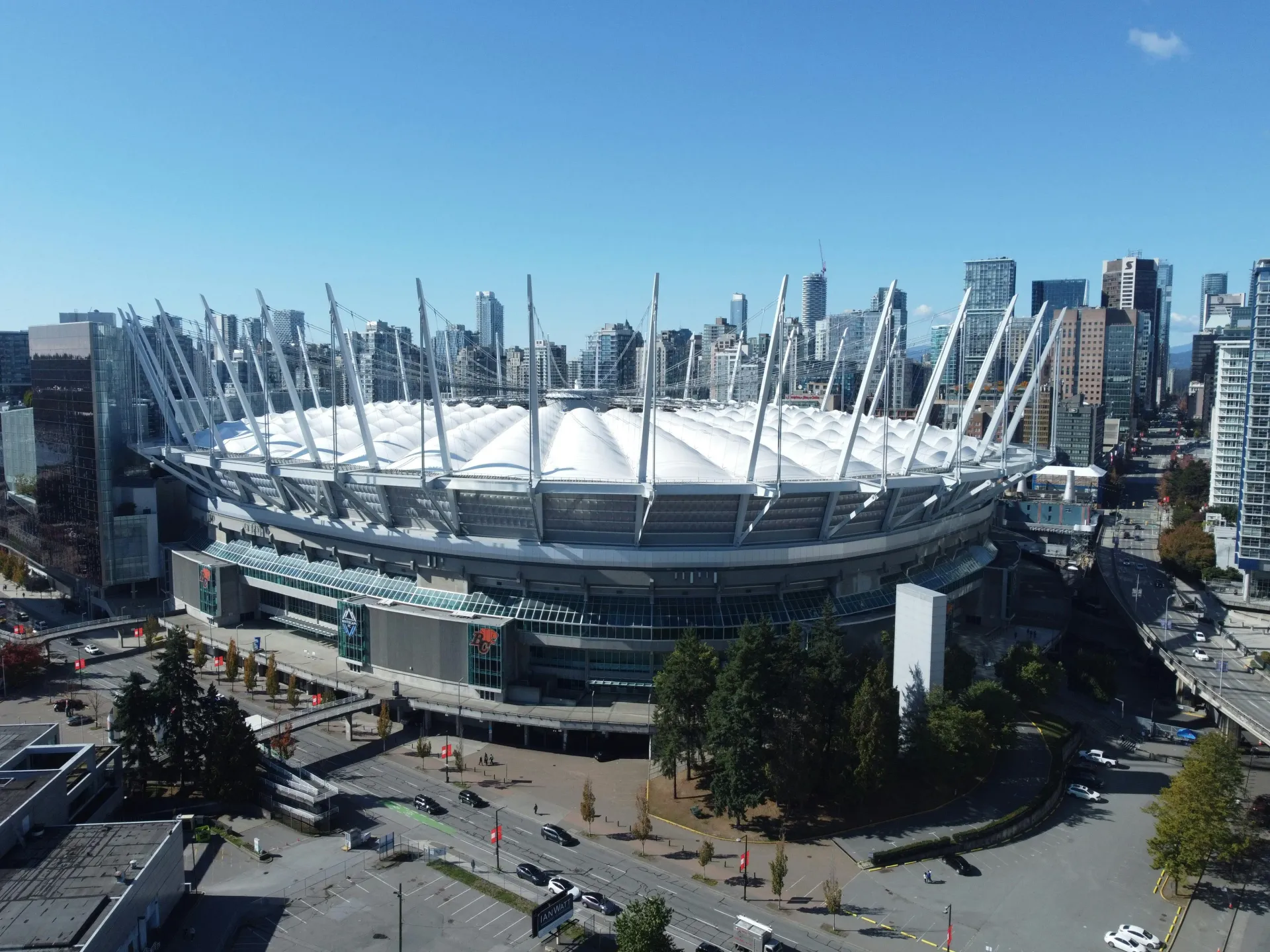
Vancouver's 70,000-Night Shortfall
The most direct collision between STR regulation and World Cup demand is in Vancouver, where British Columbia's 2023 Short-Term Rental Accommodations Act — among the strictest frameworks in North America — limits most hosts to renting only their principal residence, not secondary suites or laneway homes. The city also requires a business license on top of provincial registration, with fees reaching $1,108 per year.
Airbnb Canada publicly called on Vancouver to ease STR restrictions ahead of the tournament, arguing that the principal-residence rule would prevent the city from accommodating the expected surge. The company projected a 70,000-night shortfall at peak demand points, with as many as 15,000 fans without accommodation on the highest-demand days. B.C. Premier David Eby declined to make any exception, stating that the province's approach to housing affordability cannot be suspended for individual events, regardless of their size: "What we can't do is displace people who work and deliver services in Vancouver to support those activities."
The position has its own internal logic. But the practical outcome is that Vancouver — a World Cup host city — is facing a documented lodging gap that will push visitors toward hotels at premium prices, toward illegal unregistered rentals, or toward other cities entirely.
What the Pattern Reveals
The World Cup is making visible something that STR market analysts have discussed in the abstract for years: heavily regulated markets don't just change who operates — they reduce the capacity of the market to respond to genuine demand. The same long-horizon forces show up in other structural shifts, including how the mid-term rental boom is reallocating U.S. lodging demand — in every case, local rules determine how much of that demand the formal STR market can absorb.
This matters beyond the tournament itself. The same dynamic plays out at smaller scale whenever a market sees a demand spike — a major conference, a natural disaster displacing local residents, a sports championship. Markets where legal STR supply has been systematically compressed cannot absorb those spikes through the formal rental market. That demand goes somewhere — it inflates hotel prices, it drives unlicensed activity, or it simply doesn't materialize as local economic activity at all.
For the markets that can absorb the surge — Kansas City, the Dallas–Fort Worth corridor, the Boston suburbs — the World Cup is functioning as intended: as a demand event that creates substantial, distributed income for individual property owners who spent years building their operations. AirROI's city-by-city host earnings analysis puts Kansas City and several Texas markets among the top revenue opportunities of the full tournament. These are markets where the regulatory environment has allowed supply to develop proportionally to demand.
What Independent Hosts Should Watch
The World Cup is a useful frame for thinking about a question every STR host faces on a longer time horizon: does the regulatory environment in my market allow legal supply to track demand, or is it structurally capping it?
Hosts already operating in licensed constrained markets — Philadelphia, Vancouver, New York, San Francisco — are in an unusual position. The regulatory barriers that make their markets difficult to enter are also barriers for any new competitor. Licensed supply in these cities has real scarcity value during peak events. That value should be reflected in pricing decisions for the summer, and hosts in those markets who haven't stress-tested their dynamic pricing against event calendars are probably leaving money on the table.
For hosts in markets where supply has expanded to meet demand, the calculation runs differently: volume is available, but competition will be real, and the hosts who win on World Cup weekends will be the ones with the most professional listings and clearest positioning on what their property offers relative to the alternatives.
The deeper structural lesson cuts across both: when a city's regulatory posture systematically constrains how many licensed properties can exist, it is making a deliberate choice about who benefits from demand peaks — and increasingly, it is a choice with measurable consequences. The 2026 World Cup is providing the most transparent data the industry has ever had on what those consequences look like at scale.
The tournament runs through July 19. The booking windows are closing fast in the markets that have supply to offer. In the markets that don't, this summer's shortfall will become a data point in a much longer policy argument.