Women Can Do Construction. Most of Us Are Just Smart Enough Not To.
I’ve always said, after spending years working in the trades in my early twenties, that it isn’t that women can’t do construction. I’ve met plenty of fabulous women in the trades. It’s that most women are smart enough not to.
Construction is hard. It’s hot, dirty, freezing, physically demanding work. Things are heavy. Everything seems to have sharp edges. You’re either sweating, covered in dust, soaking wet, frozen, or somehow experiencing several of those conditions simultaneously. I learned that pretty thoroughly in my early twenties when I somehow made my way onto a pipeline crew in New England.
The company was owned by an Italian man named Tony, who remains, to this day, one of the best excavator operators I have ever seen. Watching him operate a machine was almost like watching an artist work. He could make an excavator do things I didn’t know an excavator could do. Tony was also adamant that bumbetta were not supposed to be in construction.
I was the bumbetta.
I had originally met the crew while working as a subcontractor operating a tree spade, and by then I was dating the superintendent. Eventually, they needed a dump truck driver. I had my CDL, the guys talked Tony into letting me do it, and reluctantly, he agreed. I don’t think Tony had any particular interest in pioneering gender equality in construction. He needed someone who could drive the truck, and apparently everyone convinced him I wasn’t completely useless.
So I got my shot.
I can drive truck. I can operate the loader and the shovel. I can run equipment, learn quickly, keep up with what is happening around me and make myself useful. But I also started doing the other things I naturally do. I organized the job box, a 20’ shipping container jammed full of materials and tools. I kept track of what we were running low on. Our jobsite was too far out to conveniently run for coffee and donuts in the morning for our coffee break, so I started showing up with a thermos of coffee and something freshly baked every day. Coffee cake, muffins, whatever I had made that morning.
Nobody assigned me that job. I just saw something that would make the day better and did it. I took pride in having coffee ready when break time started and in knowing the things people needed were stocked and organized before they went looking for them.
That’s something I learned very young about jobsites: your value isn’t necessarily determined by whether you can lift the heaviest pipe.
Eventually winter came. If you’ve never worked construction through a New England winter, I don’t especially recommend adding it to your bucket list. I was actually looking forward to getting laid off. Construction slows down, crews get cut, and I figured I would get a nice little winter break to spend time with my family back in sunny Southern California.
Tony apparently had other ideas.
Guys with families got laid off, and I stayed. The same man who didn’t think women belonged in construction had apparently decided that this particular bumbetta was worth keeping. So that winter I learned to work through snow, sleet, freezing rain and the kind of cold that makes you question every life decision that led you to standing in a trench in a snowstorm in New England.
It was one of the best compliments I could have received. I had proven my worth, and I hadn’t done it by trying to out-man the men. I showed up. I could drive the truck. I could operate the equipment. I did my job. I paid attention. I stayed busy. If there wasn’t an immediate task to accomplish, I cleaned. If we needed materials, I would call ten places if that was what it took to get the best price. I found ways to make myself useful rather than waiting for somebody to hand me the next assignment.
More than twenty years later, apparently I still haven’t learned to stay off construction sites. At 46, despite having built an entirely different career, I still occasionally moonlight doing general labor, final cleanup, organization, material runs or whatever else needs to happen when somebody I know calls and says they need another set of hands.
This time, though, I volunteered.
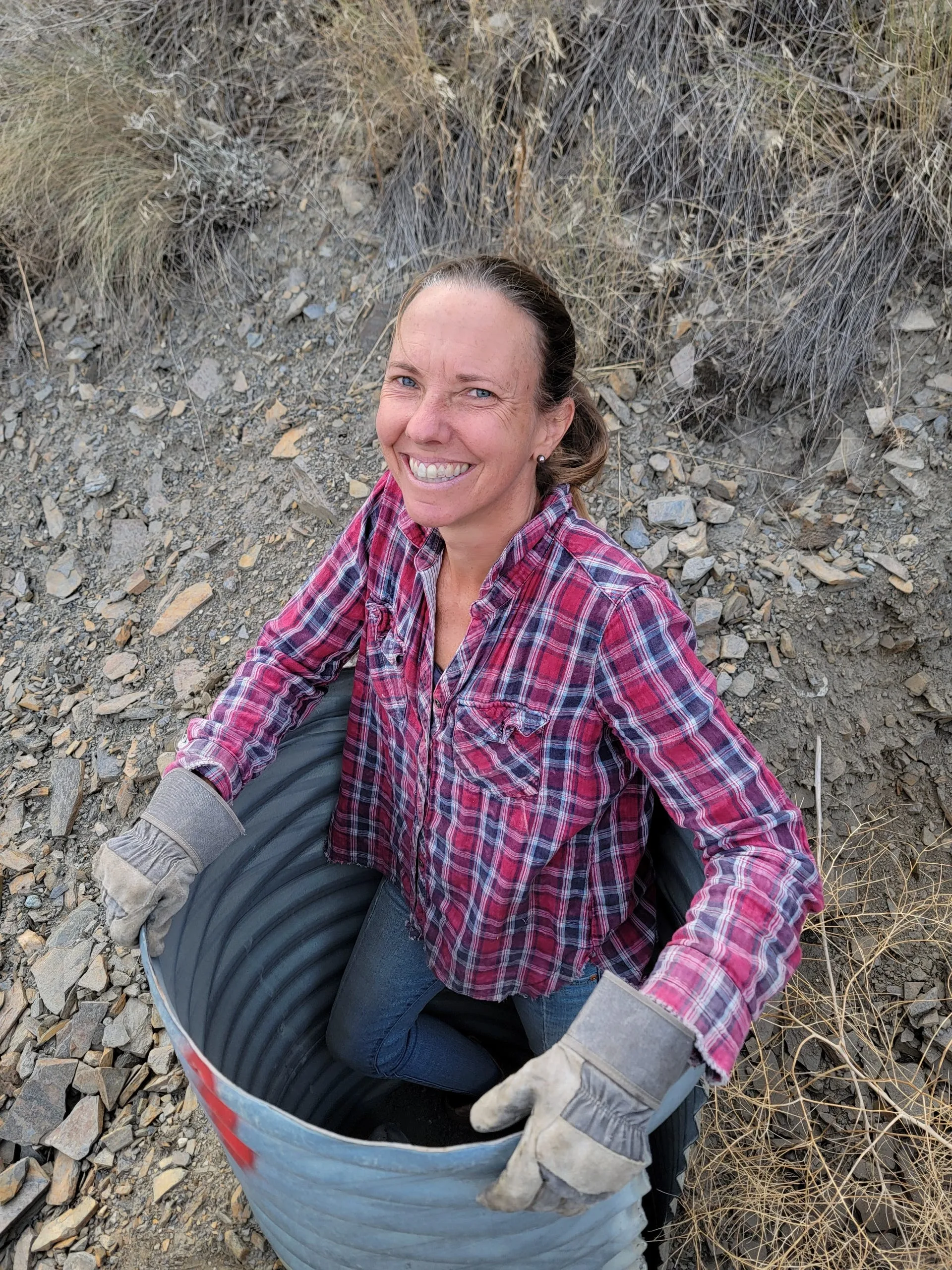
I’ve worked my way onto my friend Topher’s crew here in Missouri because I want to learn earthbag construction from the inside out. I have plans for underground and natural structures on my own property, and I don’t want to understand them only from drawings, books, videos or a weekend workshop. I want to understand the intricacies of how these buildings actually go together.
At this point in my career, I also don’t have it in me to pay thousands of dollars to attend a construction course where I get to delicately place a few bags for the educational experience. Put me to work. I’ll learn that way.
On my first day, the Missouri heat nearly took me out. I overheated enough that I knew it was time to stop, get cold water on the back of my neck, cool myself down and get my body under control before my body made that decision for me. I knew better, and I know I’ll acclimate, but it was also a pretty immediate reminder that there are physical realities involved in this kind of work.
I heard that Topher doesn’t particularly want women doing this kind of hard physical labor, and frankly, I agree with him.
That doesn’t offend me. I can’t do the brawn required for some of the work onsite, and I don’t feel any need to pretend I can. Moving heavy earth by sheer strength is simply not in my repertoire. There are men on the crew who can lift, shovel, carry and move things with a physical power I do not possess. I am great at lighter, detailed work. I can operate equipment. I can organize. I can problem solve. I can keep moving. But there is a level of brute physical strength required for certain tasks that my body simply does not have.
I don’t see acknowledging that difference as diminishing women. I think pretending those differences don’t exist diminishes what women actually do bring to a situation.
One of the things I’ve noticed over decades of being around construction is that when I’m on a crew, I naturally tend to end up in the role of brain over brawn. There is enormous value in that because a functioning jobsite isn’t just a collection of people lifting heavy things. Somebody has to notice what is about to run out before it runs out. Somebody needs to know where the tools wandered off to. Somebody needs to make the material run, organize the work area, keep supplies stocked, clean up yesterday’s disaster, remember the twelve things everybody else forgot and anticipate the problem that is going to stop production two hours from now if nobody handles it.
I stay busy. If there isn’t a task immediately in front of me, I find one. I clean. I organize. I straighten things out so the next person isn’t searching for something they need. If we need materials, I’ll call ten suppliers and find out who has them, who can get them there fastest and who has the best price. I’ll run into town. I’ll pick up what we forgot. I’ll figure out the next logistical problem before it becomes everybody else’s problem.
And I take pride in the little things that make a workday more pleasant. I like having coffee ready when break time starts. I like the idea of making lunch for the guys so instead of everyone grabbing something separately or forgetting to eat altogether, we can stop, sit down and eat together. I like keeping the cooler stocked and making sure there is enough water. I like creating a moment in the middle of a hard physical day where everyone gets to reset.
None of that moves a mountain of dirt, but it makes the people moving the mountain of dirt function better.
This is the part I think we sometimes miss when we talk about women entering traditionally male spaces. We tend to frame success as proving that women can do exactly what men can do, in exactly the same way. But why is that the measure?
Women often notice the spaces between the obvious tasks. We notice the environment people are working in. We notice whether people have eaten. We notice the details. We anticipate. We organize. We tend. We nurture. We often have a natural instinct to make a space cleaner, more functional, more comfortable and more human.
Not every woman is wired that way, of course, just as there are plenty of men who are exceptional at those things. These are tendencies, not rules. But I do think there are distinctly feminine qualities that enhance almost any environment, including a construction site.
And those contributions can be easy to dismiss precisely because they are difficult to measure. You can count how many bags someone moved. You can measure how many yards of dirt someone shoveled. It’s much harder to calculate the value of the person who kept the entire day moving smoothly, who noticed that supplies were low before production stopped, who kept the tools organized, who found the better price, who cleaned up the mess or who made sure everyone got a real break.
At 22, maybe I felt like I had something to prove. At 46, I don’t.
I don’t need to carry the heaviest thing to prove I belong there. I’m perfectly happy letting the guy who can pick it up without hurting himself pick it up. I’ll figure out where it needs to go. I’ll make sure we have the next load coming. I’ll notice we’re almost out of something. I’ll take the truck for materials. I’ll clean up the catastrophe everybody has been stepping around. I’ll photograph the process. I’ll ask sixteen questions about why we’re building something this way because I want to understand how I’ll design my own.
And there will probably be coffee when we stop for break.
Tony figured something out more than twenty years ago, even if he probably never would have articulated it this way. The Italian contractor who was adamant that bumbetta didn’t belong in construction ended up keeping one working through a brutal New England winter while laying off men around her. Apparently he no longer was worried that I could handle the extreme weather.
I think about that now and smile because equality was never supposed to mean sameness. Men don’t have to become women for women to matter, and women don’t have to become men to prove we’re capable.
A good crew, like a good family, business or community, becomes stronger when people bring what they are naturally good at to the table. Sometimes that is operating an excavator like an extension of your own body. Sometimes it’s driving the dump truck or running the loader. Sometimes it’s having the strength to move an enormous amount of earth by hand.
Sometimes it’s figuring out what everyone is going to need before they know they need it, finding the best price on the materials, making really good coffee, keeping the site running smoothly and making sure everyone has what they need to get through the day.
Originally published on Substack.