When the Destination Itself Becomes the Medicine
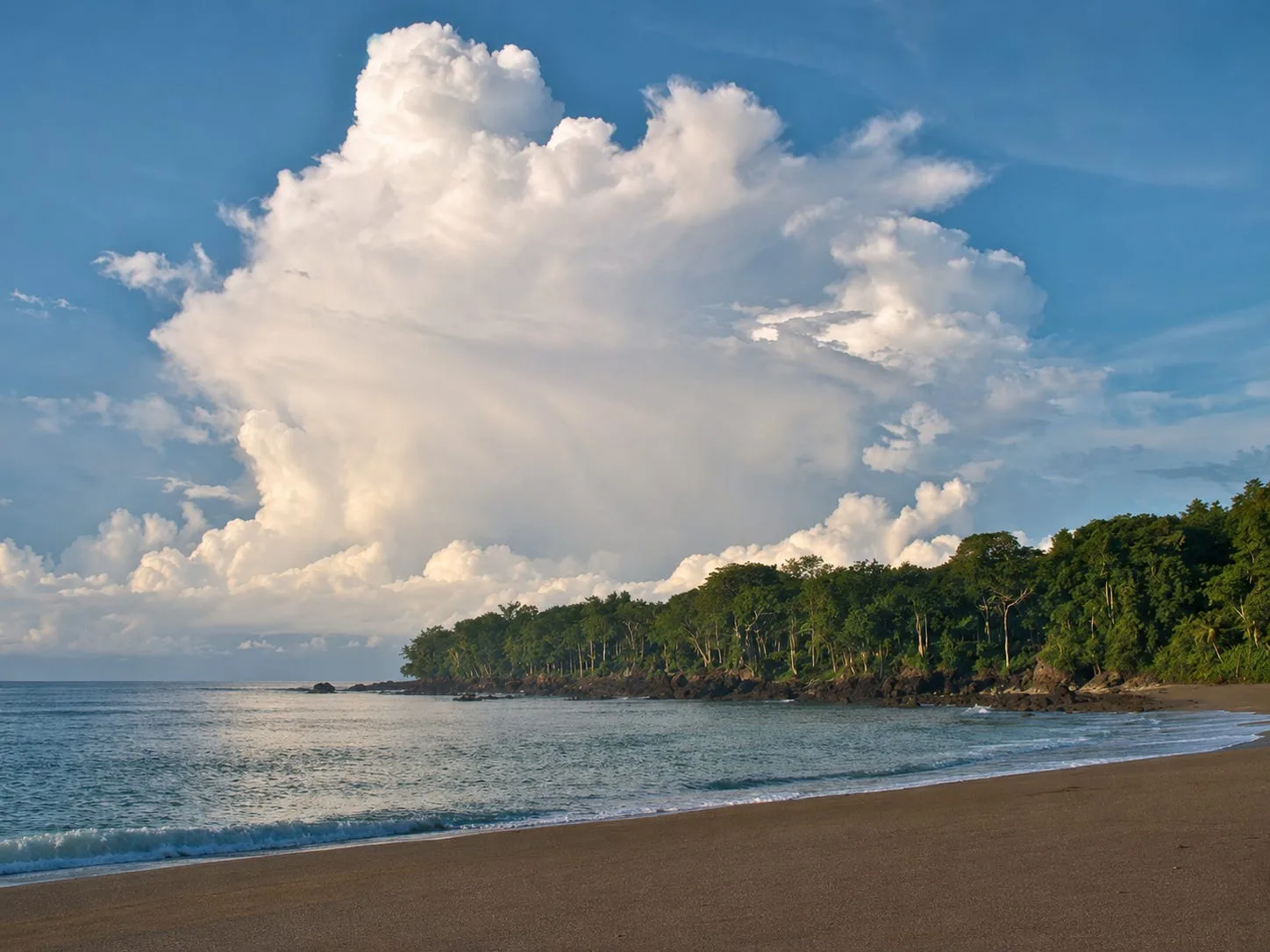
Backwash Bay, Cabo Matapalo, Costa Rica, photographed in 2012 from the beach in front of Casa La Luz. This was one of the places that first taught me that a destination itself can become part of the healing. Warm ocean, open air, jungle at the water’s edge, and a life shaped by weather, light, and the natural rhythm of the day.
Long before I had language for restorative hospitality, I spent years living between Costa Rica and Guatemala, paying attention to the places that changed people.
Some properties offered yoga, massage, elaborate menus, and carefully programmed retreats. Others offered little more than an open-air room, a mosquito net, a communal table, and a path leading through the jungle to the sea.
Yet it was often the place—not the programming—that did the deepest work.
Nowhere have I experienced this more clearly than on Costa Rica’s Osa Peninsula.
The Osa helped teach me that restoration does not always need to be manufactured. Sometimes the environment has already created the conditions. The role of hospitality is simply to protect them.
What Is a Restoration Destination?
A restoration destination is a place where the surrounding environment begins relieving the body of modern inputs before the hospitality offering does anything at all.
The journey creates a threshold between ordinary life and the place you are entering. The landscape changes your sensory field. Artificial noise recedes. Natural darkness returns. The horizon opens. The temperature brings you back into your body. Your days begin reorganizing themselves around light, weather, food, water, and sleep.
The Osa Peninsula does all of this almost effortlessly.
It is remote enough that arriving requires intention. You do not simply exit a freeway and pull into a resort. You may arrive by small plane, boat, four-wheel-drive vehicle, or a long journey overland. Even the trip begins interrupting the speed and convenience of modern life.
Then the jungle takes over.
Scarlet macaws fly overhead. Monkeys move through the canopy. Rain lands heavily on the roof. Insects, birds, ocean waves, and wind replace the constant mechanical hum of cities and conditioned buildings.
You have not come to observe nature from behind glass.
You are living in it.
Living Almost Entirely Outside
Much of the Osa is off-grid and powered by solar energy.
Because electricity is precious and the tropical climate is warm, closed, air-conditioned environments have historically been rare. Buildings were designed to work with their surroundings instead: deep shade, open walls, screened windows, high roofs, covered terraces, ceiling fans, and layouts positioned to capture the breeze.
The architecture does not attempt to seal the guest away from the environment.
Air moves through the room. Humidity is felt. Rain becomes part of the soundscape. Daylight changes naturally. Night becomes truly dark.
Even while sleeping, bathing, eating, or resting beneath a roof, you remain connected to the weather and the living world around you.
In practical terms, you are almost completely outside.
This is radically different from the way most people now live. We spend our days in sealed buildings, beneath artificial light, breathing mechanically conditioned air and moving between climate-controlled rooms and vehicles. Weather becomes an inconvenience viewed through a window.
On the Osa, the body returns to the environment.
You feel when morning arrives. You notice when the sun becomes too strong. You understand why the afternoon slows down. You hear the jungle change as evening approaches.
No one needs to program a circadian-reset workshop. The place itself begins returning you to natural rhythm.
The Ocean Is Warm and Inviting
Water is not simply scenery on the Osa.
The warm ocean invites you to enter it.
There is little hesitation or bracing against cold. Swimming becomes easy and instinctive. You can move from the heat of the jungle into the sea, back into shade, through a rainstorm, and beneath the breeze of an open-air structure.
The body is not only looking at nature. It is participating in it.
The peninsula is held between the Pacific Ocean and the Golfo Dulce, with beaches, rivers, waterfalls, tropical rain, tidal pools, and warm coastal water shaping daily life. In Cabo Matapalo, the rainforest reaches directly toward rocky coves, surf breaks, and open beaches.
Water becomes part of the rhythm of the stay rather than a scheduled activity.
You swim because the water is there. You walk to the beach because there is little reason not to. You rinse off beneath an outdoor shower. You listen to rain while falling asleep.
The simplicity of this contact matters.
Simple, Local Nourishment
Food on the Osa is often uncomplicated, local, and built into the stay.
Guest lodges such as Ojo del Mar and Encanta La Vida provide three meals a day within their packages. Guests do not need to repeatedly decide where to eat, navigate roads, make reservations, or spend the day studying menus.
Someone has already considered the meal.
You gather at the table, eat what has been prepared, and return to the rhythm of the place.
Meals may center around tropical fruit, rice, beans, vegetables, eggs, fresh juices, local ingredients, and straightforward home-style cooking. The restorative quality does not come from elaborate “wellness cuisine.” It comes from freshness, simplicity, nourishment, shared tables, and the removal of constant decision-making.
Food does not need to perform wellness to be restorative.
Sometimes it only needs to be grown nearby, prepared with care, served at the right time, and enjoyed in the open air.
The Osa Does Not Need More Wellness Programming
The Osa Peninsula does not need to be transformed into a wellness destination.
It already contains many of the conditions that wellness properties attempt to reproduce:
-
Natural light and darkness
-
Fresh moving air
-
Warm water
-
Living sound
-
Daily movement
-
Reduced technology
-
Local food
-
Contact with the ground
-
Immersion in biodiversity
-
Distance from normal routines
-
Space for rest and reflection
The danger is not that the Osa lacks restorative potential.
The danger is that hospitality can interrupt it.
A property can flood the jungle with artificial light. It can replace natural sound with amplified music. It can overprogram every day. It can import synthetic fragrance into an environment already overflowing with scent. It can seal guests into air-conditioned rooms, make them dependent on screens, or distract them from the very place they traveled so far to experience.
A restoration destination asks something different of the operator:
Do not manufacture what the land is already providing. Learn how to host without interfering with it.
Several properties on the Osa represent different ways of answering that question.
Casa La Luz: Where the Osa Began for Me
Casa La Luz was my introduction to Costa Rica. For me, it became a doorway into another way of living.
The house was not a sealed object placed beside nature. It belonged to the conditions around it. Open-air living, solar power, ocean breezes, jungle sounds, and the daily rhythms of the coast were not amenities. They were simply life.
The distinction between inside and outside softened.
The ocean was in front of you. The jungle was behind and around you. Wildlife moved through the property. Surf, rain, heat, food, and darkness organized the day.
There was no need for an app reminding you to go outside.
You were already there.
Casa La Luz planted one of the earliest seeds of what I now call restorative hospitality: the understanding that a building does not always need to control the environment. It can help people reenter it.
Ojo del Mar: Intimacy, Community and Elemental Hospitality
Ojo del Mar sits on four beachfront acres along the Golfo Dulce, between tropical rainforest and the sea. The lodge describes itself as an intimate, eco-friendly retreat and centers its communal life around the Casa Grande—an open kitchen, library, gathering place, and shared table.
What makes Ojo memorable is not simply its location.
It is the intimacy of the experience.
Meals, conversation, music, rest, nature, and community are held within a setting that still feels elemental. Guests can practice yoga, walk the trails, spend time on the beach, gather around the table, or choose to do very little at all.
Three meals a day create a natural rhythm and remove the need to keep leaving the property in search of the next thing.
The hospitality becomes part of the restoration because it reduces decisions rather than adding more of them.
Ojo del Mar is not a resort attempting to overpower the peninsula. It remains human in scale—an example of how communal hospitality, simple nourishment, and immersion in place can work together.
Encanta La Vida: The Social Heart of Matapalo
Encanta La Vida sits at the edge of the ocean in Cabo Matapalo, surrounded by rainforest, surf, wildlife, and warm coastal water. The property combines accommodations and meals with yoga, surfing, jungle experiences, and a spa and yoga space overlooking Pan Dulce Bay.
It is one of the places where the adventurous, communal character of Matapalo becomes especially visible.
People come for surf, yoga, wildlife, movement, friendship, and the experience of living close to the elements. Three meals a day give the stay structure without requiring guests to constantly plan around food.
Encanta offers activity, but the setting remains the central experience.
You may wake to howler monkeys, walk to the water, practice yoga beneath the rainforest canopy, eat with other guests, and fall asleep to waves and jungle sound. The property describes its current model as an all-inclusive eco-lodge with meals and nature-based experiences integrated into the stay.
It is not formal perfection that gives places like Encanta their life.
It is the combination of land, water, people, movement, and a sense that everyday life has moved outdoors.
Luna Lodge: A Pioneer of Restoration in the Rainforest
If there is a pioneer in this space, it is Lana Wedmore.
Lana is the founder and owner of Luna Lodge, as well as the founder of the White Hawk Foundation. Long before “wellness travel” became an industry category, she understood that the rainforest itself could become a setting for healing, transformation, spiritual growth, and reconnection.
Luna Lodge rises from the rainforest near Corcovado, offering bungalows, hacienda rooms, and safari-style accommodations alongside yoga, meditation, nourishing meals, nature immersion, and retreat experiences.
But listing the offerings does not fully communicate what Lana created.
Luna feels intentional without feeling disconnected from the wildness around it. It demonstrates that a property can provide comfort, beauty, and care while allowing the natural environment to remain the most powerful presence.
Lana did not simply build a lodge in the rainforest.
She recognized the rainforest as an active participant in the guest’s experience.
That distinction places Luna Lodge at the heart of this conversation. It represents an early and deeply embodied form of restorative hospitality—one developed through lived relationship with the land rather than through market research.
Bosque del Cabo: Comfort Deep Inside the Wild
Bosque del Cabo occupies more than 700 acres at the tip of the peninsula, with private bungalows and houses positioned above the coastline and surrounded by rainforest. The owner-operated lodge opened in 1990 and is one of the Osa’s longest-running nature lodges.
Bosque sits somewhere between the rustic intimacy of properties such as Encanta La Vida and the more polished luxury of Lapa Rios.
It offers privacy, spacious accommodations, ocean views, tropical breezes, trails, wildlife, gardens, and substantial comfort while preserving direct contact with the forest.
This middle ground matters.
Not every guest is ready for the most elemental version of off-grid living. Restoration does not require discomfort, and comfort does not necessarily require separation from nature.
Bosque del Cabo shows how thoughtful hospitality can ease someone into the wild without removing them from it.
Lapa Rios: Restoration for the Guest Who Needs Luxury
Lapa Rios offers another important interpretation of the Osa.
Set within a protected 1,000-acre rainforest reserve, it combines conservation, guided nature experiences, expansive views, sophisticated accommodations, and a much higher level of luxury.
This is the property for the guest who wants to encounter the wild but needs a stronger sense of refinement and conventional comfort in order to relax into it.
That does not make the experience less legitimate.
For some people, discomfort creates enough vigilance that they cannot surrender to the destination. A beautiful room, attentive service, privacy, and familiar comforts may provide the sense of safety that allows them to finally look outward.
Lapa Rios demonstrates that luxury can coexist with ecological immersion when the luxury serves connection rather than replacing it.
Its newer accommodations now include air conditioning, making it an exception to the peninsula’s traditionally open-air lodging model. Yet the property still emphasizes rainforest views, wildlife, conservation, terraces, and longer stays intended to allow guests to experience the place more fully.
This creates a valuable question for restorative hospitality:
How much comfort helps a guest surrender—and at what point does comfort begin insulating them from the very environment they came to experience?
Lapa Rios occupies that edge.
Osa Clandestina: Regenerative Hospitality Off the Grid
Osa Clandestina is an intimate, off-grid lodge within a 90-acre private rainforest reserve near the beaches and surf of Cabo Matapalo. The property traces its beginnings to a 1998 surf trip and describes its purpose as connecting guests with raw nature without entirely sacrificing the comforts of home.
Its inclusion matters because it represents a more contemporary expression of the Osa’s original spirit.
It combines off-grid living, rainforest protection, beach access, food, comfort, and regenerative intentions without attempting to turn the jungle into a conventional resort environment.
Osa Clandestina suggests one possible future for restorative hospitality: small-scale properties that understand both the ecological responsibility of operating in a wild place and the human desire to feel cared for within it.
The Property Still Matters
The Osa carries so much inherent restorative power that it can be tempting to believe any property there will automatically restore its guests.
The environment provides an extraordinary foundation, but hospitality still determines whether that foundation is protected.
A beautiful landscape cannot compensate indefinitely for:
-
Poor stewardship
-
Unresolved conflict among owners or staff
-
Synthetic fragrance
-
Harsh artificial light
-
Constant amplified music
-
Inadequate maintenance
-
Uncomfortable beds
-
Disorganized food service
-
Mold or poor sanitation
-
Intrusive hosting
-
Overprogramming
-
A guest experience that feels chaotic rather than freeing
The land can invite surrender. The ocean can regulate the body. The jungle can restore natural sensory rhythm.
But the people holding the property still shape whether guests feel safe enough to receive what the environment is offering.
This is why restorative hospitality is not simply nature tourism.
It is the relationship between place, property, and stewardship.
The Responsibility of Hospitality in a Powerful Place
The Osa Peninsula does not need hospitality operators to manufacture transformation. The land, water, climate, darkness, and biodiversity are already creating the conditions for it. The role of the property is not to compete with those forces, but to protect the guest’s access to them.
That means designing buildings around natural airflow instead of automatically sealing every room and conditioning the air. It means allowing darkness to return at night rather than illuminating every pathway, tree, and exterior wall. It means letting the sound of rain, waves, insects, birds, and monkeys remain the soundtrack instead of covering it with amplified music.
It means serving food that belongs to the place rather than importing an elaborate identity that has little relationship to the region. It means providing enough comfort for guests to settle into the experience without insulating them so completely that the living environment disappears.
Most of all, it means leaving room in the day.
The impulse within modern hospitality is often to add more: more amenities, more activities, more treatments, more entertainment, and more reasons for the guest to feel that the price of the stay has been justified. Yet places such as the Osa reveal that the most powerful experience may come from removing distractions and allowing the destination to do what it already does.
The property does not need to be the loudest part of the experience. In a destination this alive, it should know when to become quiet.
The People Who Hold the Place
Even in a destination with enormous restorative power, the people caring for the property still shape the guest’s experience.
Casa La Luz was my introduction to Costa Rica. The oceanfront, off-grid home was one of the first built in the Matapalo subdivision and is owned by my former business partner and friend Charlie Miller and the late Phil Becker, the legendary surfboard shaper with whom Charlie shared the property.
Today, Casa La Luz is managed by a local couple who provide extraordinary hospitality there and at other homes throughout the neighborhood. Their presence illustrates something that cannot be reduced to architecture or amenities: the quality of care offered by people who understand the place, know the community, and make guests feel genuinely looked after.
Hospitality at its best is not performance. It is stewardship.
It is knowing how to prepare a home for someone’s arrival, how to provide what is needed without hovering, how to introduce guests to the rhythms of an unfamiliar place, and how to create comfort without separating them from the environment they came to experience.
That human layer matters throughout the Osa. A beautiful property can offer open-air architecture, warm ocean water, extraordinary wildlife, and nourishing food, but the emotional atmosphere created by the owners, managers, cooks, guides, and staff determines whether guests can fully settle into it.
The destination may begin the restorative process, but good stewardship allows it to continue.
Recognizing Where Restoration Is Already Happening
Perhaps the future of restorative hospitality is not about building more elaborate wellness resorts.
Perhaps it begins by recognizing the destinations where restoration is already happening and learning how to host without interrupting it.
The Osa Peninsula is one of those places.
Its restorative power is not contained in a spa menu or a retreat schedule. It is in the warm ocean, the moving air, the heavy rain, and the return of true darkness. It is in shared meals prepared from simple local ingredients and eaten without the need to decide where to go next. It is in waking to the sound of monkeys and watching scarlet macaws cross the sky. It is in the experience of sleeping beneath a roof while remaining entirely surrounded by life.
It is also in the people who have spent decades learning how to live and host within that environment.
Properties such as Casa La Luz, Ojo del Mar, Encanta La Vida, Luna Lodge, Bosque del Cabo, Lapa Rios, and Osa Clandestina offer very different ways of entering the Osa.
Some guests will want the intimate communal experience of a small lodge where three meals a day are prepared, the table becomes a gathering place, and much of daily life is gently held by the property. Others may be restored by the privacy and independence of an off-grid home such as Casa La Luz, where they bring their own food, prepare meals in an open-air kitchen, and allow the days to unfold without a schedule or service structure.
That kind of self-catered stay can be restorative in an entirely different way. The guest chooses when to eat, when to swim, when to sleep, and whether to see anyone at all. Preparing simple food can become part of the rhythm of the place rather than another task to escape. Privacy creates room for families, couples, friends, or solo travelers to settle into their own natural pace.
Still others may need the privacy, polish, and refinement of a property such as Lapa Rios before they feel comfortable enough to relax into the wildness around them.
No single hospitality model is inherently more restorative. A fully hosted lodge, an intimate retreat, and a private self-catered home can all provide access to the same living environment. The question is whether the property gives the guest an appropriate level of support, freedom, comfort, and connection to place.
The most successful properties on the Osa understand that the jungle is not a backdrop. The ocean is not an amenity. Nature is not part of the décor.
The place itself is the experience.
The Osa does not need to promise transformation. It simply asks you to travel far enough, stay long enough, and become quiet enough for the jungle, the water, the people, and the living world to begin working on you.
Originally published on Substack.