Alma Creek Retreat: A New Expression of Restorative Hospitality
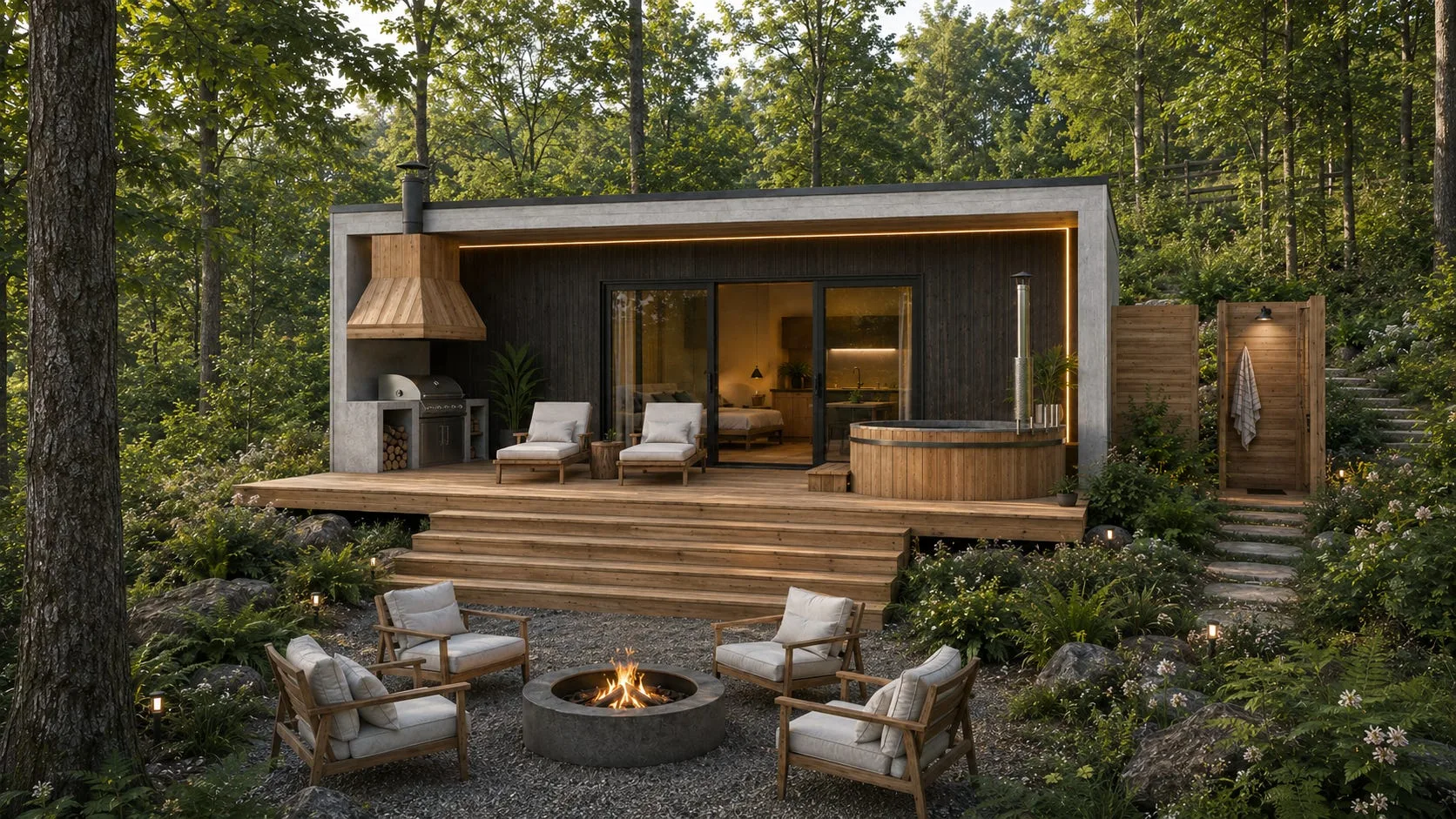
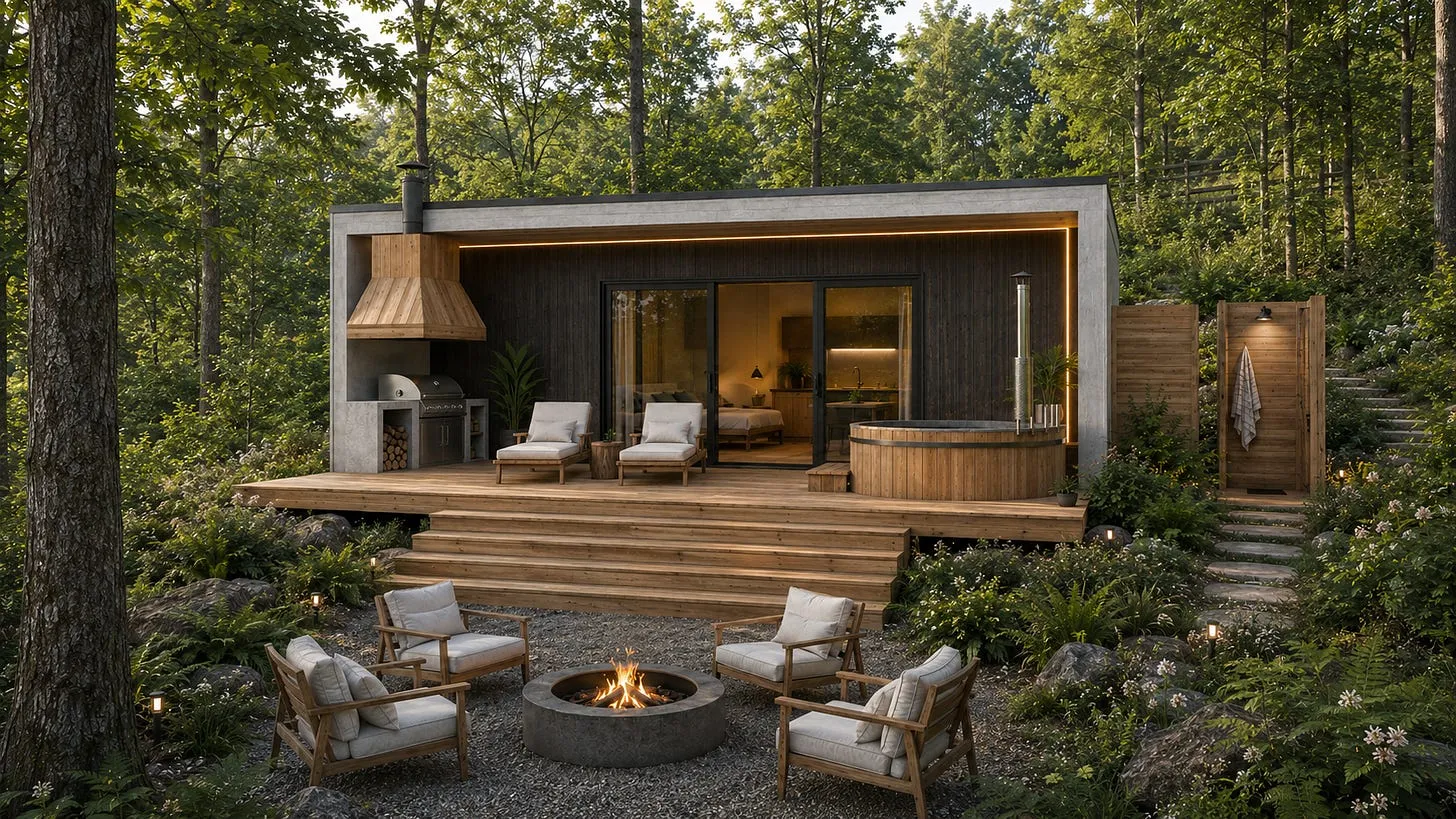
Rendering courtesy of Alma Creek Retreat.
As restorative hospitality begins to take shape as a distinct idea within the broader wellness travel landscape, the most interesting properties are not necessarily the ones adding the most programming, treatments or amenities. They are the ones reconsidering the guest experience from the ground up and asking a more fundamental question: what kind of environment actually helps a person slow down, settle and reconnect?
That is what first drew me to Alma Creek Retreat.
Currently under development on approximately ten acres in Rutherfordton, North Carolina, Alma Creek is the vision of Lucas and Stefania, a Colombian couple creating an intimate retreat for individuals and couples who want to step away from the pace, stimulation and demands of everyday life. The property is surrounded by native forest, open land and a natural creek, and from the early renderings alone, there is a clear sensitivity to both landscape and atmosphere. The cabins feel contemporary without feeling disconnected from their surroundings, and the overall aesthetic is warm, restrained and deeply rooted in place.
What makes the project particularly compelling, however, is that the thinking behind it goes well beyond design.
Lucas and Stefania describe their vision as a place where wellness feels effortless rather than scheduled, where the environment itself encourages guests to slow down. That idea sits at the heart of what I mean when I talk about restorative hospitality. Restoration is not something that necessarily needs to be delivered through a program. It can be supported through the cumulative effect of privacy, quiet, thoughtful architecture, access to nature, good food, reduced stimulation and enough unstructured time for the nervous system to begin finding its own rhythm again.
Alma Creek is still in the development stage, which makes this an especially exciting moment to follow the project. Rather than retrofitting a conventional hospitality property with wellness offerings later, Lucas and Stefania have the opportunity to consider restoration while the place itself is still being formed. Their answers reveal an unusual level of intentionality around that process, from preserving the natural character of the land to creating spaces where guests can simply read, journal, walk, sit beside the creek or spend uninterrupted time together.
I asked them to share more about the story behind Alma Creek, the philosophy guiding the project and what they hope guests will eventually experience there.
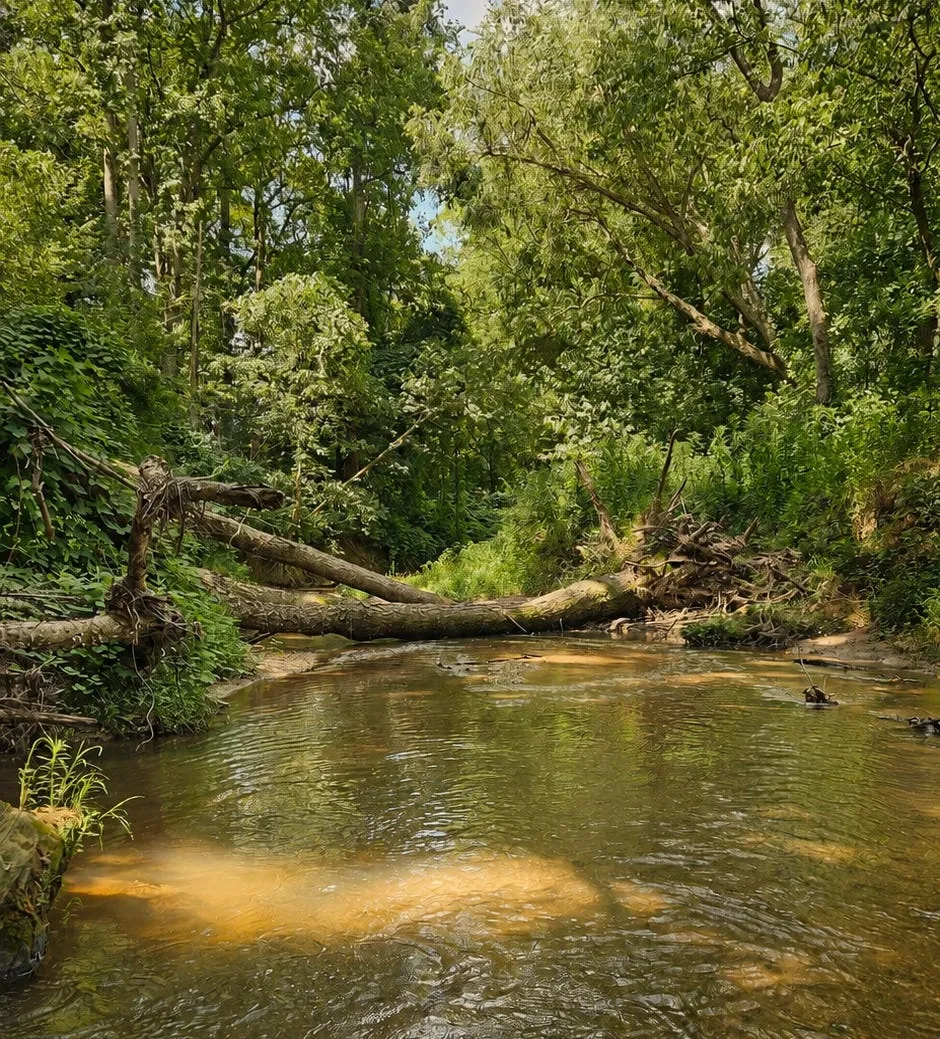
The creek that helped inspire Alma Creek Retreat. The approximately ten-acre property in Rutherfordton, North Carolina, is being developed around its existing forest and water. Photo courtesy of Alma Creek Retreat.
Where are you both from, and what inspired you to create Alma Creek Retreat?
We are both originally from Colombia.
Alma Creek began as a shared dream of creating a place where people could genuinely disconnect from the noise of everyday life and reconnect — with themselves, with their partner and with nature.
We have always been drawn to travel, wellness, thoughtful design and meaningful experiences, but we wanted to create something that felt more personal than a traditional hotel or vacation rental.
When we discovered this property in Rutherfordton, surrounded by trees, mountains and a beautiful creek, we immediately felt that it could become something special.
Our vision became a small, intimate wellness retreat where luxury is not necessarily about excess, but about privacy, silence, beautiful surroundings, thoughtful details and the ability to slow down.
Was Alma Creek already the name of the property?
We created the name specifically for the project.
“Alma” means soul in Spanish, so for us the name represents the connection between the soul and nature.
The creek is one of the most meaningful features of the property and was one of the things that made us fall in love with the land.
Together, the words represent what we hope guests experience here: grounding, peace, reconnection and a deeper sense of presence.
It also reflects our Colombian roots while still feeling simple, natural and connected to this place in North Carolina.
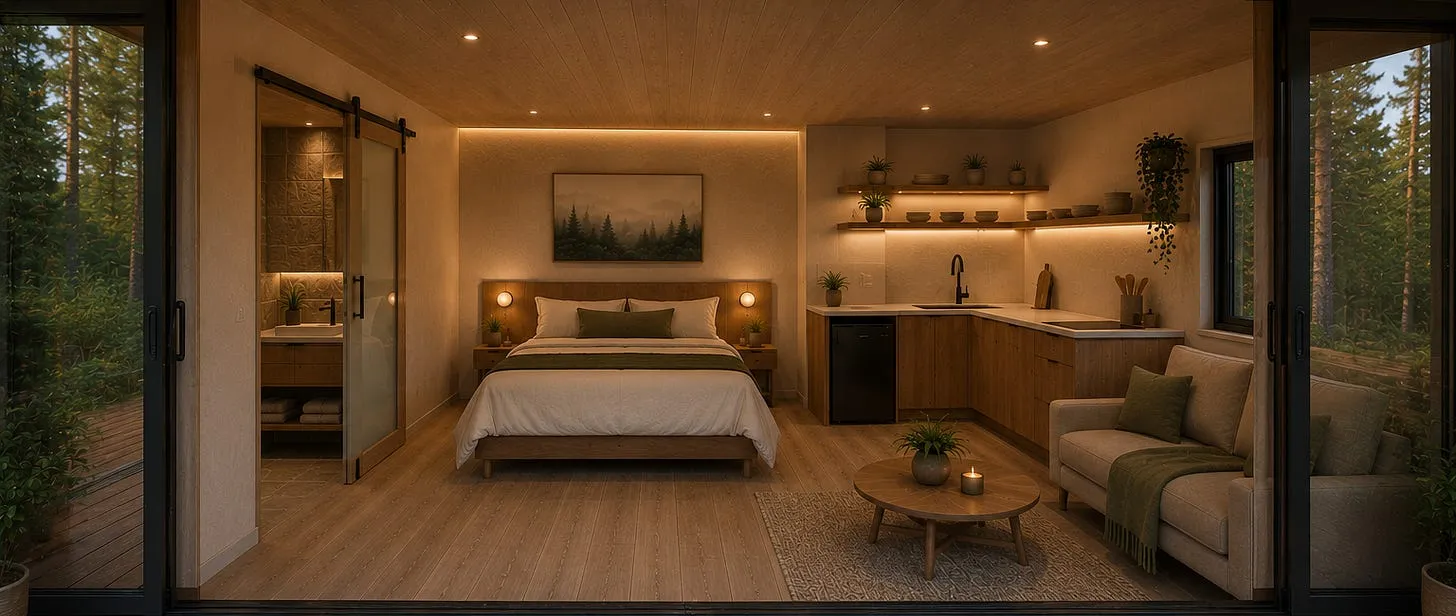
Rendering courtesy of Alma Creek Retreat.
How would you describe Alma Creek’s mission and values?
Our mission is to create a space where people can pause, breathe and reconnect.
Alma Creek is being designed primarily as an intimate wellness retreat for couples and individuals who want to step away from routine and spend intentional time in nature.
Our vision is to create an experience where wellness feels effortless rather than scheduled — where the environment itself encourages you to slow down.
The values behind Alma Creek are connection, intentionality, nature, privacy, simplicity and authenticity.
We believe luxury can be found in quiet mornings, thoughtful design, good food, time by the water and having enough space to simply be present.
That idea — wellness that feels effortless rather than scheduled — really stood out to me. How are you designing the property to support that?
Every part of the property is being considered through the lens of how it can make someone feel.
The cabins are designed to feel private, warm and connected to the landscape, with large openings toward nature, outdoor decks and spaces for couples to spend time together.
Beyond the cabins, guests will be able to experience the creek, walking trails, quiet areas for reading or journaling, outdoor relaxation spaces and opportunities for grounding and spending time by the water.
We also envision wellness experiences such as yoga, breathwork, meditation, healthy cooking, nutrition-focused experiences and nature walks, as well as an Experience Center where some of these activities can eventually take place.
Our goal is not to overwhelm guests with activities.
We want to provide opportunities for wellness while also protecting something that has become increasingly rare: quiet, unstructured time.
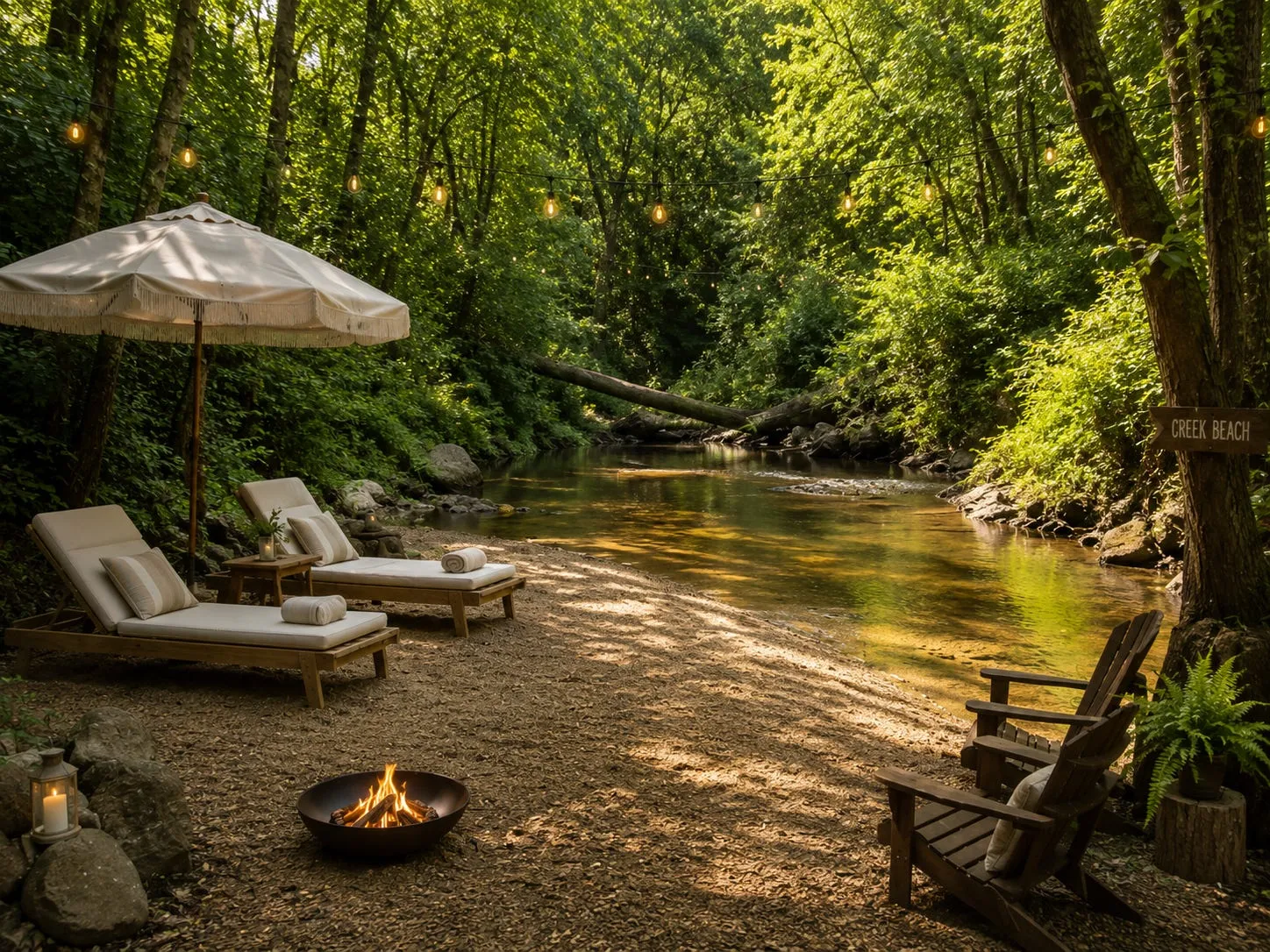
Rendering courtesy of Alma Creek Retreat.
Where is the project now?
Alma Creek is located on approximately ten acres in Rutherfordton, North Carolina, surrounded by native forest, open land and a natural creek.
We are currently developing the first phase of the property, which includes the initial guest cabins, infrastructure, landscaping and the outdoor spaces that will shape the Alma Creek experience.
We are taking a very intentional approach to development because we want the property to remain intimate and preserve as much of its natural character as possible.
Alma Creek and the Evolution of Restorative Hospitality
There is a great deal about Alma Creek that reflects where I believe hospitality is beginning to move.
For years, wellness travel has largely been defined by what a property can add: more treatments, more programming, more fitness, more modalities and more opportunities for guests to actively participate in their own wellbeing. Those experiences can be valuable, but they represent only one interpretation of what people increasingly need from travel.
Restorative hospitality begins from a different premise. It asks how the entire environment influences the guest, including the architecture, landscape, soundscape, lighting, materials, water, food, technology, privacy and pace of the stay. Instead of assuming that restoration must happen through an activity, it recognizes that the environment itself can either support or interfere with a person’s ability to decompress.
Alma Creek is compelling because Lucas and Stefania seem to understand this intuitively.
Their description of luxury is not centered on excess. It is centered on silence, privacy, thoughtful details, beautiful surroundings and the ability to slow down. Their wellness vision includes yoga, breathwork, meditation and nutrition, but those offerings do not appear to be the foundation of the property. The foundation is the place itself.
That distinction matters.
A guest may choose to participate in a yoga class or a guided experience, but they may also spend a morning with coffee overlooking the trees, walk along the creek without a destination, read outside for several hours or simply sleep longer than they normally would. When a property has been designed well, those moments do not feel like the absence of an experience. They become the experience.
The setting at Alma Creek gives the project an extraordinary natural foundation for this kind of hospitality. Water, trees, open land and mountain surroundings already offer many of the sensory conditions people travel great distances trying to rediscover. The opportunity now is to protect those qualities as the property develops rather than overwhelming them with unnecessary layers.
The renderings suggest that Lucas and Stefania are already approaching that balance thoughtfully. The architecture feels refined while remaining visually connected to the landscape. Large openings draw attention outward, private decks extend the living space into nature, and the cabins appear designed to create intimacy rather than spectacle. There is a sophistication to the project, but it does not rely on excess to communicate luxury.
That is an important evolution in hospitality.
The most restorative properties of the future may not be the places trying hardest to announce themselves as wellness destinations. They may be the places that quietly make better decisions at every level of the guest experience.
They will consider how artificial light affects evenings, how much sound travels between accommodations, whether guests are constantly exposed to screens and notifications, how cleaning products influence indoor environments, how water is treated, how much privacy people actually have and whether the design encourages constant consumption or allows enough space for stillness.
They will also understand that not every moment needs to be filled.
Lucas and Stefania’s desire to protect quiet, unstructured time may ultimately be one of Alma Creek’s greatest strengths. In an industry that often measures hospitality by how much can be offered, there is something increasingly valuable about creating the conditions in which a guest no longer feels the need to be entertained.
For couples, that may create more space for genuine connection. For solo guests, it may offer an opportunity to hear their own thoughts again. For anyone arriving after prolonged periods of work, travel, digital stimulation or responsibility, it may simply provide the rare experience of having nowhere else they need to be.
Alma Creek is not open yet, and there will be many decisions between the renderings and the first guest arrival. That is precisely why the project is so interesting to watch now. Lucas and Stefania are developing the property at a moment when travelers are beginning to seek something deeper than conventional luxury and broader than the traditional wellness retreat.
They are building from a philosophy that already feels remarkably aligned with that shift.
If they continue to protect the intimacy of the land, preserve the quiet that drew them there in the first place and allow restoration to guide the operational details as carefully as it has guided the initial vision, Alma Creek has the potential to become a beautiful example of what restorative hospitality can look like in practice.
Not because it promises to transform its guests, but because it is creating a place where they may finally have the space to slow down enough for something to shift naturally.
Alma Creek Retreat Rutherfordton, North Carolina Website: www.almacreekretreat.com Instagram: @almacreekretreat
Originally published on Substack.