Hotel or furnished home after a loss?
By STAYOO team · August 12, 2026

field-notes5-min-read
Hear first when this host opens direct rates or adds a new place.

NAIC guidance explains that covered Additional Living Expenses can include necessary increases in living costs after a loss. The practical housing question is what kind of stay can carry the household routine while the claim and repairs continue. Original source · National Association of Insurance Commissioners
A hotel can solve tonight. Temporary housing has to solve the household routine.
A hotel can be the right answer tonight. It may not be the right answer for the next two months. The decision should follow the household’s real routine—and the claim’s actual limits.
The first night after a fire, water loss or another covered event is about safety. You need a clean room, working shower and a place to sleep.
Then ordinary life starts asking questions.
Where will the children do homework? Can meals be cooked? Is there laundry? What happens to the dog? How far is the school run? Will the adjuster approve another move if repairs take longer than expected?
Emergency shelter solves the night. Temporary housing has to solve the routine.
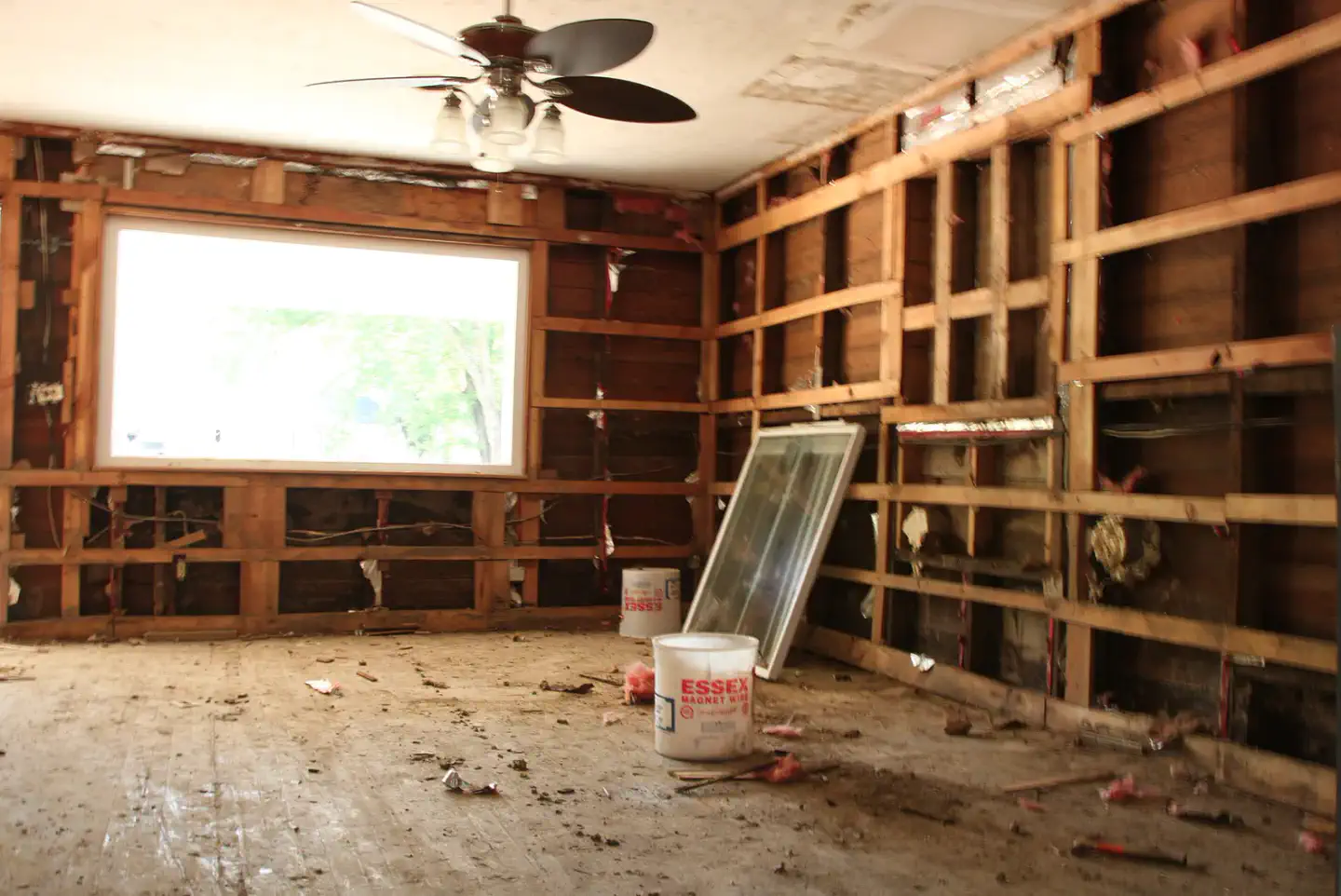
Photo: Rob Melendez · FEMA · public domain
Use a hotel when the timeline is still measured in days, the household needs immediate front-desk service or the insurer has not yet established a longer plan. Consider a furnished home once the expected displacement reaches 30 days and the household needs bedrooms, a kitchen, laundry, parking or a stable school and work routine.
Do not assume that “covered” means every cost is covered. The policy, loss type, dollar limit and time limit control the answer.
Many homeowners policies include loss-of-use or Additional Living Expense coverage when a covered loss makes the home unlivable. Washington’s Office of the Insurance Commissioner explains that this can cover expenses above the household’s normal costs, such as temporary housing, increased food expenses, laundry and additional mileage.
The National Association of Insurance Commissioners makes the same distinction: ALE generally addresses the extra cost of maintaining a comparable standard of living, not expenses the household would have paid anyway.
That is why receipts matter. Keep housing invoices, restaurant receipts, laundry charges, pet expenses if eligible and records of additional travel. Ask the adjuster which categories require advance approval and whether the claim has a dollar cap, a time cap or both.
A hotel may still be the sensible choice when:
Before extending, ask about parking, pets, adjoining rooms, kitchen facilities, laundry and whether the family can remain in the same room.
Longer displacement changes the priorities. Separate sleeping areas protect school and work routines. A kitchen reduces dependence on takeout. In-home laundry, predictable parking and storage remove repeated friction.
The goal is not to recreate the damaged home perfectly. It is to keep the household functioning with the fewest additional disruptions.
Confirm these details in writing:
Sources and verification
Official and established sources support the factual claims. Community discussions helped identify the questions people repeatedly ask; they were not treated as proof on their own.
Washington Office of the Insurance Commissioner — How home insurance works
National Association of Insurance Commissioners — Homeowners claims and Additional Living Expenses
A Stayoo home that fits this need
Seattle · Live listing · 6 beds · 3 bath s · Up to 13
A stronger fit for a displaced family than adjoining hotel rooms when children need space that feels designed for them.
Confirm before booking: Pet rules, accessibility, claim approval and the household’s school or work routes still need to be confirmed.